
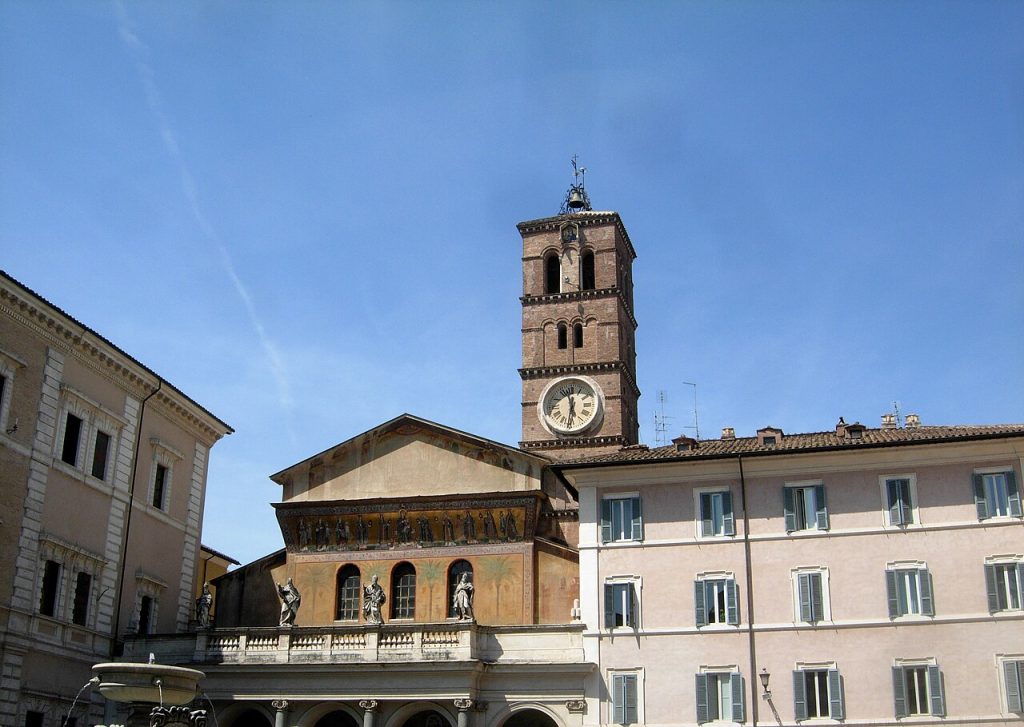

Italian hotels often begin with buildings that were never intended to be hotels. A former convent in Rome, a Renaissance residence in Florence or a group of old houses in a small village may now welcome travellers without entirely concealing its previous life. This ability to give historic spaces a new purpose has become one of the most recognisable qualities of hospitality in Italy.
The story, however, is not simply about preserving old architecture. Over time, expectations have changed dramatically. Travellers who once looked mainly for prestigious addresses and formal service increasingly value distinctive interiors, neighbourhood connections, good food and a convincing sense of place. Italian hospitality has responded by allowing heritage and contemporary design to occupy the same rooms.
How did Italy’s historic inns evolve into modern hotels?
Hospitality in Italy long predates the modern hotel. Travellers moving between cities, pilgrimage routes and commercial centres depended on inns, taverns and religious institutions for accommodation.
During the nineteenth century, a more recognisable hotel culture emerged alongside expanding rail travel and the growing popularity of Italian cities among international visitors. Historic properties began adapting to new expectations of comfort and service. Florence's Grand Hotel Minerva, for example, traces its hotel history to 1848, when accommodation opened in a building that had previously formed part of the Santa Maria Novella monastic complex.
The change was significant. Accommodation was no longer merely a practical pause during a journey. The hotel itself could become part of the experience of visiting Italy.
Why did the grand hotel become a symbol of Italian travel?
By the late nineteenth and early twentieth centuries, elegant hotels had become closely associated with Europe's fashionable travel culture.
Italian cities, spa towns, lakes and coastal destinations provided ideal settings for properties designed around ceremony and social life. Large dining rooms, lounges and terraces created spaces where guests could spend substantial parts of the day without leaving the hotel.
Architecture mattered because arrival mattered.
The hotel needed to communicate status immediately, whether through an impressive façade, an ornate lobby or a prominent position overlooking a square, lake or coastline. Hospitality became increasingly theatrical.
Some surviving buildings illustrate just how ambitious this period could be. The former Grand Hôtel des Thèrmes in Salsomaggiore, inaugurated in 1901, originally contained around 300 rooms and was later expanded with richly decorated public spaces.
Why are so many historic Italian buildings becoming hotels?
Contemporary travellers have created a different opportunity: converting existing architecture rather than constructing an entirely new hospitality environment.
Palaces, monasteries, castles and country estates offer something that cannot easily be manufactured—physical evidence of another period.
Adaptive reuse can preserve courtyards, vaulted ceilings, stone walls or historic room proportions while introducing modern bathrooms, lighting, climate control and other essentials. The challenge is deciding what should remain visible and what should change.
Rome provides an interesting example. Donna Camilla Savelli occupies a former seventeenth-century convent designed by Francesco Borromini in Trastevere. Recent renovation work updated rooms and common areas while retaining architectural references to the building's earlier character.
For travellers staying among the best hotels in Trastevere, Rome, this type of conversion can make accommodation part of the historical experience rather than simply a comfortable base beside it.
How has Italian hotel design become more contemporary?
Preserving heritage does not require reproducing the past.
Many contemporary Italian hotels now use design to establish a deliberate contrast between old architecture and new interiors. Historic ceilings might remain above restrained furniture. Traditional stone may sit beside contemporary lighting. Modern art can occupy rooms originally designed for an entirely different social world.
The strongest interiors avoid turning heritage into stage scenery. Instead, design creates a new layer that can be read alongside the older ones.
What replaced the traditional idea of hotel luxury?
Luxury once depended heavily on visible formality: elaborate interiors, attentive staff and spaces separated from ordinary urban life.
Those elements have not disappeared, but the definition has widened.
Privacy can matter more than grandeur. A quiet courtyard may be more valuable than an enormous lobby. Travellers may judge a property by the quality of breakfast, the intelligence of its restoration or how easily they can walk into a neighbourhood.
The hotel has consequently moved closer to its surroundings.
This is particularly noticeable in Italian cities, where visitors increasingly want to experience daily urban life rather than remain inside a self-contained hospitality environment. A historic building can satisfy that desire particularly well because its architecture already belongs to the destination.
What is an albergo diffuso and why did the concept emerge in Italy?
One of Italy's most distinctive contributions to contemporary hospitality does not always resemble a conventional hotel at all.
The albergo diffuso, or scattered hotel, distributes accommodation across existing buildings within a village or historic settlement while operating them as one hospitality business. Italy's official tourism portal highlights the model as a way to reuse existing housing and architectural heritage with relatively limited physical intervention.
The concept changes the relationship between guest and destination.
Instead of entering one large building and remaining inside it, travellers move through the village between rooms, shared spaces and local businesses. A medieval fortress at Proceno in Lazio, for example, now operates within this model while retaining significant elements of its historic architecture.
Here, preservation becomes part of the business model itself.
Why has location become part of the hotel experience?
A modern Italian hotel is increasingly expected to interpret its surroundings.
In Rome, that might mean connecting guests with Trastevere rather than offering a generic version of the capital. In Florence, the relationship could be with Renaissance architecture and contemporary craftsmanship. In the countryside, food producers, vineyards and walking routes may become central to the stay.
This represents an important shift.
A hotel no longer needs to create an alternative world behind its doors. It can instead function as a bridge between visitor and destination.
The approach is particularly effective in Italy because regional differences remain so pronounced. Architecture, ingredients, materials and even daily rhythms can change substantially over relatively short distances.
Is Italian hospitality becoming more informal?
In many properties, yes—but informality should not be confused with reduced attention.
The older language of luxury often relied on distance between guest and hotel. Contemporary hospitality increasingly aims for warmth without losing precision.
Interiors have followed the same direction. Formal sitting rooms may give way to spaces that work throughout the day. Restaurants can attract local diners as well as hotel guests. Bars and courtyards become social spaces rather than decorative additions.
The emphasis moves from displaying luxury to making comfort feel effortless.
That transformation is particularly compatible with historic buildings, where excessive formality can make architecture feel like a museum. More relaxed interiors allow old spaces to remain impressive while becoming usable again.
Where is Italian hospitality heading next?
The future is unlikely to require choosing between heritage and innovation.
Italy possesses an extraordinary supply of historic buildings, but their value to hospitality depends on thoughtful adaptation. Preservation without comfort can feel restrictive; contemporary design without sensitivity can erase precisely what made a property distinctive.
The more interesting direction lies between those extremes.
A former monastery can retain its cloister while accommodating modern travellers. A centuries-old palazzo can contain contemporary furniture without pretending to belong entirely to the Renaissance. A collection of village houses can operate as a hotel without being replaced by a purpose-built resort.
Italian hospitality continues to evolve because its most valuable resource is not a single design style. It is the ability to make old places useful in new ways.
That principle connects the historic inn, the grand hotel, the restored palace and the design-led retreat. The interiors may change, but the strongest properties still begin with the same question: what can this particular place offer that could not exist anywhere else?