
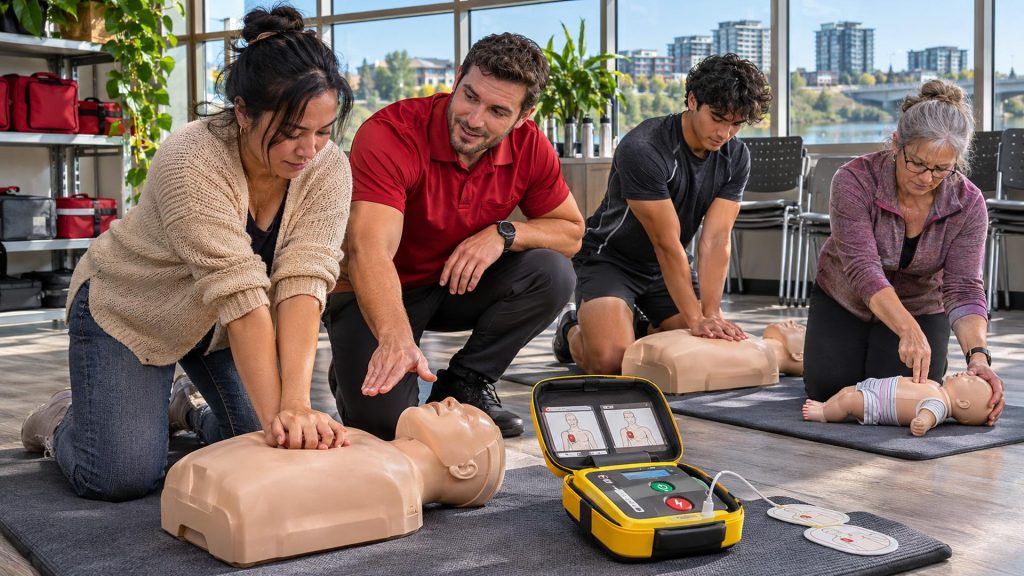

A cardiac emergency doesn’t wait for a good time. It can strike at home, at the rink, or on a quiet street. CPR keeps blood moving until paramedics arrive, and anyone can learn it. This guide explains what a class covers and how Saskatoon families can get started.
Maybe you’ve told yourself you’ll sign up someday. Stonebridge is home to young families, shift workers, and hockey parents. If that sounds like your street, now’s a good time to look at CPR training near Stonebridge and book a seat.
Why Does CPR Training Matter for Everyday People?
Many cardiac emergencies happen at home. The person who needs help is often someone you love. Paramedics are fast, but they still need a few minutes to reach you. Those minutes count.
Hands-on CPR from a bystander keeps blood and oxygen flowing to the brain and heart. It buys time. Without it, every minute of waiting lowers the chance of recovery.
What Will You Learn in a CPR Class?
A good class is practical. You won’t just watch slides. You’ll kneel on the floor, push on a manikin, and get feedback from an instructor. Most courses cover:
- Adult CPR, including chest compressions and rescue breaths
- Child and infant CPR, which differ from adult CPR
- How to use an AED (automated external defibrillator)
- Choking relief for all ages
- When and how to call 9-1-1
It sounds like a lot. It isn’t. Most people feel confident by the end of the session.
Who Should Take CPR Training in Stonebridge?
Short answer: almost everyone. Think about the people who spend time with others every day.
- Parents, grandparents, and babysitters
- Coaches and volunteers at local rinks and fields
- Teachers and daycare staff
- Office and retail workers
- Anyone caring for an older relative
Age isn’t a barrier, either. Teenagers who babysit can learn it. So can grandparents. If you can press down firmly on a manikin and follow simple steps, you can do this. Many families sign up together, which makes it easier to practise at home afterwards.
Picture a Saturday morning hockey practice. A parent collapses in the stands. Would someone know what to do? With a few trained people in the building, the answer is yes.
Is CPR Training Worth It for Parents?
Ask any parent about their scariest moment. It’s often a choking scare at the dinner table. A grape, a piece of hot dog, a toy part. It happens fast.
Parents who’ve taken a course know the steps for children and infants. They stay calmer. Calm hands act sooner.
Do Workplaces Need Trained Staff Too?
They do. A cardiac emergency or a bad fall can happen in any office, shop, or warehouse. Many employers like to have a few certified people on every shift. It protects staff and customers, and it shows people their safety matters.
Some employers ask for a specific course level. Check with your manager first so you book the right class.
Why Does Winter Make These Skills Even More Useful?
Saskatoon winters are long. Shovelling heavy, wet snow is hard work on the heart, especially for people who don’t exercise much. Icy roads can also slow down help. Neighbours who know CPR can start right away while an ambulance makes its way through the snow.
What Are the Basic Steps in an Emergency?
Every class goes deeper, but the core steps are easy to remember:
- Check that the area is safe for you and the person.
- Call 9-1-1, or point at someone and tell them to call.
- Push hard and fast in the centre of the chest.
- Use an AED as soon as one arrives and follow its voice prompts.
You won’t be alone. Dispatchers stay on the line and guide you. Your training makes their instructions click.
What If You’re Afraid of Doing It Wrong?
That fear is normal. Almost everyone feels it. Here’s the truth, though: doing something is far better than doing nothing. A person who isn’t breathing can’t be made worse by your help.
A class turns fear into muscle memory. You practise until the motions feel natural. When a real moment comes, your hands know the rhythm even if your heart is racing.
How Do You Choose the Right CPR Course?
Not every class is the same. Use this quick checklist:
- Check that the certificate is accepted by your employer, school, or club.
- Look for hands-on practice with manikins and AED trainers.
- Ask about class size. Smaller groups get more instructor time.
- Compare schedules. Evenings and weekends help busy families.
- Confirm the course covers adults, children, and infants if you need all three.
What Should You Do Before Your Class?
Keep it simple. Wear comfortable clothes, because you’ll be on the floor. Eat something first. Ask questions, even the ones that feel silly. Everyone in the room is learning, too.
How Can You Stay Ready After Class?
Skills fade if you never use them. Here’s how to keep yours sharp:
- Talk through the steps with your family at home
- Note where AEDs are kept at your community centre, rink, or school
- Review your course notes every few months
- Book a refresher when your certificate is due
Training is the first step. Confidence is what you build afterwards.
If you are looking for first aid training near Stonebridge, Saskatoon, or other areas close to our facility, then you may reach out to Coast2Coast First Aid & Aquatics in that area.
FAQs
1. How long does a CPR class take?
It depends on the course level. Many CPR classes run a few hours. Check the course page for exact timing before you book.
2. Do I need any experience to join?
No. Classes start from the basics, and instructors guide you through each step.
3. Is CPR different for children and infants?
Yes. Hand position, pressure, and breath size change with age. A good course teaches all three groups.
4. Will the course teach me to use an AED?
Most CPR courses include AED training. Confirm this on the course description if it matters for your job or club.
5. Can I book a class for my team or family?
Often, yes. Ask about group sessions when you register.