
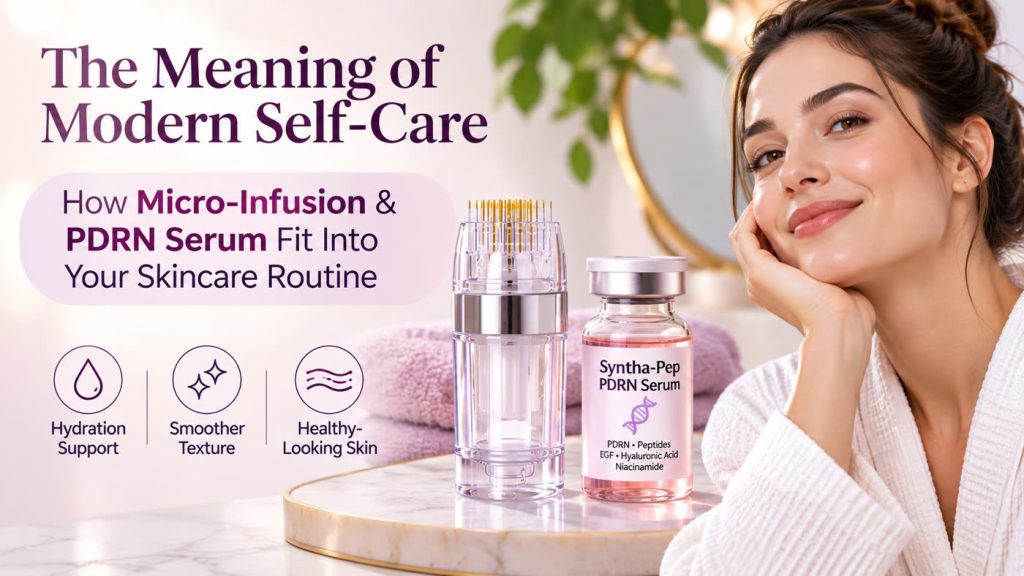

Self-care has evolved from an occasional luxury into an important part of everyday life. For many people, skincare is not simply about appearance but also about establishing healthy habits, making time for personal well-being, and feeling comfortable in their own skin. As beauty technology continues to advance, consumers are becoming more interested in personalized skincare solutions that fit their lifestyles and address individual cosmetic concerns.
One innovation gaining attention is the At-Home Micro-Infusion Kit, which combines controlled micro-infusion technology with a specialized serum containing PDRN, peptides, and other skincare ingredients. This approach reflects a growing interest in advanced beauty techniques that extend beyond traditional creams and moisturizers. However, understanding the technology, its potential cosmetic applications, and its safety considerations is essential before incorporating it into a skincare routine.
Understanding the Meaning of Self-Care in Modern Life
Self-care means taking deliberate actions to support your physical, mental, and emotional well-being. It can involve simple habits such as getting enough sleep, eating nutritious meals, exercising regularly, or maintaining a consistent skincare routine.
In today’s fast-paced environment, personal care often becomes a low priority. Work commitments, family responsibilities, and digital distractions can leave little time for relaxation.
Establishing a few manageable daily habits can create opportunities to slow down and focus on personal needs.
Skincare can be one of these habits. Taking a few minutes to cleanse and moisturize your face can become a pleasant daily ritual rather than another responsibility.
Developing healthier habits also starts with understanding the importance of consistency. Simple lifestyle adjustments, such as creating a healthier morning routine, can make it easier to dedicate time to personal care without disrupting other responsibilities.
What Is Micro-Infusion and How Does It Work?
Micro-infusion is a cosmetic technique that combines fine microneedles with a compatible serum delivery system.
Unlike conventional skincare products applied directly to the surface, micro-infusion temporarily creates microscopic channels in the skin. These channels change the skin’s natural barrier to ingredient penetration.
The technique has attracted interest among consumers looking to address cosmetic concerns such as dehydration, uneven texture, dullness, and visible fine lines.
Although professional microneedling has been used in dermatology for years, at-home micro-infusion systems are a separate category of cosmetic products with different capabilities and limitations.
The Role of a MicroInfuser
A MicroInfuser is a specialized applicator designed to combine microneedle stamping with serum application.
Modern systems may include sealed serum containers and disposable needle heads to reduce product handling and support treatment hygiene.
The purpose of this design is to provide a controlled application experience rather than relying on conventional serum distribution alone.
However, because the process penetrates the skin barrier, it carries risks that ordinary topical skincare does not. Appropriate product selection, professional guidance, and careful attention to safety remain important.
Why PDRN Serum Is Attracting Attention in Skincare
The beauty industry regularly introduces ingredients that generate interest among skincare enthusiasts. One ingredient receiving increasing attention is polydeoxyribonucleotide, commonly known as PDRN.
PDRN consists of DNA-derived fragments that have been investigated in medical and dermatological research. Its appearance in cosmetic formulations reflects growing interest in ingredients associated with skin hydration, texture, and rejuvenation.
Historically, many PDRN ingredients have been derived from fish sources. More recently, biosynthetic alternatives have expanded the options available to skincare manufacturers.
It is important to distinguish research involving pharmaceutical or injectable PDRN from evidence supporting cosmetic formulations. Different concentrations, delivery methods, and ingredient combinations may produce different outcomes.
Understanding Syntha-Pep PDRN Serum
Syntha-Pep is a specialized formulation developed for use with the MicroInfuser system.
According to the manufacturer, it contains 0.2% biosynthetic PDRN, alongside copper peptides, epidermal growth factor, hyaluronic acid, niacinamide, and other complementary ingredients.
The formulation is designed with cosmetic objectives such as improving the appearance of hydration, smoothness, and radiance.
However, the manufacturer has not published an independent clinical trial establishing the effectiveness of this particular serum and device combination. Consumers should therefore evaluate its potential benefits with realistic expectations.
The Ingredients Behind Modern Skincare Formulations
Understanding individual skincare ingredients can help consumers make more informed purchasing decisions.
Rather than selecting products solely because they are trending on social media, it is worth exploring what their ingredients are designed to accomplish.
Hyaluronic Acid: Supporting Moisture Retention
Hyaluronic acid is a widely used skincare ingredient known for attracting and retaining water.
When included in suitable topical formulations, it can improve surface hydration and temporarily create a smoother, plumper appearance.
It is particularly useful for people who experience dryness due to environmental exposure, seasonal changes, or naturally dehydrated skin.
Copper Peptides: An Ingredient for Mature Skin
Copper peptides are commonly found in cosmetic formulations targeting visible signs of aging.
Researchers have investigated their involvement in various skin-related biological processes, and skincare manufacturers include them in products intended to support the appearance of firmness and elasticity.
Their effectiveness can vary depending on concentration, formulation, and method of application.
Niacinamide: Supporting a Balanced Complexion
Niacinamide, also known as vitamin B3, is a versatile ingredient used in many skincare products.
Topical niacinamide can support the skin barrier and improve the appearance of uneven pigmentation.
Its inclusion in moisturizers and serums makes it a popular choice among people interested in building a balanced skincare routine.
Centella Asiatica: Comfort and Skin Care
Centella asiatica is a botanical ingredient frequently included in products designed to support skin comfort.
It appears in many contemporary beauty formulations, particularly those marketed for sensitive or dry skin.
As with any ingredient, individual tolerance and the overall formulation should be considered.
How Beauty Technology Is Changing Personal Care
Innovation has made skincare increasingly personalized. Consumers can now explore a wide range of devices and formulations designed around different cosmetic objectives.
Radiofrequency devices, LED masks, facial massage tools, and micro-infusion systems represent different approaches to home beauty technology.
Brands such as EvenSkyn illustrate this development through specialized skincare devices and ingredient-focused formulations.
However, advanced technology does not automatically make a skincare routine more effective. Product suitability, supporting evidence, individual skin characteristics, and safety are equally important considerations.
The most valuable innovations are those that address genuine consumer needs while fitting comfortably into established personal care habits.
Creating a Skincare Routine That Fits Your Lifestyle
A successful skincare routine should be practical enough to maintain consistently.
Introducing too many products or treatments at once can become expensive, time-consuming, and potentially irritating to the skin.
Instead, a balanced approach begins with essential skincare habits.
Build a Reliable Foundation
A gentle cleanser, suitable moisturizer, and broad-spectrum sunscreen form the foundation of many skincare routines.
Cleansing removes accumulated impurities, while moisturizers help maintain hydration and support the skin barrier.
Daily sunscreen helps protect against ultraviolet damage, which contributes to premature skin aging and pigmentation changes.
These simple habits remain important regardless of whether someone chooses to explore advanced beauty technology.
Choose Treatments Based on Your Needs
Different skin concerns require different approaches.
Someone experiencing dryness may benefit from a suitable moisturizer, while persistent pigmentation or inflammatory skin conditions may require professional dermatological assessment.
Before purchasing advanced skincare devices, consider whether simpler alternatives could address your concerns effectively.
Make Consistency More Important Than Complexity
A routine containing several expensive products is not necessarily better than a simple routine performed consistently.
Choose manageable habits that suit your schedule, budget, and skin condition.
For many people, a few minutes of personal care each morning and evening are more sustainable than an elaborate routine that becomes difficult to maintain.
Important Safety Considerations for At-Home Micro-Infusion
Although micro-infusion is marketed as a cosmetic procedure, it involves penetrating the skin barrier.
This means it can introduce risks, including irritation, infection, pigmentation changes, and scarring.
Understand When Micro-Infusion May Be Unsuitable
Individuals with active skin infections, inflamed acne, open wounds, eczema flare-ups, or a history of abnormal scarring should consult a qualified healthcare professional before considering microneedle-based treatments.
Pregnant individuals should postpone elective micro-infusion procedures. Those who are breastfeeding should seek medical guidance because safety evidence for specialized formulations delivered through microneedles remains limited.
Pay Attention to Hygiene
Microneedle treatment heads should not be shared or reused.
Products intended for ordinary topical application should not automatically be considered suitable for delivery through microscopic skin channels.
The FDA has not cleared microneedling devices for use with cosmetic serums or similar products for delivery into the skin.
Consumers should seek professional advice and carefully review product instructions and contraindications before considering home treatments.
Respect the Skin’s Recovery Needs
Skin may become temporarily sensitive following microneedle-based procedures.
Avoiding unnecessary irritation, protecting against sun exposure, and allowing appropriate recovery time are important considerations.
Persistent discomfort, significant swelling, or signs of infection should be evaluated by a healthcare professional.
The Connection Between Skincare and Everyday Confidence
Personal appearance can influence how people feel, but confidence should not depend entirely on achieving a particular beauty standard.
Social media often promotes heavily edited images and unrealistic expectations about flawless skin. In reality, pores, fine lines, changes in pigmentation, and variations in skin texture are normal.
A healthier approach to skincare focuses on comfort, protection, and personal preferences rather than comparison with others.
Taking care of your skin can be an enjoyable form of self-expression and personal well-being. The objective should be to develop habits that make you feel comfortable without creating unnecessary pressure to change your appearance.
Frequently Asked Questions
What is the difference between micro-infusion and regular serum application?
Regular serums are applied to intact skin, while micro-infusion involves creating temporary microscopic channels during serum application. Micro-infusion carries additional safety considerations because it disrupts the skin barrier.
What is PDRN serum used for in skincare?
PDRN is included in cosmetic formulations intended to support hydrated, smoother, and refreshed-looking skin. Its effectiveness depends on the formulation and delivery method, and results are not guaranteed.
Can micro-infusion replace a daily skincare routine?
No. Gentle cleansing, moisturization, and sun protection remain essential components of skincare. Advanced treatments should complement these habits when appropriate rather than replace them.
Is micro-infusion suitable for every skin type?
No. Skin conditions, medical history, sensitivity, and individual healing responses can affect suitability. Consulting a dermatologist before considering micro-infusion is advisable.
Conclusion
The meaning of modern self-care extends beyond appearance. It involves developing thoughtful habits, understanding personal needs, and making informed decisions that support everyday well-being.
Innovations such as micro-infusion systems and PDRN-based serums demonstrate how beauty technology continues to evolve. These products offer additional cosmetic options, but their potential benefits should be evaluated alongside their limitations and safety considerations.
Ultimately, a sustainable skincare routine is built on consistency, realistic expectations, and appropriate product selection. Whether you prefer simple daily skincare or choose to explore more advanced technologies, the priority should remain maintaining healthy-looking skin while feeling comfortable and confident in your everyday life.