
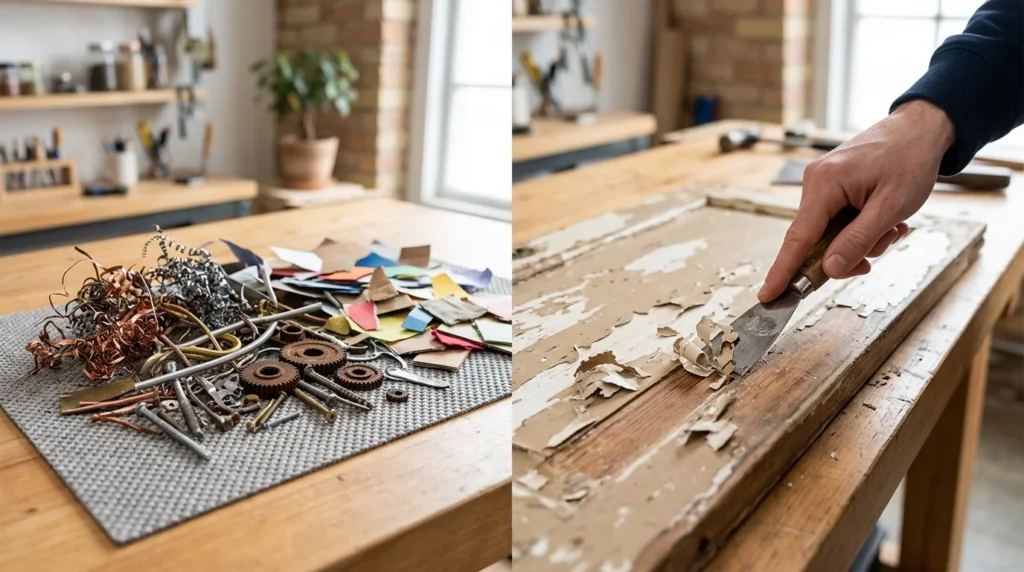

Scrap and scrape are different English words with different meanings, even though they look and sound similar. Scrap commonly refers to a small leftover piece, discarded material, or the act of abandoning or canceling something. Scrape usually refers to rubbing against a surface, removing something by rubbing, or causing a minor injury. Both can function as nouns and verbs, but they cannot normally replace each other.
Quick Answer
Use scrap when you mean a leftover piece, discarded material, or the act of abandoning or canceling something: “We scrapped the old plan.” Use scrape when you mean rubbing, scratching, removing a layer, or collecting something by scraping: “She scraped the paint from the wall.” The easiest memory rule is scrap = discard or leftover and scrape = rub or remove by scraping. Their pronunciations also differ: scrap /skræp/ and scrape /skreɪp/.
What Is the Difference Between Scrap and Scrape?
The difference between scrap and scrape is mainly a difference in meaning and usage, not a difficult grammar rule. Scrap is associated with something unwanted, discarded, canceled, or left over. It can describe a small piece of material, old metal, leftover food, or a plan that has been abandoned.
Scrape centers on physical contact, rubbing, removal, or effort. You can scrape paint from a wall, scrape mud from your shoes, or scrape your knee. In modern technology, scrape can also mean collecting data from a website using a computer program.
So, while the two words share the first four letters, their central ideas are different:
- Scrap → discard, cancel, leftover, fragment, or waste material.
- Scrape → rub, scratch, remove, or collect through scraping.
Why Scrap and Scrape Matter
Choosing the wrong word can change the meaning of an entire sentence. This is especially noticeable when the words are used as verbs.
If you say, “The company scrapped the project,” you mean that the company abandoned or canceled the project. If you say, “The worker scraped the paint,” you mean that the worker removed paint by rubbing or using a rough or sharp tool.
The distinction also matters in professional writing. A business might scrap a proposal, while a technician might scrape residue from a surface. In technology, web scraping has a specialized meaning involving automated data collection. Using scrap in that context would produce a different and usually incorrect meaning.
The Core Rule
Use “scrap” for something discarded, abandoned, canceled, or left over. Use “scrape” for rubbing, scratching, removing material from a surface, or collecting something by scraping.
A quick memory test can make the choice easier:
- If something is being thrown away, abandoned, or left over, think scrap.
- If something is being rubbed, scratched, or removed from a surface, think scrape.
- If you are talking about automatically collecting website data, use scrape.
For example, “They scrapped the proposal” means they abandoned it. “They scraped the label off the container” means they physically removed it.
How to Use Scrap
Scrap as a Verb
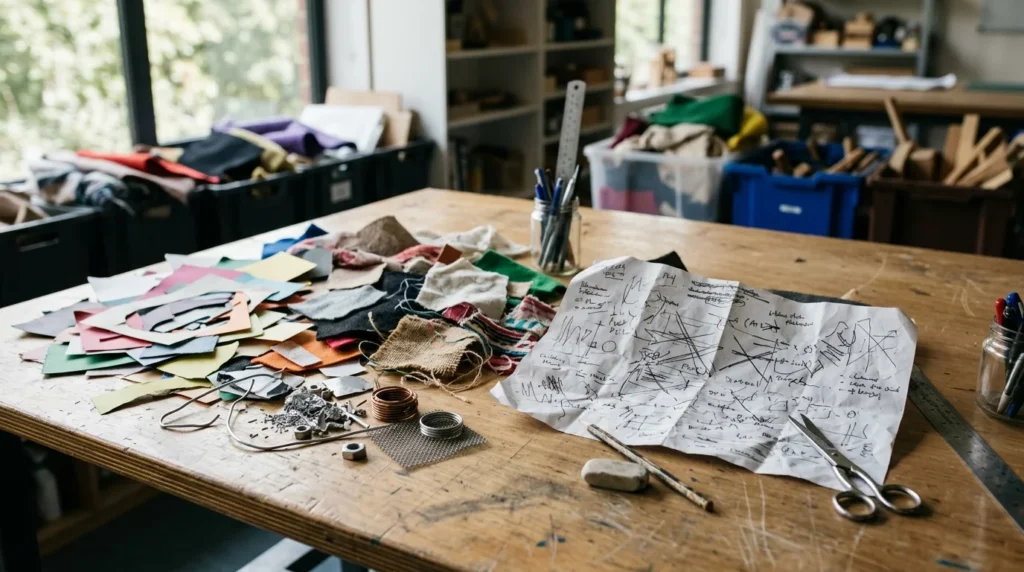
As a verb, scrap commonly means to stop, cancel, abandon, or get rid of something that is no longer wanted or useful. It is often used with plans, projects, proposals, systems, policies, vehicles, equipment, or ideas.
Examples include “The team scrapped the original design” and “The company decided to scrap the outdated system.” In both sentences, something is being abandoned rather than physically rubbed away.
Scrap can also mean to fight or argue, particularly in informal British usage. For example, “The two boys started scrapping.” This is a separate meaning from the more common “discard” sense.
Scrap as a Noun
As a noun, scrap can mean a small piece or amount of something. You can have “a scrap of paper,” “a scrap of information,” or “a scrap of fabric.” It can also refer to old or unwanted material, especially metal intended for recycling or reuse.
The plural scraps can refer to small pieces of leftover food. The noun can also mean a fight or argument in informal English.
Common Expressions With Scrap
- scrap metal — unwanted or recyclable metal
- a scrap of paper — a small piece of paper
- a scrap of information — a small amount of information
- scrap a plan — abandon or cancel a plan
- scrap a project — decide not to continue a project
- sell something for scrap — sell it as unwanted/recyclable material
- food scraps — leftover pieces of food
How to Use Scrape
Scrape as a Verb
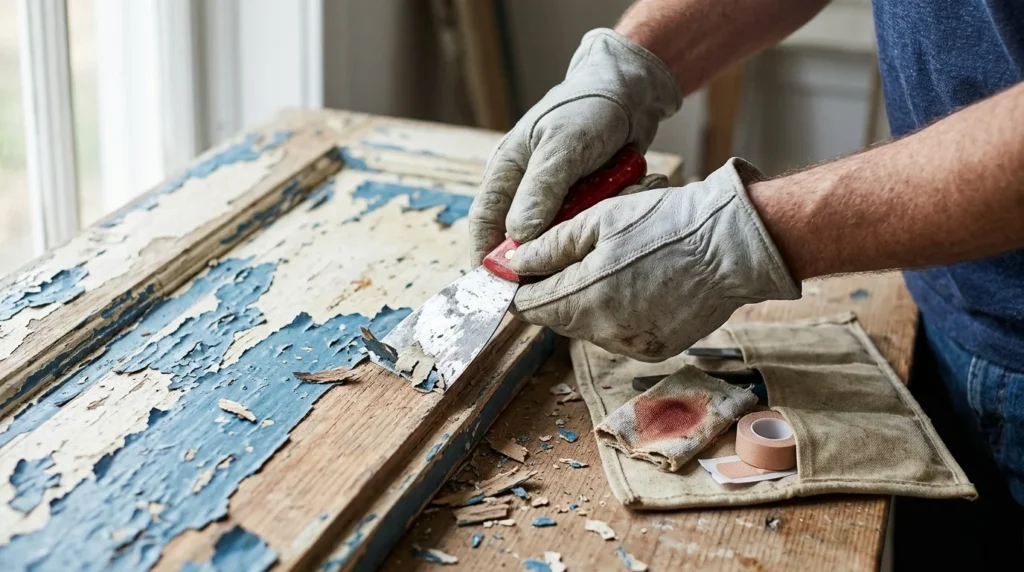
As a verb, scrape commonly means to move something rough or sharp across a surface or to remove material by rubbing. You can scrape paint from a wall, scrape snow from a car, or scrape mud from your shoes.
It can also describe accidental contact that damages or injures a surface. For example, “I scraped my knee on the pavement” means the skin was injured through rough contact.
Scrape as a Noun
As a noun, scrape can describe a minor injury or mark caused by rubbing against something rough. “He has a scrape on his elbow” refers to a small injury.
Scrape can also mean a difficult or slightly dangerous situation, especially in informal English. For example, “She got into a scrape while traveling” means she found herself in a troublesome situation.
Scrape in Technology
Modern English uses scrape in a technical sense as well. To scrape data means to use a computer program to collect information from a website or another digital source. The noun scraping refers to the process.
This meaning is important for people working in technology, SEO, data analysis, and digital research. “The program scrapes product information from websites” uses scrapes correctly because the sentence describes automated data collection.
Correct Examples of Scrap and Scrape
Conversation
“I think we should scrap that idea and start again.”
Here, scrap means abandon or discard the idea.
Everyday Life
“I scraped the mud off my shoes before entering the house.”
Here, scrape describes removing something from a surface.
“After reviewing the costs, we decided to scrap the original proposal.”
The proposal is being abandoned, so scrap is correct.
Workplace
“Please scrape the old adhesive from the surface before installing the new panel.”
The adhesive is being physically removed, so scrape is correct.
School
“I wrote the final note on a scrap of paper.”
Scrap means a small piece of paper.
Academic Writing
“The researchers found only a scrap of evidence supporting the original assumption.”
Here, scrap means a very small amount.
Social Media
“We had to scrap the original video idea because the location was unavailable.”
The idea was abandoned, so scrap fits.
Technology
“The software can scrape publicly available information from selected pages.”
This uses the modern technology meaning of scrape.
See Also: Occasion or Ocassion Differences: Which Spelling Is Correct?
Home Improvement
“He used a tool to scrape the old paint from the door.”
The paint is being physically removed, so scrape is correct.
Personal Experience
“She fell off her bicycle and got a small scrape on her arm.”
The noun scrape refers to the minor injury.
Incorrect vs. Correct
| ❌ Incorrect | ✅ Correct | Why |
|---|---|---|
| We scraped the project. | We scrapped the project. | The project was abandoned, so scrapped is correct. |
| She scrapped the paint off the wall. | She scraped the paint off the wall. | Paint is physically removed by scraping. |
| He has a scrap on his knee. | He has a scrape on his knee. | A minor injury from rubbing is a scrape. |
| We decided to scrape the proposal. | We decided to scrap the proposal. | Canceling or abandoning a proposal takes scrap. |
| I need a scrape of paper. | I need a scrap of paper. | A small piece of paper is a scrap. |
| He scraped the old car for recycling. | He scrapped the old car for recycling. | Getting rid of a vehicle as scrap is expressed with scrap. |
| The program scraps data from websites. | The program scrapes data from websites. | Automated data collection is called scraping. |
| She scrapped her knee. | She scraped her knee. | The injury results from rubbing against a surface. |
| There was a scrape of metal in the recycling bin. | There was scrap metal in the recycling bin. | Scrap metal means unwanted or recyclable metal. |
| They scraped the plan after the meeting. | They scrapped the plan after the meeting. | The plan was abandoned, not physically scraped. |
| He saved a scrape of fabric. | He saved a scrap of fabric. | A small leftover piece of fabric is a scrap. |
| The developer scrapped information from the website. | The developer scraped information from the website. | The digital extraction process is scraping. |
Scrap vs. Scrape Pronunciation
The words are similar in spelling, but their vowel sounds are different.
| Word | Pronunciation | Key Sound |
|---|---|---|
| scrap | /skræp/ | Short “a” sound, as in “cat” |
| scrape | /skreɪp/ | Long “a” sound, as in “day” |
The final e in scrape helps signal the long vowel sound. Compare scrap with scrape aloud and you can hear that the vowel changes.
Scrap and Scrape Verb Forms
Their past and present-participle forms are another common source of confusion.
| Base Form | Past Tense | -ing Form | Example |
|---|---|---|---|
| scrap | scrapped | scrapping | They scrapped the plan. |
| scrape | scraped | scraping | They scraped the paint. |
Scrap doubles the final p before -ed and -ing: scrapped, scrapping. Scrape loses its final silent e before -ing: scraping, while scraped keeps the e before -d. Standard dictionary entries list these forms accordingly.
Why People Make This Mistake
They Look Almost Identical
The words begin with the same four letters: scr-. The only visible difference is the extra e in scrape. When people type quickly, that small difference is easy to overlook.
They Sound Similar
Both words begin with the /skr/ sound and end with /p/. Their middle vowel is different, but fast speech can make the contrast less obvious to learners.
See Also: SMTH Meaning in Text: Definition, Examples & Real Usage
Spellcheck May Not Help
Both scrap and scrape are correctly spelled English words. A spellchecker may therefore accept the wrong word because it cannot always determine the intended meaning from context.
They Both Relate to Removal
This is an especially understandable source of confusion. Scrap can mean getting rid of something, while scrape can mean removing something from a surface. The difference is in how and why the removal happens.
Abandon a project → scrap it.
Remove paint from a wall → scrape it off.
Translation Can Cause Confusion
Some languages use a single word for ideas that English separates into several words. Learners may therefore translate directly and choose scrap or scrape based on a general idea of “remove.” English requires the more specific word in context.
Common Mistakes Checklist
- Scrap a plan, not usually “scrape a plan,” when you mean cancel it.
- Scrape paint, not “scrap paint,” when you mean physically remove it.
- Scrap metal means unwanted or recyclable metal.
- Scrape your knee describes a minor injury caused by rough contact.
- Scrapped is the past tense of scrap.
- Scraped is the past tense of scrape.
- Scrapping has a doubled p.
- Scraping drops the final e from scrape.
- Web scraping uses scrape, not scrap.
- A scrap of paper means a small piece of paper.
Scrap or Scrape in Real English
Scrap a Plan
“We scrapped the plan.” This is natural everyday English when a person or organization decides not to continue with a plan. The phrase is common in conversation, workplace communication, news writing, and other contexts. The verb emphasizes the decision to abandon something rather than any physical action involving a surface.
Scrape Something Off
“Scrape the sticker off the glass.” This is natural when something is being physically removed from a surface. The idea is contact, friction, and removal. The prepositions off, away, and from commonly help make the physical action clear.
A Scrap of Paper
“Write it on a scrap of paper.” This is a very natural noun phrase. Here, scrap means a small piece or fragment. It does not necessarily mean the paper is worthless; the expression simply highlights its small size or leftover nature.
A Scrape on Your Knee
“I got a scrape on my knee.” This is ordinary English for a minor injury caused by rubbing against a rough surface. Scrape is the natural noun here. Saying “a scrap on my knee” changes the word to one that does not normally describe this injury.
Scrape Data
“The program scrapes data from the site.” This is established technical usage. The verb does not describe physical rubbing; it refers to extracting information through a computer program. This specialized meaning is now common enough in technology and data-related writing that learners may encounter it frequently.
American vs. British English
There is no major American-versus-British spelling distinction between scrap and scrape. Both forms are standard in both varieties.
Some individual senses have usage notes that vary by dictionary or are more strongly associated with particular contexts. For example, scrap meaning “fight” is especially associated with British usage, while both varieties use scrap for discarded material and cancellation. Likewise, scrape has the same central physical meanings in American and British English.
Formal vs. Informal Usage
Both scrap and scrape can be used in formal and informal writing when their meanings are appropriate.
In professional writing, scrap a proposal, scrap a system, scrap outdated equipment, and scrape data can all be appropriate depending on the context. Informal expressions such as get into a scrape or have a scrap may be more conversational.
The important distinction is not simply formal versus informal. It is whether the word accurately expresses the intended meaning.
See Also: TORTA Meaning in Text Messages – Simple, Clear & Trending Explained
Scrap vs. Scrape Comparison Table
| Feature | Scrap | Scrape |
|---|---|---|
| Primary idea | Discard, abandon, leftover piece | Rub, scratch, remove from a surface |
| Part of speech | Noun and verb | Noun and verb |
| Pronunciation | /skræp/ | /skreɪp/ |
| Physical removal | Not the central meaning | Central meaning |
| Cancellation | “Scrap the plan” | Not normally used |
| Small piece | “A scrap of paper” | Not normally used |
| Minor injury | Not normally used | “A scrape on his knee” |
| Recyclable material | “Scrap metal” | Not normally used |
| Data collection | Not normally used | “Scrape data” |
| Past tense | scrapped | scraped |
| -ing form | scrapping | scraping |
Real-Life Situations
In an Interview
Correct: “We had to scrap the original strategy after the market changed.”
The speaker means the strategy was abandoned.
In a Meeting
Correct: “Should we scrap this proposal and develop a new one?”
Again, scrap means abandon or stop pursuing the proposal.
In an Email
Correct: “Please scrape the old label from the equipment before delivery.”
The label must be physically removed from a surface.
In a Text Message
Correct: “I scraped my knee when I fell.”
The word scraped describes the minor injury.
In an Exam
If a question asks you to choose between scrap and scrape, identify the action first. A canceled idea points to scrap. Physical rubbing or removal points to scrape. A small leftover piece points to scrap, while a minor rubbing injury points to scrape.
Easy Ways to Remember Scrap vs. Scrape
Memory Trick 1: Scrap Means Stop or Leftover
Think of scrap as something you no longer want or something left over: scrap metal, a scrap of paper, or a scrapped project.
Memory Trick 2: Scrape Needs Contact
Think of scrape as an action involving contact with a surface: scrape paint, scrape mud, scrape your knee, or scrape data from a source.
Memory Trick 3: Look at the E
The e in scrape gives you the long /eɪ/ vowel sound. Say scrape and scrap slowly. The vowel difference can help you remember that they are separate words.
Quiz: Scrap or Scrape?
Choose the correct word in each sentence.
- The company decided to ___ the outdated policy.
- Please ___ the ice from the windshield.
- She wrote the address on a ___ of paper.
- He got a ___ on his elbow after falling.
- The developer used software to ___ information from the website.
- The factory sells its old metal as ___.
- They ___ the original design after discovering a major problem.
- Use a knife to ___ the residue from the surface.
Answers
- scrap
- scrape
- scrap
- scrape
- scrape
- scrap
- scrapped
- scrape
Frequently Asked Questions
Is scrap and scrape the same thing?
No. They are different words. Scrap commonly means a small leftover piece, discarded material, or the act of abandoning something. Scrape usually means rubbing, scratching, or removing something from a surface.
Is it scrape a plan or scrap a plan?
The standard expression is scrap a plan when you mean to abandon or cancel it. For example, “We scrapped the plan after reviewing the costs.”
Is it scrap paint or scrape paint?
Use scrape paint when you mean to remove paint from a surface by rubbing or using a tool. For example, “They scraped the old paint from the door.”
What does scrap mean in simple English?
Scrap can mean a small leftover piece, unwanted material, or the act of getting rid of or abandoning something. “A scrap of paper” and “scrap the plan” show two common uses.
What does scrape mean in simple English?
Scrape usually means to rub against a surface or remove something from it. It can also describe a minor injury, a difficult situation, or the collection of digital data.
What is the past tense of scrap?
The past tense of scrap is scrapped. The final consonant is doubled before -ed.
What is the past tense of scrape?
The past tense of scrape is scraped. For example, “She scraped her knee.”
Why is it scrapping but scraping?
Scrap doubles its final p before -ing, producing scrapping. Scrape drops its final silent e before -ing, producing scraping.
Does scrape mean collect data?
Yes. In technology, scrape can mean to collect data from a website or another digital source using a computer program. The process is commonly called web scraping.
What is scrap metal?
Scrap metal is unwanted or old metal that can be collected, sold, processed, or reused. The term commonly applies to old machines, vehicles, metal parts, and similar materials.
What is a scrape on the skin?
A scrape is a minor injury caused when skin rubs against a rough surface. For example, falling on pavement can leave a scrape on your knee or elbow.
What is the easiest way to remember scrap and scrape?
Remember: scrap = discard or leftover, while scrape = rub or remove from a surface. “Scrap the plan” means abandon it; “scrape the paint” means physically remove it.
Quick Summary
Scrap and scrape are separate words with different meanings. Use scrap for a leftover piece, discarded material, or the act of abandoning or canceling something: “a scrap of paper,” “scrap metal,” or “scrap the plan.” Use scrape for rubbing, scratching, removing something from a surface, causing a minor injury, or collecting digital information: “scrape the paint,” “scrape your knee,” or “scrape data from a website.” Their pronunciations are also different: scrap /skræp/ and scrape /skreɪp/. The simplest rule is: scrap means discard or leftover; scrape means rub, remove, or extract.
See Also: IYK Meaning in Text Explained Simply – Definition, Examples & Online Usage