


Save and safe are two different English words with different meanings, pronunciations, and grammatical roles. Save can mean to rescue someone, keep something for later, store information, or avoid spending money. Safe is usually an adjective that describes something protected from danger, harm, or risk. Understanding the difference between save and safe helps you avoid common spelling and usage mistakes in everyday English.
Quick Answer: Save vs Safe
Save is usually a verb, while safe is usually an adjective. You can save a person, save a file, save money, or save something for later. You can describe a person, place, object, or situation as safe when it is not likely to cause or suffer harm.
For example, “Please save this document” is correct, while “This place is safe” is correct. Although the words sound similar, they cannot normally be substituted for each other.
What Does Save Mean?
Save is a versatile English word that can function as a verb, noun, preposition, or conjunction depending on the context. As a verb, it commonly means to rescue someone from danger, prevent something from being lost or damaged, keep something for future use, or avoid using or spending something unnecessarily.
In modern everyday English, save is also extremely common in technology. You can save a document, save a photograph, save a password, or save changes to a website. The meaning depends on the situation, but the basic idea often involves keeping, protecting, rescuing, or preventing loss.
Examples of Save
- Please save this file before closing the program.
- The firefighter helped save the child.
- I am trying to save money for a new laptop.
- We should save some food for tomorrow.
- Press the button to save your changes.
- Regular maintenance can save you money.
What Does Safe Mean?
Safe is primarily an adjective. It describes someone or something that is protected from danger, injury, damage, or unnecessary risk. If a place is safe, it means there is little or no reasonable danger associated with being there. If a person is safe, it means the person is not currently in danger.
Safe can describe physical situations as well as broader situations. For example, you can say that a road is safe, a food is safe to eat, a website is safe to use, or a decision is safe. The word focuses on the condition of being protected or free from significant danger.
Examples of Safe
- The children are safe at home.
- Is this water safe to drink?
- This is a safe place to park your car.
- Please make sure the door is safe and secure.
- It is safe to cross the road now.
- Keep your important documents in a safe place.
Save vs Safe: The Core Difference
| Word | Common Part of Speech | Basic Meaning | Example |
|---|---|---|---|
| Save | Verb | To rescue, keep, store, or prevent loss | Please save the document. |
| Safe | Adjective | Protected from danger or harm | The children are safe. |
The easiest way to remember the difference is this: save describes an action, while safe describes a condition. You save something or someone. Something or someone is safe.
When to Use Save
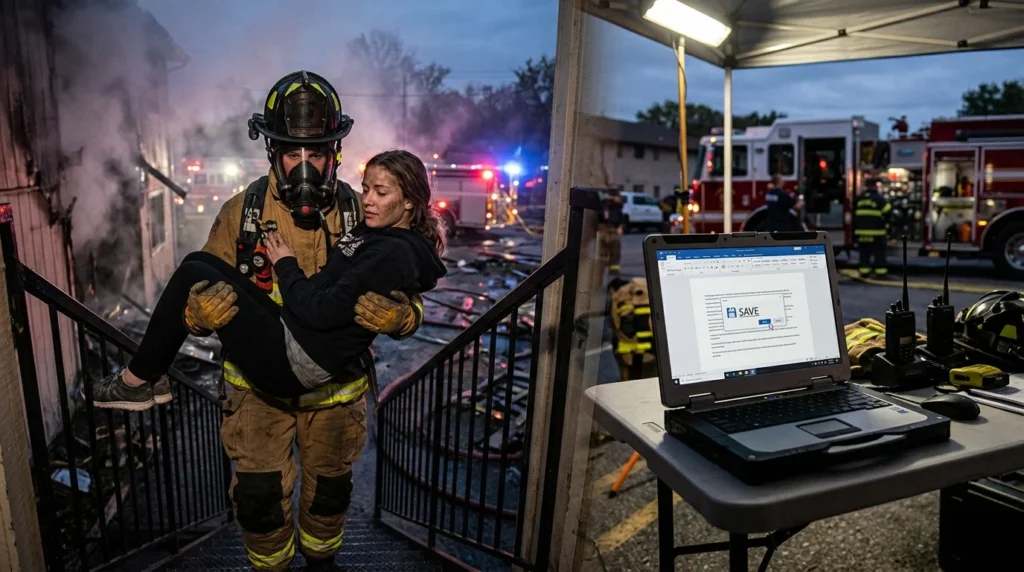
Use save when you are talking about an action involving rescue, preservation, storage, or avoiding loss. The exact meaning changes according to the context.
See Also:
Save Meaning “Rescue”
When save means rescue, it describes preventing someone or something from being harmed, injured, destroyed, or lost.
- The lifeguard saved the swimmer.
- The doctor saved his life.
- The firefighters saved the building from further damage.
- She jumped into the river to save the dog.
Save Meaning “Keep for Later”
Save can also mean keeping something so that you can use it later rather than using or discarding it immediately.
- I will save some cake for you.
- Please save this seat for me.
- She saved the message for later.
- We should save some time for questions.
Save Meaning “Store Information”
In computing, save means to store information so that it can be accessed later.
- Remember to save your work.
- Did you save the document?
- I forgot to save the changes.
- The application automatically saves your progress.
Save Meaning “Spend Less”
Save can also refer to keeping money rather than spending it. This usage is especially common when discussing financial goals.
- I am trying to save money.
- We need to save for a new car.
- This discount will help you save $20.
When to Use Safe

Use safe when describing a person, place, object, activity, or situation that is protected from danger or unlikely to cause harm.
See Also:
Safe for People
Safe can describe someone’s physical condition after a dangerous event or situation.
- Everyone is safe.
- Are you safe at home?
- The passengers arrived safe and sound.
Safe Places
Safe is commonly used to describe places where people are unlikely to experience danger.
- This neighborhood is generally considered safe.
- We found a safe place to stay.
- Keep the children in a safe area.
Safe to Eat, Drink, or Use
Safe is also common when discussing whether something can be consumed or used without significant danger.
- Is this food safe to eat?
- Is this water safe to drink?
- Is this product safe for children?
- The website is safe to use.
Save vs Safe: Correct and Incorrect Examples
| Incorrect | Correct | Why? |
|---|---|---|
| Please safe this file. | Please save this file. | Save means to store information. |
| Are you save? | Are you safe? | Safe describes a condition without danger. |
| I want to safe money. | I want to save money. | Save means to keep money rather than spend it. |
| The children are save. | The children are safe. | Safe is the adjective needed after “are.” |
| Can you safe my work? | Can you save my work? | Save is used for storing computer work. |
| This food is save to eat. | This food is safe to eat. | Safe means not dangerous. |
| He tried to safe the dog. | He tried to save the dog. | Save means rescue. |
| This is a save place. | This is a safe place. | Safe describes a place with little danger. |
| I need to safe this document. | I need to save this document. | Save is the correct verb for storing a document. |
| Stay save. | Stay safe. | Safe describes the condition you should remain in. |
Save Someone vs Keep Someone Safe
One common source of confusion is the difference between save someone and keep someone safe. They are related, but they do not mean exactly the same thing.
Save someone usually means rescuing them from an immediate or serious danger. Keep someone safe means protecting them from danger or taking steps to prevent harm.
- The lifeguard saved the swimmer from drowning.
- The lifeguard kept the children safe near the pool.
In the first sentence, the person is rescued from danger. In the second, protection is provided to prevent danger or harm.
See Also:
Save vs Safe in Everyday English
Both words are extremely common, but native speakers use them in clearly different grammatical patterns. Save normally appears as an action word: you save money, save a file, save time, or save a person. Safe normally appears as a description: a person is safe, a place is safe, or something is safe to use.
A useful test is to ask whether you are describing an action or a condition. If you are talking about doing something to prevent loss, rescue someone, or store something, you probably need save. If you are describing freedom from danger, you probably need safe.
Why Do People Confuse Save and Safe?
The confusion usually comes from their similar spelling and pronunciation. Both words begin with “sa” and contain the same vowel sound in many varieties of English. For learners, this can make them easy to mix up when writing quickly.
Another reason is that their meanings can appear together in the same sentence. For example, “Save the children and keep them safe” uses both words correctly. Because saving someone can make them safe, learners sometimes treat save and safe as interchangeable. They are connected in meaning, but their grammatical functions are different.
Save vs Safe: A Simple Memory Trick
Remember this simple rule:
- Save = do something.
- Safe = describe a condition.
- You save a file.
- You keep a file safe.
- You save a person from danger.
- The person is safe after being rescued.
If you can replace the word with rescue, store, or keep, you may need save. If you can replace it with protected or not in danger, you probably need safe.
Common Expressions with Save
- save money — keep money instead of spending it
- save time — reduce the amount of time needed
- save a file — store a computer file
- save someone’s life — prevent someone from dying
- save the day — solve a serious or difficult problem
- save energy — use less energy
- save space — use less physical or digital space
- save for later — keep something for future use
Common Expressions with Safe
- safe place — a place without significant danger
- safe journey — a journey completed without harm
- safe and sound — unharmed and in good condition
- play it safe — avoid unnecessary risk
- safe to eat — not dangerous to consume
- safe to use — not dangerous to use
- stay safe — remain protected from danger
- better safe than sorry — taking precautions is preferable to regretting a preventable problem
Save vs Safe in Different Sentences
| Sentence | Correct Word | Meaning |
|---|---|---|
| Remember to ___ the document. | save | Store the document. |
| Is this medicine ___? | safe | Not dangerous. |
| I need to ___ more money. | save | Keep money for future use. |
| Are the passengers ___? | safe | Not in danger. |
| The firefighter ___ the family. | saved | Rescued them. |
| Keep your valuables ___. | safe | Protected from harm or loss. |
Practice Quiz: Save or Safe?
Choose save or safe to complete each sentence.
- Please ___ the document before closing the program.
- Are you ___ after the storm?
- I am trying to ___ enough money for a vacation.
- Is this water ___ to drink?
- The rescue team helped ___ the hikers.
- Keep your passport in a ___ place.
- Remember to ___ your work frequently.
- The children are ___ inside the house.
Answers
- save
- safe
- save
- safe
- save
- safe
- save
- safe
Frequently Asked Questions
Is it save or safe?
Both save and safe are correct words, but they have different meanings. Save usually describes an action such as rescuing, storing, or keeping something. Safe describes a condition in which someone or something is protected from danger.
What is the difference between save and safe?
Save is commonly a verb meaning to rescue, store, preserve, or avoid spending something. Safe is mainly an adjective meaning protected from danger or harm.
Is “stay save” or “stay safe” correct?
Stay safe is correct. Safe is an adjective describing the condition you should remain in. “Stay save” is incorrect in standard English.
Is it “save money” or “safe money”?
Save money is correct when you mean keeping money rather than spending it. For example, “I am trying to save money for a new car.”
Is it “save file” or “safe file”?
Save file is correct when talking about storing a computer file. For example, “Please save the file before closing the application.”
Is “safe to eat” correct?
Yes. Safe to eat is a standard expression meaning that something can be eaten without significant danger. For example, “The food is safe to eat.”
Can save and safe be used interchangeably?
No. They have related meanings in some contexts, but they serve different grammatical purposes. Save generally refers to an action, while safe describes a condition of protection from danger.
Is “save and sound” correct?
No. The standard expression is safe and sound, meaning unharmed and in good condition. For example, “The children arrived home safe and sound.”
What does “save someone” mean?
“Save someone” usually means rescuing that person from danger, injury, death, or another serious problem. For example, “The lifeguard saved the swimmer.”
What does “keep someone safe” mean?
“Keep someone safe” means protecting someone from danger or taking measures to prevent harm. For example, “Parents try to keep their children safe.”
Quick Summary
Save and safe are not interchangeable. Save is commonly a verb used for actions such as rescuing someone, storing a file, keeping money, or preserving something for later. Safe is mainly an adjective used to describe someone or something that is protected from danger or harm. Remember the simple distinction: you save something, but something is safe. For example, “Save your work” is correct, while “Keep your work safe” describes protecting it. Learning this difference will help you avoid one of the most common spelling and word-choice mistakes in everyday English.
See Also:
NMMS Meaning In Text – What It Really Means & When to Use It