
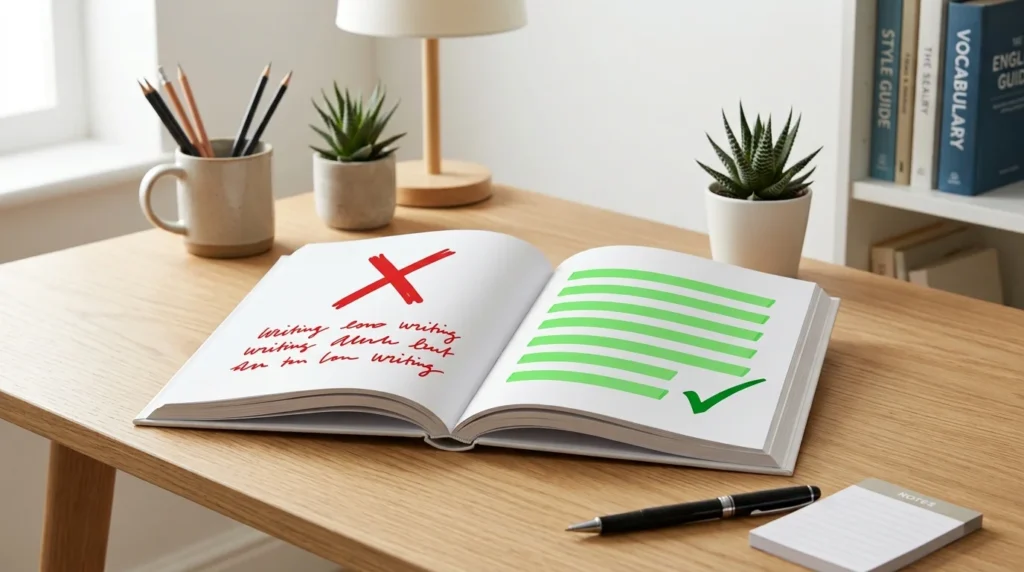

Quick Answer: So is the standard English word. It can mean “to such a degree,” “therefore,” or “in this way,” depending on the sentence. Soo is generally not a standard spelling of the word so. It may appear as a nonstandard, playful, exaggerated, or stylized spelling in informal online communication. In normal English writing, use so.
What Is the Difference Between Soo and So?
So is a standard English word with several meanings and grammatical functions. It can work as an adverb, conjunction, or part of a larger expression.
For example:
- The movie was so interesting.
- I was tired, so I went home.
- Please don’t do it so quickly.
- So, what happened next?
Soo, by contrast, is generally not the standard spelling when you mean the ordinary English word so. It is sometimes used intentionally in texting, social media, comments, and casual online writing to exaggerate pronunciation or emotion.
For example:
“I am soo tired!”
Here, the writer usually means “I am so tired!” but has deliberately repeated the vowel to make the emotion stronger.
Therefore, if you are writing an email, essay, article, assignment, business message, or other standard English text, so is the correct choice.
Why Does Soo vs So Matter?
This difference matters because informal internet spelling can look similar to standard English but does not necessarily belong to standard written English.
Someone might write:
“That was soo funny!”
The intended meaning is easy to understand, but soo is being used as a stylistic spelling rather than the standard form.
The distinction becomes especially important in professional or academic writing. A sentence such as:
“The results were soo surprising.”
should be written:
“The results were so surprising.”
The extra o does not create a new standard grammatical form of so.
The Core Rule

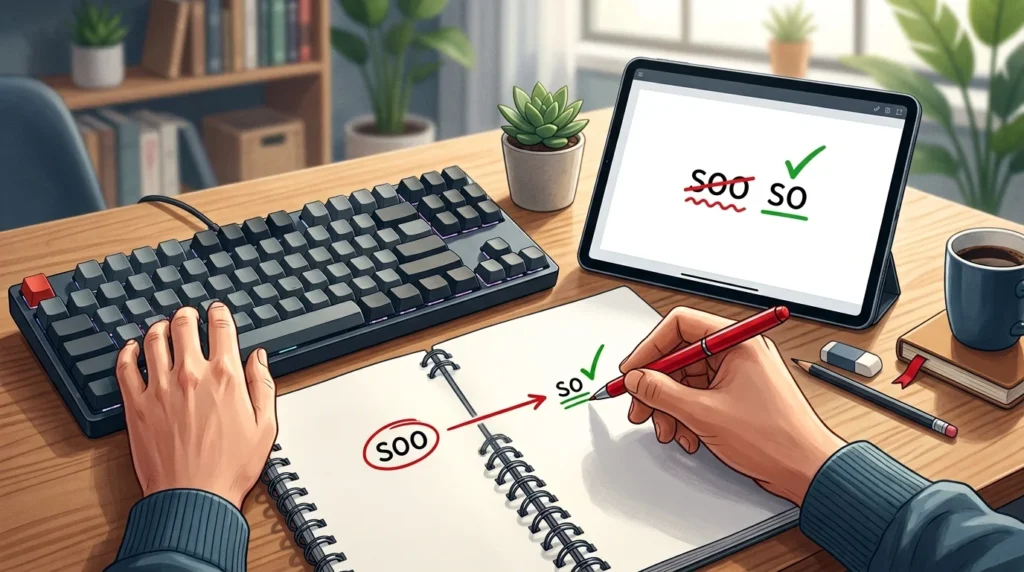
Use “so” in standard English. Use “soo” only when you intentionally want an informal, playful, exaggerated, or stylized spelling.
The easiest rule is:
Standard English = so
Informal stylization = soo
If you are unsure, choose so.
How to Use So
So to Mean “To a Great Degree”
One of the most common uses of so is to show a high degree or intensity.
Examples:
- The coffee is so hot.
- She was so happy.
- That book was so interesting.
- The children were so excited.
- It was so cold outside.
You can also use so before an adjective and that to show a result:
The road was so slippery that we had to drive slowly.
So to Show a Result
So can connect an action or situation with its result.
For example:
I missed the bus, so I walked home.
The first part explains the situation, and the second part gives the result.
More examples:
- It was raining, so we stayed inside.
- She studied hard, so she passed the exam.
- The store was closed, so we came back later.
So to Mean “In This Way”
So can also refer to a particular manner or way.
For example:
Don’t hold the box so.
You can also see this meaning in expressions such as:
If you do so, you may cause a problem.
Here, so means something like “in that way” or “as described.”
So at the Beginning of a Sentence
So is frequently used at the beginning of a sentence in conversation.
For example:
So, what are you going to do?
So, let’s start the meeting.
So, you’re saying that the plan has changed?
This use is completely normal in everyday English.
How Is Soo Used?
Soo is generally a stylized spelling rather than the standard spelling of so.
It commonly appears online when someone wants to exaggerate the pronunciation or emotional force of a word.
For example:
“That puppy is soo cute!”
Standard writing:
“That puppy is so cute!”
Another example:
“I’m soo excited!”
Standard writing:
“I’m so excited!”
The repeated vowel can communicate enthusiasm, exaggeration, or a deliberately casual tone.
Correct Examples of So
Everyday Conversation
“I am so tired today.”
Text Message
“That restaurant was so good!”
“Thank you so much for your help.”
Workplace
“The meeting was so productive.”
School Writing
“The experiment was so successful that the students repeated it.”
Academic Writing
“The difference was so significant that further analysis was required.”
Social Media
“This view is so beautiful.”
Giving a Result
“The weather changed, so we canceled the trip.”
Asking for Confirmation
“Is that so?”
Starting a Conversation
“So, what should we discuss first?”
Incorrect vs Correct: Soo and So
| Incorrect in Standard English | Correct | Why |
|---|---|---|
| I am soo tired. | I am so tired. | So is the standard spelling. |
| She is soo happy. | She is so happy. | The extra o is unnecessary. |
| It was soo cold. | It was so cold. | Standard English uses so. |
| Thank you soo much. | Thank you so much. | The conventional expression is so much. |
| He was soo surprised. | He was so surprised. | Soo is only a stylized spelling here. |
| The movie was soo good. | The movie was so good. | Use so in standard writing. |
| I soo want this. | I so want this. | Soo is not the standard form. |
| Soo, what happened? | So, what happened? | The standard sentence-opening form is so. |
| It was soo difficult that I stopped. | It was so difficult that I stopped. | The standard degree word is so. |
| I agree soo. | I agree so. | The standard spelling is so. |
Why Do People Write Soo Instead of So?
Pronunciation and Emphasis
When people speak, they may naturally stretch the vowel in so:
“That was soooo good!”
Online writers sometimes represent this stretched pronunciation through spelling.
Texting and Social Media
Informal digital communication encourages creative spelling. People may write:
- soo
- sooo
- sooooo
- soooooo
These forms are usually intended to add emotion rather than change the meaning.
Emotional Emphasis
Writing soo can make a sentence feel more exaggerated.
Compare:
“I am so excited!”
with:
“I am soo excited!”
The second version visually emphasizes the emotion.
Informal Style
People often bend standard spelling intentionally in texts, comments, captions, and memes. This does not mean the altered spelling is a new standard English word.
See Also:
YM Meaning in Text Explained – Full Guide, Definition, Uses & Examples
Common Mistakes With Soo and So
- Using “soo” in formal writing: Replace it with so.
- Assuming “soo” is an alternative standard spelling: It generally is not.
- Using online spelling in school assignments: Informal internet spellings should normally be avoided.
- Thinking extra letters change grammar: Adding another o usually changes style, not grammatical function.
- Confusing emphasis with correctness: A spelling can communicate emotion while still being nonstandard.
- Using “soo” in professional emails: Use so unless you have a specific stylistic reason not to.
Soo vs So in Real English
Grammatically Correct: “She is so happy.”
This is the standard form and works naturally in both casual and formal contexts. So modifies the adjective happy and expresses a high degree of happiness. It is appropriate in conversation, emails, schoolwork, professional writing, and other standard English contexts.
See Also:
LMY Meaning in Text Explained – Full Guide, Definition, Usage & Examples
Grammatically Possible but Nonstandard: “She is soo happy.”
Readers will usually understand this sentence immediately. However, soo is not the standard spelling of the degree word. In this context, it is better understood as an informal or expressive spelling. It can be appropriate when deliberately imitating casual online speech, but it should not replace so in standard writing.
Natural Everyday English: “That was so funny!”
This is a completely ordinary way to express a strong reaction in conversation or informal writing. English speakers also commonly extend the spelling informally, such as sooo funny, to imitate an exaggerated spoken pronunciation. That is a stylistic choice, not a different grammatical form.
Stylized Online English: “That was sooo funny!”
This spelling is intentionally exaggerated. The additional letters visually represent a stretched pronunciation and can add enthusiasm, sarcasm, excitement, or emphasis depending on context. It belongs to informal digital communication rather than conventional formal writing. The underlying standard word remains so.
American vs British English
There is no meaningful American-versus-British spelling difference between so and soo in this context.
Both American and British standard English use so.
For example:
- It was so interesting.
- She was so tired.
- I was so surprised.
- It was raining, so we stayed home.
Soo does not become a standard spelling simply because of the English variety being used.
See Also:
WLW Meaning in Text Messages – Simple Guide, Usage & Examples Explained
Formal vs Informal Usage
So works in both formal and informal English.
For example, formal writing can use:
The results were so significant that additional research was conducted.
Informal conversation can use:
I was so tired last night.
Soo, however, is generally associated with informal, expressive, or playful writing.
You might see:
“I am soo excited!!!”
in a text message or social-media comment.
In a professional email, academic paper, report, application, or formal article, use so.
Comparison Table: Soo vs So
| Feature | So | Soo |
|---|---|---|
| Standard English word | Yes | Generally no, in this meaning |
| Standard spelling | Yes | No |
| Formal writing | Appropriate | Avoid |
| Academic writing | Appropriate | Avoid |
| Business writing | Appropriate | Avoid |
| Texting | Appropriate | Possible as stylization |
| Social media | Appropriate | Possible as stylization |
| Expressive spelling | Can be extended as “sooo” | Common informal variation |
| Main purpose | Meaning and grammar | Informal emphasis or style |
| Recommended for normal writing | Yes | No |
Real-Life Situations
In a Professional Email
“Thank you so much for your quick response.”
Use so, because professional communication normally follows standard spelling.
In a Text Message
“I am so tired!”
Or, for deliberate exaggeration:
“I am soo tired!”
The second version is understandable as casual expressive spelling.
See Also:
In an Academic Essay
“The results were so consistent that the researchers conducted another test.”
Use so, not soo.
On Social Media
“This sunset is soo beautiful!”
The spelling soo may be intentionally used for emotional emphasis.
In a Job Application
“I am so interested in this position.”
Use the standard spelling so.
Is Soo a Word?
Soo can appear as a proper name, place name, abbreviation, or word in particular languages or specialized contexts. But when someone writes soo as an exaggerated version of the ordinary English word so, it is not the standard spelling.
The context therefore matters.
If your question is specifically about whether you should write:
“I am soo happy.”
in standard English, the answer is that you should write:
“I am so happy.”
See Also:
Is “Soo” Correct in Texting?
It can be acceptable as intentional informal spelling, but it is not the standard form.
Texting and social media often allow creative spellings that communicate tone or emotion.
For example:
“I miss you soo much!”
The reader understands the intended meaning, and the extra o adds emphasis.
However, if the message needs to follow standard English, write:
“I miss you so much!”
Can You Write “Sooo” Instead of “So”?
Yes, sooo can be used informally as an expressive spelling.
For example:
“That cake was sooo good!”
The extra letters suggest that the speaker is stretching the vowel for emphasis.
But sooo is still an informal stylistic spelling. It should not be treated as the standard spelling used in academic, professional, or formal writing.
What Is the Easiest Way to Remember Soo vs So?
Remember this simple rule:
“So” is standard; “soo” is style.
If you are writing something for school, work, a website, an application, or another formal context, choose so.
If you see soo, sooo, or soooo, think of it as an expressive internet spelling rather than a new standard form.
Practice Quiz: Soo or So?
Choose the correct form for each sentence.
- The movie was ______ interesting that I watched it twice. (soo / so)
- I am ______ excited about the trip! (soo / so)
- Thank you ______ much for helping me. (soo / so)
- It was raining, ______ we stayed home. (soo / so)
- The teacher was ______ helpful during the lesson. (soo / so)
- I am ______ tired after work today. (soo / so)
- The results were ______ impressive that everyone noticed them. (soo / so)
- ______ what should we do next? (Soo / So)
Answers
- so
- so
- so
- so
- so
- so
- so
- So
Frequently Asked Questions
Is “soo” grammatically correct?
As a spelling of the ordinary English word so, it is generally nonstandard. It can be intentionally used in informal digital communication to exaggerate pronunciation or emotion.
Is “so” the correct spelling?
Yes. So is the standard spelling in ordinary English.
Can I use “soo” in a text message?
You can use it as an informal stylistic choice. For example, “I am soo excited!” is understandable, but so remains the standard spelling.
Should I use “soo” in an essay?
No. Use so in a standard academic essay. The extra o is unnecessary and can make the writing look overly informal.
Is “soo” slang?
It is better described as an informal or stylized spelling rather than a standard slang word. Its meaning normally comes from the standard word so.
Why do people spell “so” as “soo”?
People may add an extra o to represent an exaggerated pronunciation, emotion, excitement, sarcasm, or playful tone.
Is “soo” more emphatic than “so”?
In informal writing, soo can visually suggest greater emphasis. However, the extra letter does not create a new grammatical degree of the word so.
Is “sooo” correct English?
It can be acceptable as deliberate informal or expressive spelling, especially in texting and social media. It is not the standard spelling used in formal English.
What should I write in a professional email: “soo” or “so”?
Use so. For example, write “Thank you so much”, not “Thank you soo much.”
Is “so” used the same way in American and British English?
Yes. There is no relevant standard American-British distinction here. So is the normal form in both varieties.
How can I remember the difference between soo and so?
Remember: “So” is standard; “soo” is style. When you are writing standard English, choose so.
Quick Summary
So is the correct standard English spelling when you mean the ordinary word used to express degree, result, manner, or agreement. Soo is generally not a standard spelling of that word. It may appear in texting, social media, comments, and other informal contexts as a playful or exaggerated spelling, especially when someone wants to show strong emotion. For example, “I am soo excited!” can be understood as an expressive version of “I am so excited!” However, use so in academic assignments, professional emails, business documents, applications, articles, and other standard writing. The easiest memory rule is simple: so = standard English; soo = informal stylization. When in doubt, always choose so.
See Also:
BSF Meaning in Text: Don’t Confuse It With BFF Today
GNG Meaning in Text: What It Means, How to Use It & Real Chat Examples
EVB Meaning in Text Explained – Full Guide, Definition, Usage & Examples