
In today’s digital world, communication is no longer limited to words only. People now use symbols, stickers, and emojis to express emotions in a faster and more visual way. That is why understanding emoji meaning in text has become very important for anyone who uses social media or messaging apps regularly.
If you have ever received a message filled with 😊, 😢, ❤️, or 🔥 and wondered what the sender really meant, you are not alone. Emojis may look simple, but they carry strong emotional meanings that can completely change the tone of a message.
In fact, emojis are now a universal language used across WhatsApp, Instagram, Snapchat, TikTok, and even emails. They help people express feelings like happiness, sadness, anger, love, sarcasm, or excitement without typing long sentences.
In this guide, we will explore everything about emojis in text communication, including their meanings, history, usage, examples, and social media relevance. By the end, you will clearly understand how emojis shape modern digital conversations.
Meaning & Definition
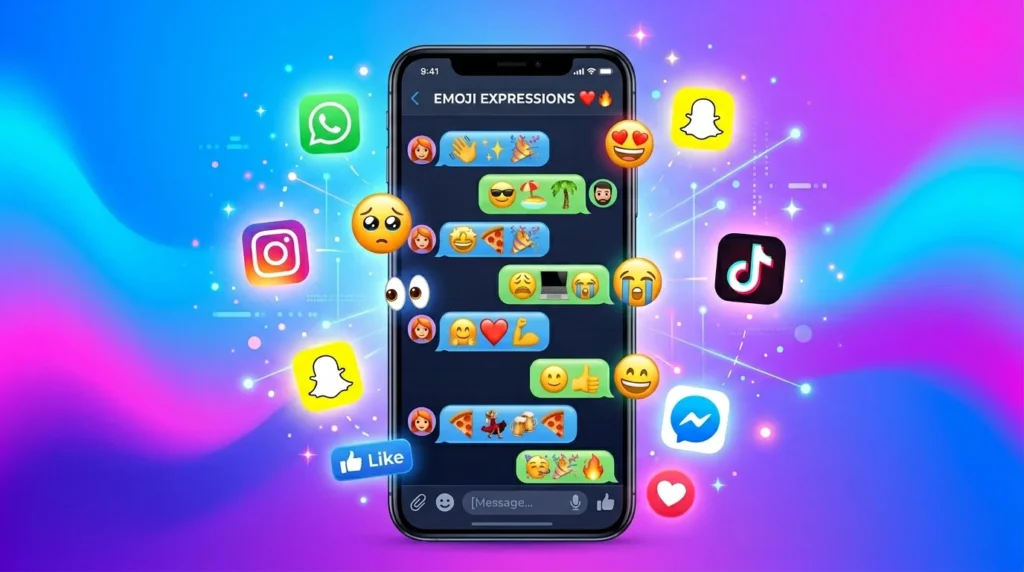
An emoji is a small digital icon or symbol used in text messages and online communication to express emotions, ideas, or reactions.
The most common meaning of emojis in text is to replace or support words with visual expressions. For example, a smiling face 😊 can represent happiness, while a crying face 😢 shows sadness.
Emojis are used to make messages more expressive, emotional, and easier to understand. Instead of writing long sentences, people can simply add an emoji to show how they feel.
In simple terms, emojis are visual shortcuts that help people communicate emotions quickly and clearly in digital conversations.
What Does Emoji Mean in Text?
In text messages, emoji means a visual symbol used to express emotions, reactions, or ideas instead of words.
Emojis help make conversations more emotional and engaging. They can completely change the meaning of a sentence depending on how they are used.
For example:
- “Okay 😊” → friendly and positive
- “Okay 😡” → angry or upset
So, emojis are used to add emotional context to text messages and make communication more expressive.
Background / Origin
Emojis originated in Japan in the late 1990s. The word “emoji” comes from Japanese, where “e” means picture and “moji” means character. The first emojis were created by Shigetaka Kurita in 1999 for mobile communication.
The idea was to create simple symbols that could express emotions quickly in digital messages. As mobile phones became more advanced, emojis spread globally and became a key part of online communication.
With the rise of smartphones and social media platforms like WhatsApp, Facebook, and Instagram, emojis became extremely popular worldwide. Today, they are used by billions of people every day.
Modern emoji sets now include thousands of symbols covering emotions, objects, activities, food, and even cultural expressions. They have become a universal digital language.
Usage in Different Contexts
General Usage
In everyday conversations, emojis are used to express emotions quickly and make messages more engaging. People use them in chats with friends, family, and social media followers to add tone and feeling to their words.
For example, a simple message like “thanks” becomes more warm and friendly when written as “thanks 😊”.
Formal vs Informal Use
Informal Use:
Emojis are widely used in casual communication, including texting, social media posts, and online chats. They make conversations more expressive and relatable.
Formal Use:
In professional communication such as emails, business messages, or official documents, emojis should be used carefully or avoided. Overusing them in formal settings can look unprofessional.
Emoji Meaning on Social Media Platforms
- WhatsApp:
Used in personal chats to express emotions, reactions, and tone in conversations. - Snapchat:
Frequently used in snaps and streak messages to show feelings or reactions quickly. - TikTok:
Used in comments to react to videos, trends, and emotional content. - Instagram:
Common in captions, comments, and DMs to express mood and personality.
Other Meanings in Different Fields
- Medical:
Emojis have no medical meaning but are sometimes used in mental health communication to express emotions. - Physics:
Emojis are not used in physics as scientific symbols. - Technology:
In technology, emojis are part of Unicode standards and digital communication systems.
Examples of Emoji Meaning in Text in Sentences
- Example 1: “I’m so happy today 😊” → shows happiness
- Example 2: “I missed you 😢” → shows sadness
- Example 3: “That’s amazing 🔥” → shows excitement
- Example 4: “Okay 👍” → shows agreement or approval
Common Misconceptions
- Misconception 1: Emojis always have one fixed meaning
→ False, meaning depends on context. - Misconception 2: Emojis are only for fun
→ Incorrect, they also express deep emotions. - Misconception 3: Emojis are unprofessional everywhere
→ Not always, they are acceptable in informal business chats.
Similar Terms & Alternatives
- Emoticons – Text-based facial expressions like 🙂
- Stickers – Larger expressive images used in chats
- GIFs – Animated reactions or expressions
- Symbols – Simple icons used in digital communication
- Reactions – Quick emoji responses on posts
How to Respond to Emoji Meaning in Text When Someone Uses It
When someone uses emojis in a message, your response should match the emotion they are expressing. Emojis are often used to add tone, so your reply should stay aligned with that feeling.
- Response 1: “😊 I’m glad!”
- Response 2: “👍 Got it!”
- Response 3: “That’s awesome 🔥 thank you!”
Difference Between Emoji Meaning in Text and Similar Terms
Emojis are different from emoticons and stickers because they are standardized visual symbols supported across all devices. Emoticons are made using keyboard characters like 🙂 or :D, while emojis are colorful icons. Stickers and GIFs are more detailed, but emojis are simpler and universally understood, making them the most commonly used form of digital expression.
Relevance in Online Conversations & Dating Apps
In modern communication, emojis play a major role in expressing emotions quickly and clearly. On dating apps, emojis help users show personality, interest, and emotional tone without using long sentences. A simple emoji like ❤️ or 😊 can change the meaning of a message completely.
On social media platforms, emojis are used to increase engagement and make posts more attractive. They help users express feelings like love, excitement, humor, or sadness in a visually appealing way.
However, overusing emojis can sometimes confuse the message, so they should be used carefully depending on the context. Overall, emojis have become an essential part of digital communication, making conversations more expressive and human-like.
Frequently Asked Questions
What does emoji mean in text?
Emoji is a visual symbol used to express emotions in messages.
Where are emojis used most?
They are widely used on WhatsApp, Instagram, Snapchat, and TikTok.
Do emojis have fixed meanings?
No, their meaning depends on context.
Are emojis formal or informal?
They are mostly informal but sometimes used in semi-formal chats.
Who created emojis?
Emojis were created in Japan by Shigetaka Kurita in 1999.
Why are emojis important?
They help express emotions quickly and improve digital communication.
Conclusion
In conclusion, understanding emoji meaning in text is essential in today’s digital communication world. Emojis are simple yet powerful visual symbols that help people express emotions, reactions, and ideas instantly without using long sentences. From happiness 😊 to sadness 😢 or excitement 🔥, emojis add emotion and clarity to everyday conversations.
They are widely used across messaging apps and social media platforms, making communication more engaging, expressive, and human-like. Although they are mainly used in informal communication, they have become a universal language understood across cultures and age groups.
As digital communication continues to grow, emojis will remain a key part of how people interact online. Learning their meanings helps you understand messages better, respond correctly, and stay connected with modern communication trends in a simple and effective way.
See Also:
WYFF Meaning in Text: What It Means & How to Reply
LGHT Meaning in Text Explained (Light Meaning or Typo?)
JT Meaning in Text Explained Simply – Definition, Examples & Online Usage