


If you have ever received a simple “K” in a text message, you probably paused for a second and wondered what it actually meant. Was the person angry? Were they busy? Or were they simply saying “okay” in a short way? In modern online communication, even a single letter can completely change the tone of a conversation. That is why understanding the K meaning in text is more important than many people think.
The letter “K” is one of the most commonly used texting abbreviations on social media platforms, messaging apps, and online chats. Some people use it casually without any hidden meaning, while others use it to sound cold, serious, or uninterested. The meaning often depends on the context, the relationship between the people chatting, and the tone of the conversation.
In this complete guide, you will learn what “K” really means in texting, where it came from, how it is used on different platforms, common misunderstandings, examples, replies, and much more. By the end, you will understand exactly how to interpret and use “K” in online communication.
Meaning & Definition
The term “K” in text is a short form of the word “Okay.” People use it in text messages, social media chats, and online conversations to quickly acknowledge a message or show agreement.
For example, if someone says, “I’ll call you later,” another person may simply reply with “K,” meaning “Okay.” It is one of the shortest responses used in digital communication and is popular because it saves time and typing effort.
However, the tone of “K” can vary depending on the situation. Sometimes it sounds friendly and casual, while in other cases it may appear cold, annoyed, or uninterested. Because texting lacks facial expressions and voice tone, many people try to interpret emotional meaning from short replies like “K.”
Even though it is only one letter, “K” has become a major part of internet slang and modern texting culture.
What Does K Meaning in Text?
In text messaging, K usually means “Okay.” It is a quick way to confirm, acknowledge, or respond to a message.
Example:
- “See you at 8.” → “K”
- “Don’t forget the homework.” → “K thanks”
Depending on the tone and context, “K” can sound neutral, casual, annoyed, or dismissive.
Background / Origin
The use of “K” as a shortened form of “Okay” started long before social media became popular. The word “okay” itself has existed for many years and became one of the most widely used expressions in the English language. As technology evolved and texting became common, people naturally looked for faster ways to communicate. This led to shortened versions like “ok,” “kk,” and eventually just “K.”
During the early days of mobile phones, texting often had character limits, and typing on small keypads took more time. Users began shortening words wherever possible to type faster and save space. “K” became an easy and efficient response because it required only one letter while still conveying understanding or agreement.
Over time, internet culture added emotional meaning to short replies. Unlike “okay,” which feels more complete and friendly, “K” sometimes appeared more abrupt. Because of this, many people started associating “K” with annoyance, sarcasm, or emotional distance in certain conversations.
Today, “K” is deeply connected to texting culture and social media communication. It remains one of the most recognized internet abbreviations worldwide.
Usage in Different Contexts
General Usage
In everyday conversations, “K” is mainly used as a quick acknowledgment. People send it when they understand a message, agree with something, or want to end a conversation quickly. Since modern texting focuses on speed and convenience, short replies like “K” have become extremely common.
For example, if a friend texts, “I’m outside,” replying with “K” simply confirms that you understood the message. Similarly, in group chats, users often send “K” when responding quickly without typing full sentences.
The tone can vary depending on the relationship between the people chatting. Between close friends, “K” may feel completely normal and casual. However, in emotional conversations, it can sometimes seem cold or distant because it lacks warmth and detail.
People also use different versions such as:
- Kk
- Okay
- Ok
- Oki
- Kay
Each variation creates a slightly different tone in conversation.
Formal vs Informal Usage
“K” is highly informal and mainly belongs to casual digital communication. It is commonly used between friends, siblings, classmates, gaming communities, and social media users. On platforms like Snapchat and WhatsApp, quick one-letter responses are considered normal because conversations move very fast.
However, “K” is usually inappropriate in professional or formal communication. In business emails, workplace chats, academic discussions, or customer service conversations, using “Okay” instead of “K” sounds more respectful and professional.
For example:
- Informal: “K, I’ll be there soon.”
- Formal: “Okay, I understand the instructions.”
The choice between “K” and “Okay” often depends on tone. Using “K” in serious conversations may unintentionally make someone feel ignored or dismissed. That is why understanding context is very important when using texting abbreviations.
K Meaning on Social Media Platforms
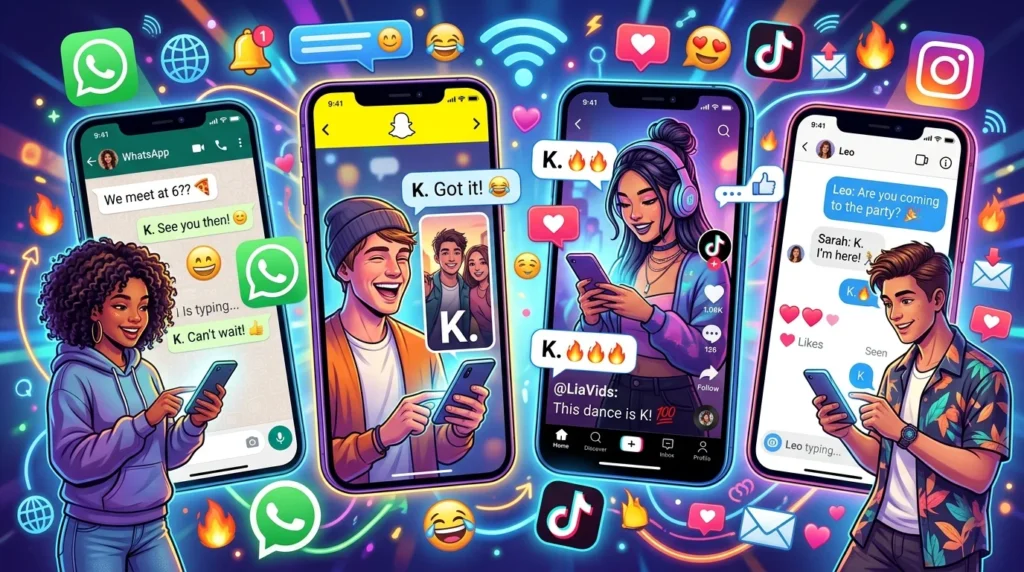
- WhatsApp → On WhatsApp, “K” is mostly used for quick acknowledgments in chats and group conversations. Depending on the tone, it can feel casual or slightly cold.
- Snapchat → On Snapchat, “K” often appears in fast conversations where users respond quickly to snaps and messages. Teenagers commonly use it as a short confirmation.
- TikTok → On TikTok, “K” may appear in comments or replies to express agreement, sarcasm, or disinterest depending on the context of the discussion.
- Instagram → On Instagram, users use “K” in direct messages and comments for short replies. It is commonly seen in casual conversations between friends.
Other Meanings in Different Fields
Although “K” usually means “Okay” in texting, it also has different meanings in various industries and subjects.
- Medical → In medicine, “K” often represents Potassium, an important mineral in the human body.
- Physics → In physics, “K” is commonly used as the symbol for Kelvin, a temperature measurement unit.
- Technology → In technology, “K” can stand for Kilobyte or represent one thousand units, such as 10K followers.
Examples of K Meaning in Text in Sentences
- Example 1:
Friend: “Movie starts at 7.”
You: “K, I’m on my way.” - Example 2:
Mom: “Buy milk while coming home.”
You: “K got it.” - Example 3:
Friend: “You seem upset.”
You: “K…” - Example 4:
Teammate: “Meeting moved to tomorrow.”
You: “K thanks for telling me.”
Common Misconceptions
- Misconception 1 → Many people think “K” always means anger. In reality, it is often just a fast response with no emotional meaning.
- Misconception 2 → Some users believe “K” is rude. It can feel rude in certain situations, but context and tone matter greatly.
- Misconception 3 → People assume everyone interprets “K” the same way. Different generations and online communities understand it differently.
Similar Terms & Alternatives
- OK – Standard acknowledgment
- Okay – Full and more polite version
- KK – Friendly or playful agreement
- Sure – Expresses confirmation
- Got it – Shows understanding
- Alright – Casual agreement
- Bet – Modern slang for agreement
How to Respond to K Meaning in Text When Someone Uses It
When someone replies with “K,” your response should depend on the tone of the conversation. In normal situations, “K” simply means they understood your message. However, if the reply feels cold or distant, you may want to continue the conversation carefully.
Possible responses include:
- “Great, see you later.”
- “Thanks for confirming.”
- “Okay sounds good.”
- “Cool.”
- “Talk soon.”
- “Got it.”
These replies help keep the conversation natural and comfortable.
Difference Between K Meaning in Text and Similar Terms
“K” is similar to terms like “OK,” “KK,” and “Alright,” but the tone changes slightly with each one. “Okay” sounds complete and polite, while “K” feels shorter and faster. “KK” often sounds friendlier and more cheerful compared to a plain “K.”
For example:
- K → Quick acknowledgment
- Okay → Neutral and polite
- KK → Friendly confirmation
- Bet → Excited agreement
The biggest difference is emotional tone. Short replies like “K” can sometimes feel emotionally distant if the context is serious.
Relevance in Online Conversations & Dating Apps
In modern digital communication, short responses are extremely common because people prefer fast and efficient conversations. The letter “K” has become part of internet culture because it allows users to respond instantly without typing full words. On messaging apps, social media platforms, and dating apps, speed often matters more than grammar or complete sentences.
On dating apps, “K” can sometimes create confusion because tone is difficult to understand through text alone. If someone responds with “K” repeatedly, the other person may think they are uninterested or bored. However, many users simply type quickly and do not intend any negative emotion. Context plays a major role in understanding the message correctly.
In gaming chats and online communities, “K” is extremely popular because conversations move rapidly. Players often use it to confirm instructions or respond quickly during gameplay. Similarly, on Snapchat and TikTok, users rely heavily on abbreviations to keep communication casual and modern.
As online language continues evolving, “K” remains one of the most recognized and frequently used texting abbreviations worldwide.
Frequently Asked Questions
What does K mean in texting?
In texting, “K” usually means “Okay.”
Is K rude in text messages?
Not always. It can sound rude depending on the context and tone of the conversation.
What does K mean from a girl or guy?
Usually, it still means “Okay,” but tone and relationship context matter.
Is K different from OK?
Yes. “K” feels shorter and sometimes colder than “OK.”
Why do people use K instead of Okay?
People use “K” because it is faster and easier to type.
What does KK mean compared to K?
“KK” usually sounds friendlier and more positive than a single “K.”
Conclusion
Understanding the K meaning in text is important because even a single letter can affect how a message is interpreted online. In most cases, “K” simply means “Okay” and is used as a quick acknowledgment in text messages, social media chats, and online conversations. However, because texting lacks facial expressions and voice tone, people often interpret emotional meaning from short replies. Depending on the situation, “K” can sound casual, neutral, cold, or even slightly annoyed.
The abbreviation became popular due to fast-paced digital communication and continues to be widely used across platforms like WhatsApp, Snapchat, TikTok, Instagram, and dating apps. While it works perfectly in informal chats, using “Okay” in professional conversations is usually a better choice. Understanding the context behind “K” helps avoid misunderstandings and improves online communication. As internet slang evolves, simple abbreviations like “K” will likely remain a major part of modern texting culture for years to come.
Also Read:
ARD Meaning in Text Explained – Snapchat, TikTok & Chat Meaning
FWY Meaning in Text – Full Slang Breakdown You Need to Know
IMU Meaning in Text Revealed: Hidden Meaning Explained Simply