
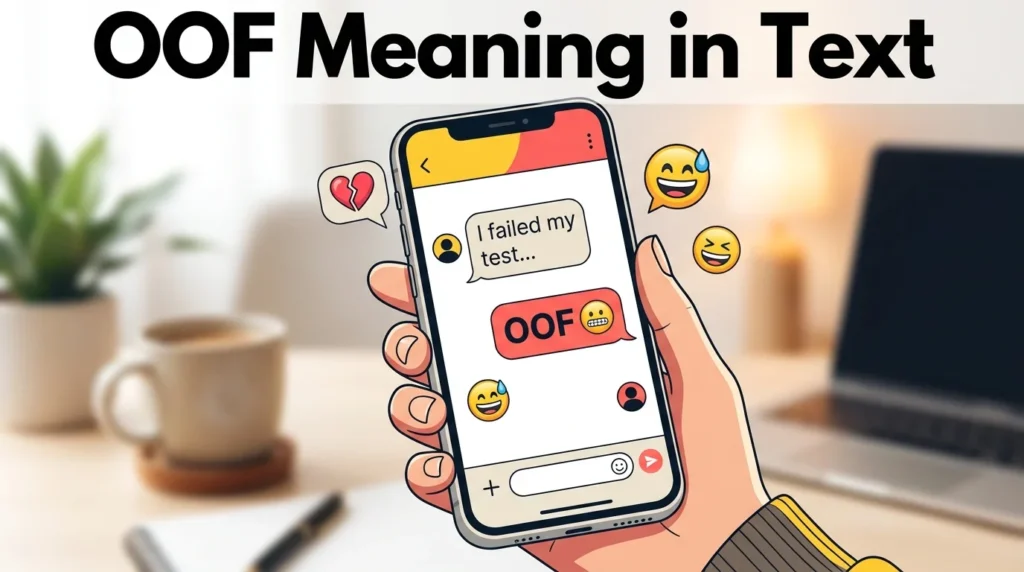

You’ve probably seen someone reply with just “oof” in a chat and wondered—what does that even mean? It’s short, simple, and looks almost meaningless at first glance, but it actually carries a lot of emotion. The OOF meaning in text has become a popular way to react to awkward, painful, or surprising situations online.
Whether someone fails at something, shares bad news, or says something cringe-worthy, “oof” fits perfectly as a quick reaction. It saves time while still expressing how you feel. But here’s the interesting part—it can mean different things depending on the situation and tone. That’s why understanding it properly matters. In this guide, you’ll learn the exact meaning of “oof,” where it came from, how people use it across platforms, and how you should respond in real conversations.
Meaning & Definition
The OOF meaning in text is a reaction used to express discomfort, sympathy, disappointment, or mild shock. It is often used when something awkward, painful, or unfortunate happens.
Unlike full sentences, “oof” works as a quick emotional response. It can show that you feel bad for someone, that something went wrong, or that a situation is embarrassing.
For example, if someone says they failed an exam, replying with “oof” shows sympathy without needing a long message.
Overall, “oof” is a flexible slang term that helps express emotions quickly in digital conversations.
What Does OOF Meaning in Text?
OOF in text means a quick reaction to something awkward, painful, or unfortunate. It expresses sympathy, discomfort, or mild shock in a short and simple way.
Background / Origin
The term “oof” is not entirely new. It originally comes from natural human sounds people make when they feel sudden pain or discomfort. Over time, this sound became part of online language.
Its popularity grew significantly through internet culture, especially gaming communities. One major influence was the game Roblox, where a character would make an “oof” sound when defeated. This sound became widely recognized and eventually turned into a meme.
As memes spread across platforms, people began using “oof” in text conversations to react to situations that felt emotionally similar—like failure, embarrassment, or disappointment.
Today, “oof” is widely used across social media and messaging apps. It has evolved from a simple sound into a versatile digital expression that captures emotions quickly and effectively.
Usage in Different Contexts
General Usage
The OOF meaning in text is commonly used as a reaction rather than a full statement. People use it when they want to respond quickly to something unfortunate or awkward. It works well in casual conversations where long explanations are not needed. For example, if a friend shares bad news or a funny fail moment, replying with “oof” shows that you understand the situation. It can also be used humorously when something mildly embarrassing happens. The tone depends on context, but it usually carries a sense of empathy or reaction.
Formal vs Informal Usage
“OOF” is strictly informal and should only be used in casual communication. It is perfect for texting, chatting with friends, or commenting on social media. However, in formal settings like emails, reports, or professional communication, it is not appropriate.
Using “oof” in formal writing may seem unprofessional or unclear. Instead, proper words like “unfortunate” or “disappointing” should be used. In informal contexts, though, “oof” adds personality and emotion to conversations, making them feel more natural and relatable.
OOF Meaning on Social Media Platforms
- WhatsApp → Used in chats to react quickly to bad news or awkward situations.
- Snapchat → Common in snaps or replies to show a quick emotional reaction.
- TikTok → Frequently used in comments when reacting to fails or cringe moments.
- Instagram → Seen in comments and DMs as a short reaction to posts or stories.
Other Meanings in Different Fields
- Medical → Not a standard medical term; used only informally.
- Physics → No official meaning in physics.
- Technology → Sometimes used humorously in tech communities, but not technical.
Examples of OOF Meaning in Text in Sentences
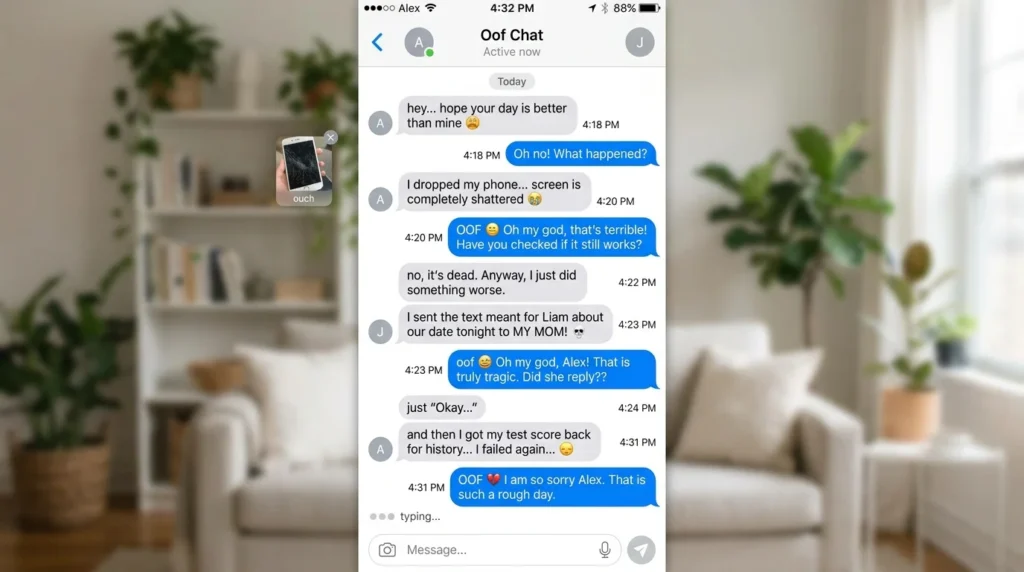
- Example 1:
“I failed my driving test today.”
“Oof, that’s tough 😅”
(Shows sympathy.) - Example 2:
“I sent the message to the wrong person…”
“OOF 😬”
(Reacting to embarrassment.) - Example 3:
“My phone fell and cracked.”
“Oof, that hurts 💔”
(Expressing discomfort.) - Example 4:
“I tripped in front of everyone.”
“OOF 😂”
(Mix of humor and reaction.)
Common Misconceptions
- Misconception 1:
Some think “oof” always means something serious, but it can be used humorously too. - Misconception 2:
Others believe it is rude, but it is usually neutral or empathetic. - Misconception 3:
Many assume it has only one meaning, but it depends on context.
Similar Terms & Alternatives
- Yikes – Expresses shock or discomfort
- Ouch – Indicates pain or sympathy
- Bruh – Reaction to something surprising
- Wow – General reaction
- That’s rough – Shows empathy
How to Respond to OOF Meaning in Text When Someone Uses It
When someone says “oof,” they are reacting to a situation you shared. Your response should match the tone of the conversation.
- Response 1: “Yeah, it really sucked 😅”
- Response 2: “I know right!”
- Response 3: “It was pretty embarrassing 😂”
Difference Between OOF Meaning in Text and Similar Terms
The OOF meaning in text stands out because it is short and flexible. Unlike “ouch,” which focuses on pain, or “yikes,” which highlights shock, “oof” can cover both emotions at once.
For example, “yikes” often feels more surprised, while “oof” feels more empathetic. Similarly, “bruh” is more casual and sometimes humorous, while “oof” carries a slightly more emotional reaction.
This flexibility makes “oof” a popular choice in online conversations where quick and clear reactions are needed.
Relevance in Online Conversations & Dating Apps
In modern communication, speed and emotional clarity are very important. The OOF meaning in text fits perfectly into this style of communication because it allows users to express reactions instantly without typing long messages.
On social media, “oof” is widely used in comments and replies, especially when reacting to fails, awkward moments, or surprising content. It helps users engage quickly while still showing emotion.
In dating apps, “oof” can be used carefully to react to something unexpected or slightly awkward in conversation. It can lighten the mood and make interactions feel more natural. However, it should be used in a friendly way to avoid misunderstandings.
Overall, “oof” reflects how digital language has evolved to become faster, simpler, and more expressive. It allows people to connect emotionally in just one word, making it a valuable part of modern online communication.
Frequently Asked Questions
What does OOF mean in texting?
OOF means a reaction to something awkward, painful, or unfortunate.
Is OOF rude?
No, it is usually neutral or empathetic.
Can OOF be funny?
Yes, it is often used humorously.
Where did OOF come from?
It became popular through gaming and internet culture.
Is OOF formal?
No, it is informal slang.
How should I reply to OOF?
Respond naturally based on the situation and tone.
Conclusion
The OOF meaning in text may seem simple, but it carries a wide range of emotions in just one word. From expressing sympathy and discomfort to reacting humorously to awkward situations, oof has become a powerful part of modern digital communication.
Its flexibility and simplicity make it easy to use across different platforms and conversations. Whether you are chatting with friends, commenting on social media, or reacting to a situation online, understanding how to use “oof” correctly can help you communicate more effectively. As online language continues to evolve, small expressions like “oof” show how people adapt to faster and more expressive ways of connecting.
Also Read:
LUV Meaning in Text Explained – Is It Love or Just Casual?
KYS Meaning in Text – Real Meaning, Risks & Better Alternatives