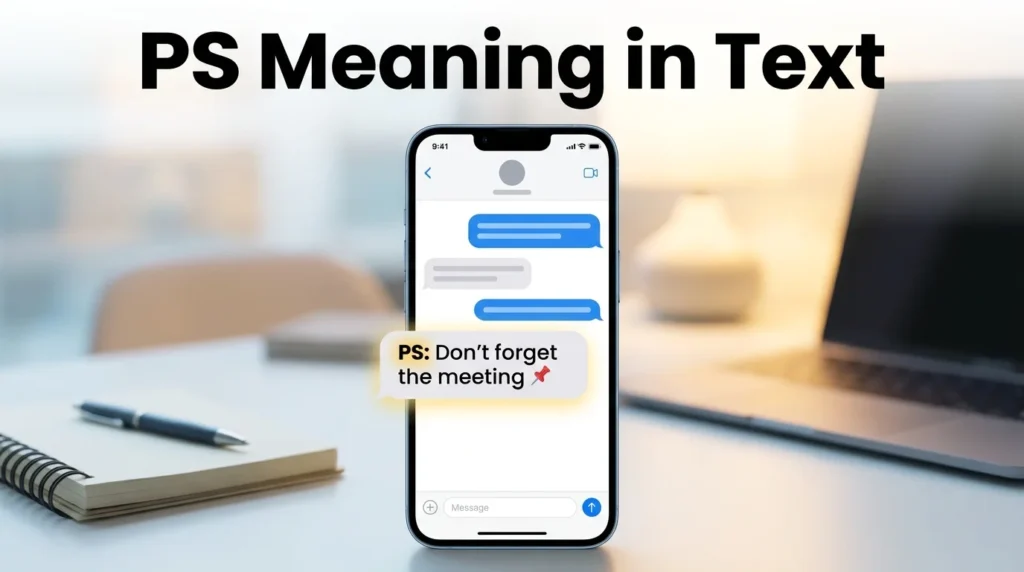

You’re reading a message, and at the end, you notice something like “PS: Don’t forget the meeting.” It feels familiar, but you pause—what exactly does it mean in texting today? In the fast world of digital communication, abbreviations like PS meaning in text are still widely used, even though they come from much older writing traditions. Unlike modern slang, “PS” carries a mix of classic and casual tone, making it unique in conversations.
Sometimes it adds extra information, sometimes it changes the tone of the message, and other times it simply feels like an afterthought. If you don’t fully understand how it works, you might miss its purpose or use it incorrectly. In this guide, you’ll learn everything about “PS,” from its meaning and origin to how it’s used in texts, social media, and everyday conversations—so you can use it naturally and confidently.
Meaning & Definition
The PS meaning in text most commonly stands for “Postscript.” It is used to add extra information at the end of a message after the main content has already been written.
In simple terms, “PS” is like saying, “Oh, and one more thing.” It allows the sender to include an additional thought without rewriting the whole message.
For example, someone might write: “See you tomorrow. PS: Bring your notes.” This shows that the main message is complete, but there’s something important to add.
Even though it comes from formal writing, “PS” is now widely used in casual texting, emails, and social media to add extra context, reminders, or emphasis.
What Does PS Meaning in Text?
PS in text means Postscript. It is used to add extra information or a final thought at the end of a message.
Background / Origin
The origin of “PS” comes from traditional letter writing, long before texting or digital communication existed. It is derived from the Latin word post scriptum, which means “written after.” In the past, people used “PS” when they forgot to include something in their letter and didn’t want to rewrite the entire message. Instead, they would simply add a note at the end.
Over time, “PS” became a standard part of written communication, especially in letters, emails, and formal documents. Even as communication moved into digital formats, the abbreviation remained popular because of its usefulness.
Today, “PS” is used not only for forgotten information but also for emphasis, humor, or adding a personal touch. It has successfully transitioned from formal writing into casual texting and online conversations, making it one of the few classic abbreviations still widely used in modern communication.
Usage in Different Contexts
General Usage
The PS meaning in text is mainly used to add extra information after the main message. It acts as a quick way to include something important without rewriting the entire message. For example, someone might send a message about plans and then add a “PS” to include a reminder or additional detail. It can also be used for emphasis, such as highlighting something the sender really wants the reader to notice.
In casual texting, “PS” often feels friendly and conversational, almost like adding a side note. It can also be used creatively, such as adding humor or making a message more engaging. Overall, its flexibility makes it useful in many types of conversations.
Formal vs Informal Usage
In formal communication, such as emails or professional writing, “PS” is used carefully to add important information or a polite reminder. It keeps the message organized without disrupting the main content. In informal communication, like texting or chatting with friends, “PS” is used more freely and creatively.
It can add humor, emotion, or even a casual afterthought. For example, someone might use it to add a funny comment at the end of a message. While it works well in both contexts, the tone changes depending on how it is used. In formal settings, it feels structured and purposeful, while in informal settings, it feels relaxed and expressive.
P.S Meaning on Social Media Platforms
- WhatsApp → Used to add extra details or reminders at the end of messages.
- Snapchat → Appears in captions or chats as a quick afterthought or extra note.
- TikTok → Used in captions to include additional context or hidden messages.
- Instagram → Common in posts and DMs to add personal notes or extra thoughts.
Other Meanings in Different Fields
- Medical → “PS” can stand for Postscript or refer to specific medical abbreviations depending on context.
- Physics → “PS” may refer to Picosecond, a unit of time.
- Technology → “PS” can mean Power Supply or Photoshop depending on context.
Examples of PS Meaning in Text in Sentences
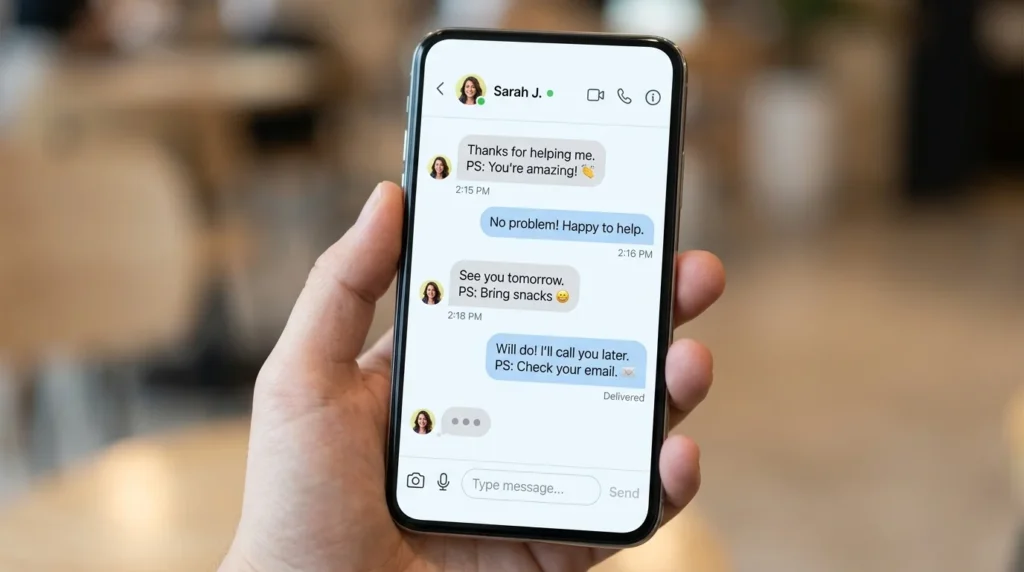
- Example 1:
“I’ll call you later. PS: Don’t forget the meeting.”
(Adding a reminder.) - Example 2:
“That movie was amazing! PS: We should watch it again.”
(Adding a suggestion.) - Example 3:
“Thanks for helping me today. PS: You’re the best!”
(Adding appreciation.) - Example 4:
“See you tomorrow. PS: Bring snacks 😄”
(Adding a fun detail.)
Common Misconceptions
- Misconception 1:
Some people think “PS” is outdated, but it is still widely used. - Misconception 2:
Others assume it is only for formal writing, but it works in casual texts too. - Misconception 3:
Many believe it only means forgotten information, but it can also add emphasis or personality.
Similar Terms & Alternatives
- BTW – By the way
- Also – Adding extra information
- FYI – For your information
- One more thing – Informal phrase
- Note – Formal alternative
How to Respond to PS Meaning in Text When Someone Uses It
When someone uses “PS,” they are adding extra information or emphasis to their message. Your response should acknowledge that addition naturally.
- Response 1: “Got it, thanks for the reminder!”
- Response 2: “Okay, I’ll keep that in mind.”
- Response 3: “Haha, noted 😄”
Difference Between PS Meaning in Text and Similar Terms
The PS meaning in text is different from similar terms because it is placed at the end of a message and acts as an additional note.
For example, “BTW” is used within a sentence to add information, while “PS” comes after the main message is complete.
Similarly, “FYI” provides information directly, while “PS” feels more like a personal or optional addition.
Understanding these differences helps you use each term correctly depending on the structure and tone of your message.
Relevance in Online Conversations & Dating Apps
In modern communication, especially online, adding personality and clarity is very important. “PS” helps people include extra thoughts without making messages too long.
On dating apps, using “PS” can make messages feel more engaging and personal. It adds a friendly tone and shows attention to detail.
In general chats, it keeps conversations organized while allowing for additional comments or reminders.
As digital communication continues to evolve, “PS” remains relevant because it balances clarity, structure, and creativity in messaging.
Frequently Asked Questions
What does PS mean in texting?
PS means “Postscript,” used to add extra information.
Is PS still used today?
Yes, it is commonly used in both formal and casual communication.
Can PS be used in texting?
Yes, it is widely used in casual conversations.
What is the difference between PS and BTW?
PS is used at the end, while BTW is used within a sentence.
Is PS formal or informal?
It can be both, depending on context.
How should I reply to PS?
Acknowledge the additional information naturally.
Conclusion
The PS meaning in text is a simple yet powerful tool that has remained relevant from traditional writing to modern digital communication. Most commonly meaning “Postscript,” it allows people to add extra information, reminders, or personal thoughts at the end of a message without disrupting the main content. Its flexibility makes it useful in both formal and informal settings, from professional emails to casual chats.
Understanding how and when to use “PS” helps you communicate more clearly and effectively while adding a touch of personality to your messages. As communication continues to evolve, “PS” stands as a perfect example of how classic language adapts to modern needs, making conversations more organized, expressive, and engaging.
Also Read:
STTM Meaning in Text Explained – Is It a Happy Reaction?
DWU Meaning in Text Explained – Is It Polite or Something Else?