
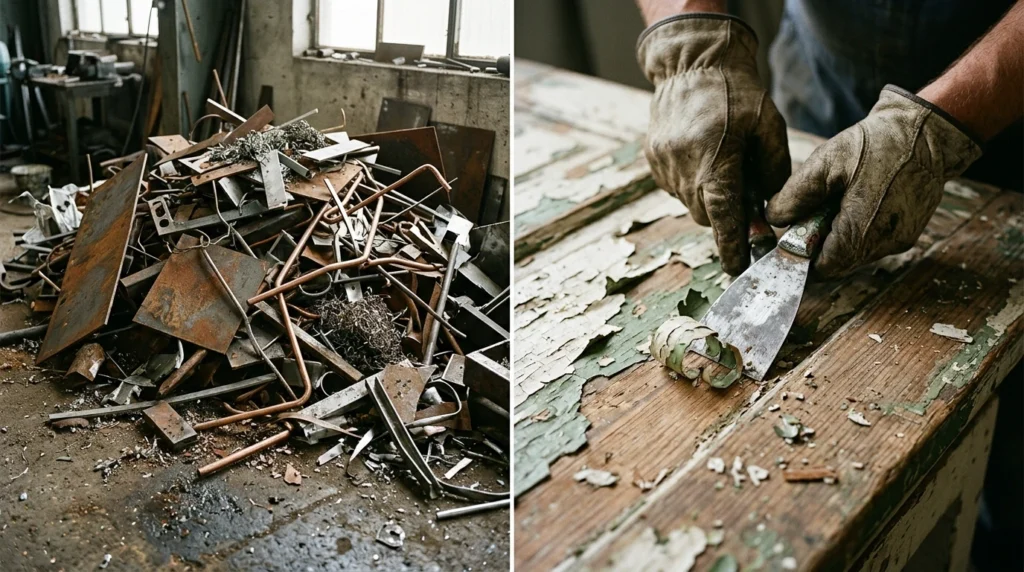

Quick Answer: Both scrap and scrape are correct English words, but they have different meanings. Scrap means discarded material, a leftover piece, or abandoning something. Scrape means rubbing, scratching, or removing something from a surface. The correct word depends on the meaning of your sentence.
Scrap vs. Scrape: The Main Difference
The main difference between scrap and scrape is how each word is used. Scrap is commonly associated with waste materials, leftovers, or canceling plans. Scrape describes rubbing an object against a surface, removing a substance, or causing a scratch.
| Feature | Scrap | Scrape |
|---|---|---|
| Meaning | Discarded material, leftover piece, or canceling something | To rub, scratch, or remove something from a surface |
| Part of speech | Noun and verb | Noun and verb |
| Examples | Scrap metal, scrap paper, scrap a project | Scrape a pan, scrape your knee, scrape off paint |
| Past tense | Scrapped | Scraped |
Easy rule: Use scrap when you mean discard or cancel. Use scrape when you mean rub, scratch, or remove something from a surface.
What Does Scrap Mean?
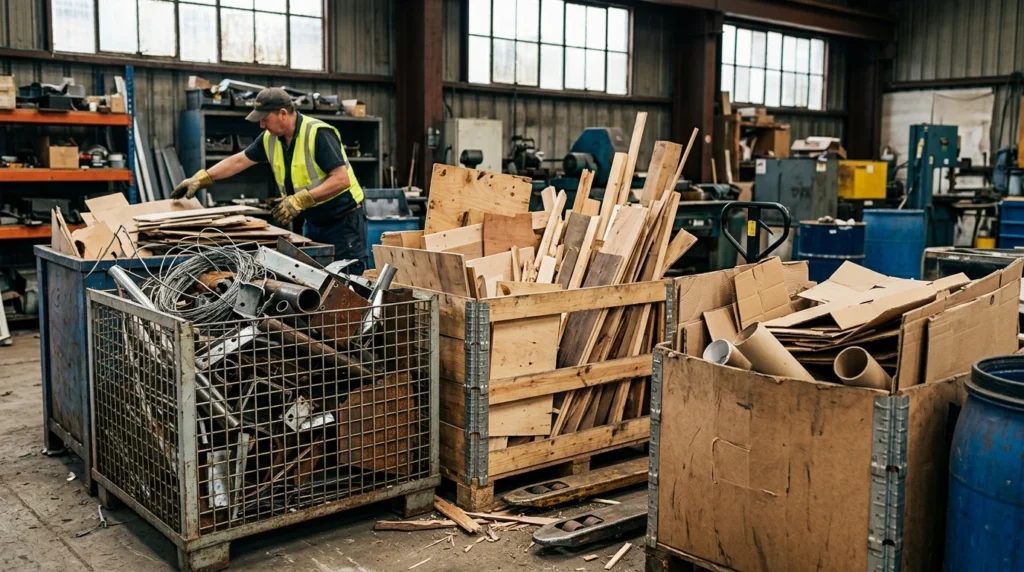
Scrap is a noun or verb with several common meanings. As a noun, it can refer to a small leftover piece, discarded material, or waste that can potentially be recycled. As a verb, it means to abandon, cancel, or get rid of something that is no longer useful or wanted.
See Also:
Scrap as a Noun
When used as a noun, scrap often refers to a leftover piece of material or something considered waste.
- Scrap metal: Old metal collected for recycling or reuse.
- A scrap of paper: A small piece of paper.
- Fabric scraps: Small pieces of fabric left after sewing.
- Food scraps: Leftover food pieces, such as vegetable peels.
Examples:
- The workers collected the scrap metal for recycling.
- She wrote the phone number on a scrap of paper.
- I saved the fabric scraps for a sewing project.
- The restaurant separates suitable food scraps for composting.
Scrap as a Verb
As a verb, scrap means to abandon, cancel, or discard something. It is frequently used when a plan, proposal, product, or project will no longer go ahead.
Examples:
- The company decided to scrap its original advertising campaign.
- We had to scrap our travel plans because of the storm.
- The manufacturer will scrap the damaged equipment.
- The team scrapped the expensive proposal after reviewing the budget.
In these sentences, scrap does not mean scratching a surface. It means canceling or getting rid of something.
What Does Scrape Mean?
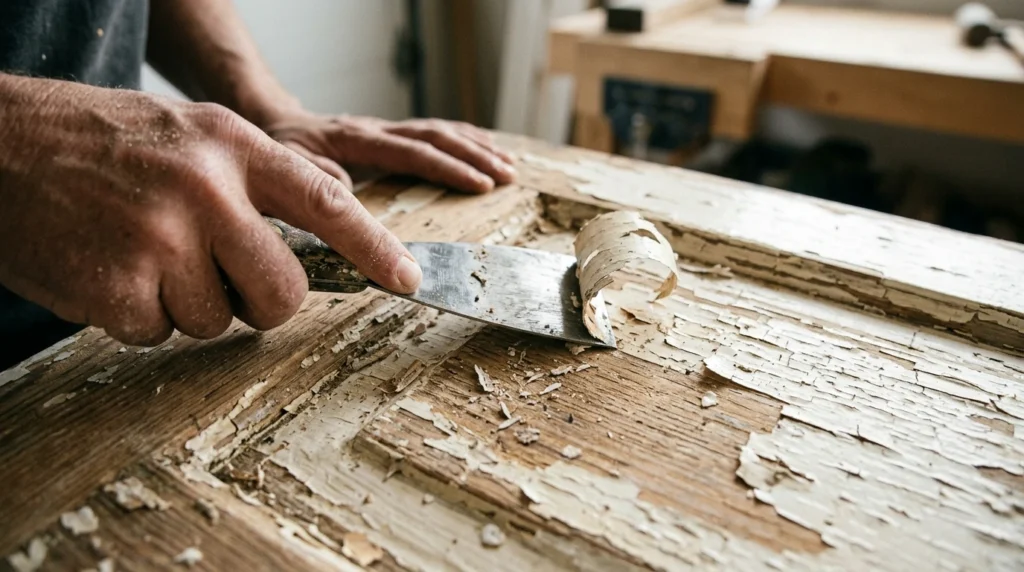
Scrape is a noun or verb associated with friction, scratching, or removing something from a surface. As a verb, it can describe dragging an object across another surface, removing a layer of material, or accidentally scratching your skin.
As a noun, scrape can refer to a scratch or a difficult situation. The intended meaning depends on the context.
Scrape as a Verb
When used as a verb, scrape describes an action involving contact with a surface. It often refers to removing stuck-on material or causing a superficial mark or injury.
Examples:
- Please scrape the leftover food from the plate.
- He scraped the ice off his car windshield.
- I scraped my knee when I fell off my bicycle.
- The painter scraped the old paint off the wooden door.
- She scraped the mud from her shoes before entering the house.
Scrape as a Noun
As a noun, scrape can refer to a minor scratch or an awkward, difficult situation.
See Also:
Examples:
- The child had a small scrape on his elbow.
- I got into a scrape after forgetting to renew my parking permit.
- That was a close scrape, but everyone was safe.
In the first sentence, scrape means a minor skin injury. In the other sentences, it refers to a troublesome situation.
Scrap vs. Scrape: Sentence Examples
Comparing the words in similar situations makes their differences easier to understand.
| Scrap | Scrape |
|---|---|
| The company will scrap the outdated machine. | The technician will scrape the label off the machine. |
| We collected scrap wood for the project. | He scraped the wood to remove its rough surface. |
| They decided to scrap the original design. | She scraped the paint off the design board. |
| Put the metal scraps in the recycling bin. | Scrape the remaining food into the compost container. |
| The team scrapped its first proposal. | The team scraped mud off its boots. |
The correct choice depends on the meaning of the sentence, not simply on how the word sounds.
See Also:
Scrapped vs. Scraped: What Is the Difference?
Scrapped is the past tense and past participle of scrap. Scraped is the past tense and past participle of scrape. Although the words look similar, their meanings remain different.
When to Use Scrapped
Use scrapped when something was discarded, abandoned, or canceled.
- The company scrapped the old production plan.
- We scrapped our picnic plans because it rained.
- The damaged car was scrapped after the accident.
When to Use Scraped
Use scraped when someone rubbed, scratched, or removed something from a surface.
- She scraped the burnt food from the pan.
- He scraped his arm against the rough wall.
- The workers scraped the loose paint off the fence.
Spelling tip: Scrap becomes scrapped, while scrape becomes scraped. Both are standard spellings, but they belong to different verbs.
Common Expressions with Scrap and Scrape
Both words appear in common English expressions. Learning these phrases can help you recognize the correct word in everyday conversation and writing.
Common Expressions with Scrap
- Scrap metal: Discarded metal collected for recycling. Example: The factory sells scrap metal to a recycling company.
- A scrap of evidence: A small amount or piece of evidence. Example: Investigators did not find a scrap of evidence supporting the claim.
- Scrap an idea: Abandon an idea or plan. Example: We decided to scrap the idea after calculating the costs.
- Scrap paper: Leftover paper that can be reused. Example: Use scrap paper for your practice calculations.
Common Expressions with Scrape
- Scrape by: Manage with very little money or resources. Example: They scrape by on a limited income.
- Scrape together: Gather enough money or resources with difficulty. Example: She scraped together enough money for a used laptop.
- Scrape off: Remove something from a surface. Example: Scrape off the dried mud before washing your shoes.
- Scrape through: Succeed narrowly or with difficulty. Example: He scraped through the final examination.
Common Mistakes When Using Scrap and Scrape
Because these words have similar spellings, writers sometimes choose the wrong one. Here are some common mistakes and their corrections.
Mistake 1: Using Scrape When You Mean Cancel
Incorrect: The manager decided to scrape the project.
Correct: The manager decided to scrap the project.
Why? The manager is abandoning the project, not scratching or removing something from a surface.
Mistake 2: Using Scrap When You Mean Remove Something
Incorrect: Please scrap the burnt food from the pan.
Correct: Please scrape the burnt food from the pan.
Why? The action involves removing stuck food by dragging a utensil against the pan.
Mistake 3: Confusing Scrapped and Scraped
Incorrect: He scrapped his knee when he fell.
Correct: He scraped his knee when he fell.
Why? A superficial injury caused by rubbing against a rough surface is a scrape. The past-tense verb is scraped.
Mistake 4: Choosing a Word Based Only on Sound
Scrap and scrape sound similar, but they are not interchangeable. Think about the intended meaning before choosing a spelling. If you mean discard or cancel, use scrap. If you mean rub, scratch, or remove something from a surface, use scrape.
How to Remember the Difference Between Scrap and Scrape
A simple memory trick can help you choose the correct word without checking a dictionary every time.
- Scrap = discard: Think of scrap metal, leftover material, or scrapping a plan.
- Scrape = scratch: Think of scraping ice from a windshield or scraping a knee.
You can remember the extra e in scrape by connecting it with an action involving friction against a surface. This is a memory aid rather than a formal spelling rule.
For example, if you want to cancel an event, you scrap it. If you want to remove dried paint from a wall, you scrape it off.
Scrap or Scrape in Real-Life Situations
Understanding the words in context makes them easier to use accurately in everyday English.
At Work
A product development team might scrap a design that is too expensive to manufacture. A maintenance worker might scrape rust or peeling paint from a metal surface before repairing it.
At Home
You might collect scrap paper for shopping lists or reuse fabric scraps for a craft project. When cleaning the kitchen, you might scrape leftover food off plates before washing them.
In Personal Experiences
If you fall while running and get a minor skin injury, you might say you scraped your knee. If you decide not to go on a planned trip, you might say you scrapped your travel plans.
In Recycling and Manufacturing
Businesses collect scrap metal, plastic, and other materials for recycling. In contrast, a worker may scrape unwanted residue from a machine or surface during cleaning and maintenance.
Practice Quiz: Scrap or Scrape?
Test your understanding by choosing the correct word for each sentence.
- The company decided to _____ its outdated product line.
- She used a spoon to _____ the remaining sauce from the bowl.
- The recycling center accepts _____ metal.
- He _____ his elbow while playing football.
- We had to _____ our plans because the road was closed.
- Please _____ the old stickers off the window.
Answers and Explanations
- Scrap: The company is abandoning its product line.
- Scrape: The spoon removes sauce from the bowl.
- Scrap: Scrap metal is collected for recycling or reuse.
- Scraped: The elbow was scratched or grazed during the activity.
- Scrap: The plans were canceled.
- Scrape: The stickers are being removed from a surface.
Frequently Asked Questions
Is scrap or scrape correct?
Both scrap and scrape are correct English words. Scrap refers to discarded material, leftovers, or abandoning something. Scrape refers to rubbing, scratching, or removing something from a surface.
What is the difference between scrap and scrape?
Scrap usually means waste material, a small leftover piece, or the act of canceling something. Scrape usually means rubbing against a surface, causing a scratch, or removing a substance. You scrap a plan but scrape paint off a wall.
Is it scraped or scrapped?
Both spellings are correct, but they come from different verbs. Scraped is the past tense of scrape, while scrapped is the past tense of scrap. You scraped your knee, but you scrapped your original plan.
What does scrap mean in simple English?
Scrap means a small leftover piece, discarded material, or the act of getting rid of something. Scrap metal, for example, is metal collected for recycling, while scrapping a project means canceling it.
What does scrape mean in simple English?
Scrape means to rub or drag something against a surface, often to remove material or cause a scratch. For example, you might scrape food from a plate or scrape your knee after falling.
Can scrap and scrape be used as verbs?
Yes. Both words can function as verbs. Scrap means to abandon or discard something, while scrape means to rub, scratch, or remove something from a surface.
What is the past tense of scrap?
The past tense of scrap is scrapped. Example: The company scrapped the proposal after reviewing the costs.
What is the past tense of scrape?
The past tense of scrape is scraped. Example: He scraped the mud off his boots before entering the house.
Quick Summary
- Scrap is a noun meaning discarded material or a small leftover piece, and a verb meaning to discard, cancel, or abandon something.
- Scrape is a verb meaning to rub, scratch, or remove something from a surface. As a noun, it can mean a scratch or a difficult situation.
- Scrapped is the past tense of scrap.
- Scraped is the past tense of scrape.
- Use scrap a plan when canceling it and scrape a surface when rubbing or removing something from it.
See Also:
IBVS Meaning in Text: The Viral Slang Everyone Is Searching For