
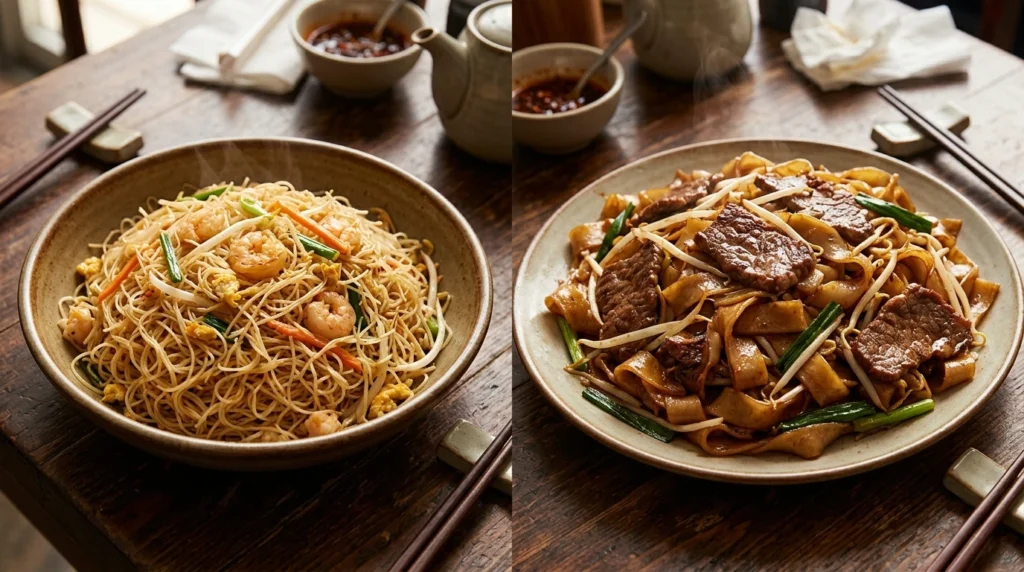

Quick Answer: Mei fun and chow fun are two popular Chinese noodle dishes, but the main difference is the type of rice noodles used. Mei fun is made with thin rice vermicelli noodles, while chow fun is made with wide, flat rice noodles. Mei fun is often lighter and commonly stir-fried with vegetables, eggs, meat, or seafood. Chow fun has a chewier texture and is frequently prepared with beef, bean sprouts, scallions, and savory stir-fry sauce.
If you have ever looked at a Chinese restaurant menu and wondered whether to order mei fun or chow fun, you are not alone. Their names sound similar, and both dishes can contain rice noodles, vegetables, meat, and flavorful sauces. However, the noodles look and feel quite different, which affects the overall eating experience.
Understanding the difference between mei fun and chow fun can help you choose a dish that matches your taste preferences. Whether you enjoy delicate noodles, smoky stir-fried flavors, or a hearty meal, this guide explains their ingredients, textures, cooking methods, nutrition, and most popular variations.
What Is Mei Fun?
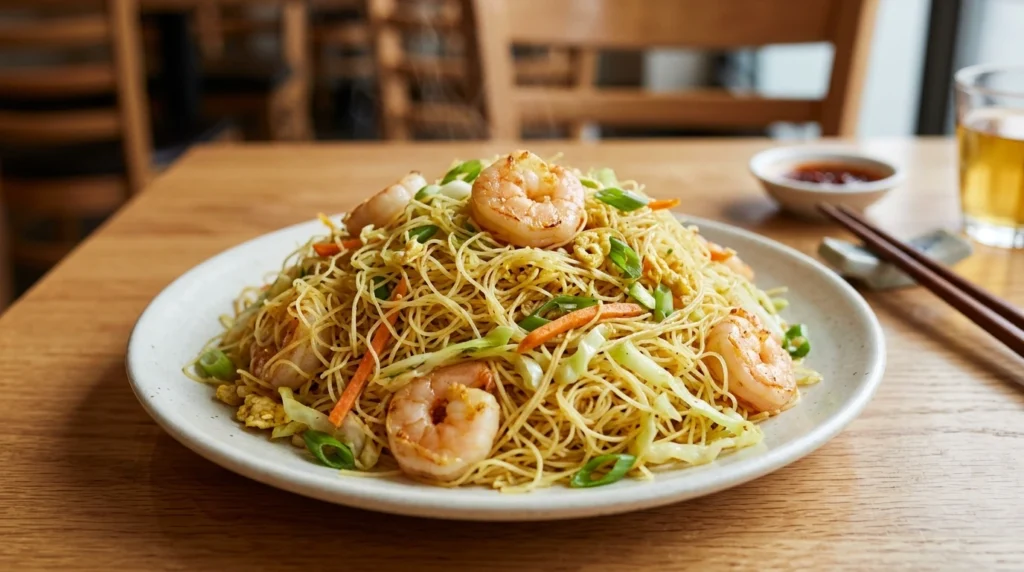
Mei fun, also spelled mai fun or mei fen, is a dish made with thin rice vermicelli noodles. The noodles are typically delicate, narrow, and light, making them suitable for stir-frying with vegetables, eggs, chicken, shrimp, pork, or other ingredients.
The term is associated with rice vermicelli in Chinese food terminology, and the dish is especially familiar in Cantonese-style cooking and Chinese restaurants outside China. Depending on the restaurant and regional tradition, mei fun may be seasoned with soy sauce, curry powder, garlic, ginger, or other seasonings.
What Do Mei Fun Noodles Look Like?
Mei fun noodles are very thin, resembling fine strands or vermicelli. They are usually white or pale in color before cooking and absorb seasonings readily. Once cooked, they become soft and flexible, although they can turn mushy if overcooked or handled too roughly.
Because the noodles are so narrow, they mix easily with finely sliced vegetables and small pieces of meat or seafood. Each bite often contains a combination of noodles and other ingredients rather than one broad noodle dominating the texture.
Common Mei Fun Ingredients
Restaurant versions vary, but many mei fun dishes include a combination of the following ingredients:
- Thin rice vermicelli noodles
- Eggs
- Carrots and onions
- Bean sprouts and scallions
- Chicken, beef, pork, shrimp, or tofu
- Soy sauce or other savory seasonings
- Garlic, ginger, and cooking oil
One especially popular variation is Singapore mei fun, which is commonly prepared with curry seasoning, vegetables, eggs, and meat or seafood. Despite its name, this restaurant-style dish is generally associated with Chinese diaspora cooking rather than being a traditional Singaporean national dish.
What Does Mei Fun Taste Like?
Mei fun has a mild flavor on its own, so its taste depends heavily on the seasonings and accompanying ingredients. Soy sauce can make it savory, curry powder can add warmth and aromatic spice, and garlic or ginger can provide a more pronounced flavor.
Its thin noodles give the dish a relatively delicate texture. The strands can pick up seasoning throughout the dish, creating a balanced combination of noodles, vegetables, and protein.
What Is Chow Fun?
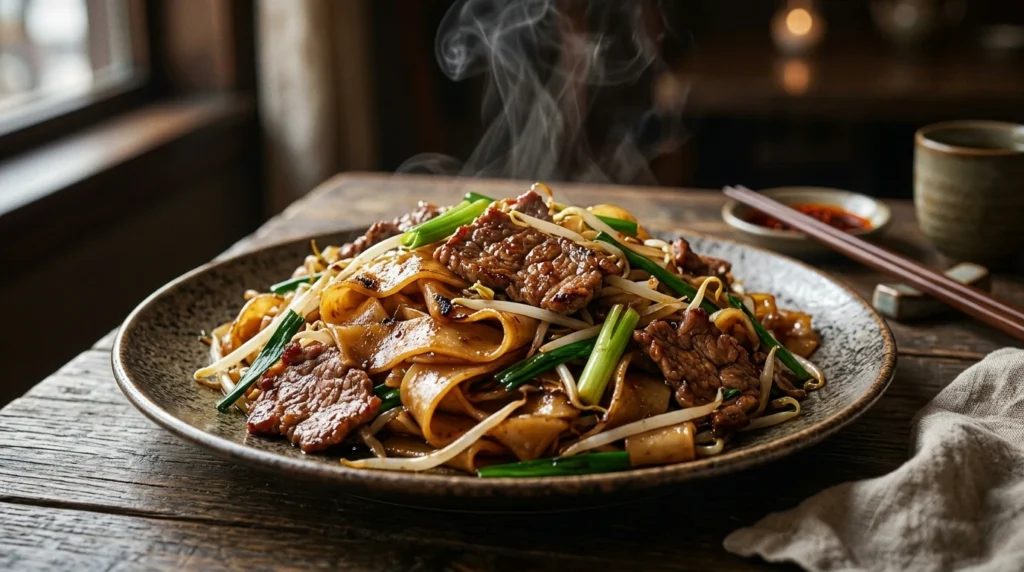
Chow fun is a Chinese noodle dish made with wide, flat rice noodles, often called ho fun or he fen. These noodles are much broader than mei fun noodles and have a soft, slippery, chewy texture. Chow fun is commonly stir-fried over high heat with meat, vegetables, and savory sauces.
Beef chow fun, known in Cantonese as gon chow ngau ho, is one of the best-known versions. It typically combines wide rice noodles with sliced beef, bean sprouts, scallions, soy sauce, and other seasonings. A hot wok can create a distinctive smoky aroma often called wok hei, meaning the breath or essence of the wok.
What Do Chow Fun Noodles Look Like?
Chow fun noodles are broad, flat ribbons rather than thin strands. They may be white, glossy, and slightly translucent, depending on how they are prepared. Their larger surface area allows them to develop browned edges and absorb savory sauces during stir-frying.
These noodles are also more substantial in the mouth than rice vermicelli. Their width and chewiness give chow fun a hearty character, particularly when cooked with beef or other protein-rich ingredients.
Common Chow Fun Ingredients
Traditional and restaurant-style chow fun recipes often include:
- Wide, flat rice noodles
- Sliced beef, chicken, pork, shrimp, or tofu
- Bean sprouts
- Scallions or Chinese chives
- Soy sauce and sometimes dark soy sauce
- Garlic and other aromatics
- Cooking oil and optional additional seasonings
Beef chow fun is particularly popular because the beef, broad noodles, and savory sauce work well together. However, chow fun can also be made with chicken, seafood, vegetables, or tofu, depending on the restaurant.
What Does Chow Fun Taste Like?
Chow fun typically has a savory, rich flavor, particularly when stir-fried with beef and soy-based sauces. Its broad noodles provide a chewy, slippery texture, while bean sprouts and scallions add freshness and crunch.
When prepared in a well-seasoned wok over high heat, chow fun may have a lightly smoky, roasted flavor. This quality is one reason beef chow fun is a favorite among people who enjoy traditional Chinese stir-fried noodles.
Mei Fun vs Chow Fun: Key Differences
The biggest difference between mei fun and chow fun is noodle shape. Mei fun uses thin rice vermicelli, whereas chow fun uses wide, flat rice noodles. This difference affects their texture, cooking behavior, appearance, and the types of dishes in which they are commonly used.
| Feature | Mei Fun | Chow Fun |
|---|---|---|
| Noodle type | Thin rice vermicelli | Wide, flat rice noodles |
| Shape | Fine, narrow strands | Broad, flat ribbons |
| Texture | Delicate and relatively light | Soft, slippery, and chewy |
| Common preparation | Stir-fried or served in other preparations | Often stir-fried over high heat |
| Popular version | Singapore mei fun | Beef chow fun |
| Typical flavor | Mild, savory, or curry-seasoned | Savory, rich, and sometimes smoky |
| Common additions | Eggs, vegetables, meat, or seafood | Beef, bean sprouts, scallions, or chives |
| Best for | People who prefer thin noodles | People who prefer broad, chewy noodles |
Keep in mind that these are common patterns rather than strict rules. Restaurants can prepare either dish with different vegetables, proteins, sauces, and cooking methods.
Mei Fun vs Chow Fun: Which Has Better Texture?
Texture is one of the easiest ways to decide between these two noodle dishes. Although both are made with rice noodles, they feel different when eaten.
Mei Fun Texture
Mei fun has fine, delicate strands that mix easily with other ingredients. Properly cooked noodles are tender and flexible, making them a good choice if you enjoy lighter noodle dishes with plenty of vegetables and small pieces of meat or seafood.
Because the noodles are thin, they can overcook relatively quickly. Excessive moisture or prolonged stir-frying can cause them to become soft, sticky, or broken.
Chow Fun Texture
Chow fun noodles are wider and generally have a more substantial, chewy mouthfeel. Their broad surfaces can become lightly browned during stir-frying, while the inside remains soft and slippery.
However, chow fun noodles can tear or stick together if they are handled too aggressively. Freshness, moisture, heat, and cooking technique all affect the final texture.
Texture verdict: Choose mei fun if you prefer fine, delicate noodle strands. Choose chow fun if you enjoy broad noodles with a soft, chewy texture.
Mei Fun vs Chow Fun: Which Tastes Better?
Neither dish is universally better because taste depends on your personal preferences and the recipe. Both can be savory, flavorful, and satisfying, but their usual seasonings and noodle textures create different experiences.
Choose Mei Fun If You Prefer:
- Thin noodles that blend easily with vegetables.
- Light, delicate noodle strands.
- Egg, chicken, shrimp, or vegetable combinations.
- Curry-flavored noodle dishes, such as Singapore mei fun.
- A mixture of small ingredients in every bite.
Choose Chow Fun If You Prefer:
- Wide, flat noodles with a chewy texture.
- Rich, savory stir-fry flavors.
- Beef, bean sprouts, and scallions.
- Smoky flavors created by high-heat wok cooking.
- A hearty dish built around broad noodles.
If you enjoy spicy or aromatic flavors, Singapore mei fun may be appealing. If you prefer savory beef and smoky wok flavors, beef chow fun may be the better choice.
Mei Fun vs Chow Fun: Which Is Healthier?
Neither mei fun nor chow fun is automatically healthier than the other. Both use rice noodles, and their nutritional value depends on portion size, cooking oil, sauces, protein, and the quantity of vegetables included in the dish.
A vegetable-rich mei fun dish with a moderate amount of oil may be a lighter choice than a large, oil-heavy serving of chow fun. However, chow fun prepared with lean protein and plenty of vegetables can also fit into a balanced diet.
Calories in Mei Fun
Mei fun can be relatively light when made with a moderate amount of oil, plenty of vegetables, and lean protein. However, restaurant portions can contain substantial calories when the noodles are stir-fried with generous amounts of oil, meat, egg, or rich sauces.
Singapore mei fun may also contain additional oil and sodium from curry seasoning and sauces. The name alone does not tell you whether a particular version is low in calories.
Calories in Chow Fun
Chow fun can be calorie-dense because its broad rice noodles are often stir-fried with oil and savory sauces. Beef chow fun may provide protein from the beef, but the total calorie and sodium content depends on the portion and preparation method.
Ordering extra vegetables, choosing a reasonable portion, and asking for less oil or sauce when available can help you manage the overall nutritional content.
See Also:
YM Meaning in Text Explained – Full Guide, Definition, Uses & Examples
Nutrition Comparison
| Nutrition Factor | Mei Fun | Chow Fun |
|---|---|---|
| Carbohydrates | Primarily from rice noodles | Primarily from rice noodles |
| Protein | Depends on eggs, meat, seafood, or tofu | Depends on beef, meat, seafood, or tofu |
| Fat | Depends largely on cooking oil and additions | Depends largely on cooking oil and additions |
| Sodium | Varies with sauces and seasoning | Varies with sauces and seasoning |
| Vegetables | Can be included generously | Can be included generously |
Exact calories cannot be determined from the dish name alone. Recipes and restaurant portions vary significantly, so check the restaurant’s nutrition information if you need a more precise estimate.
Are Mei Fun and Chow Fun Gluten-Free?
Rice itself is naturally gluten-free, so noodles made only from rice and water can be suitable for people avoiding gluten. However, you should not assume that every mei fun or chow fun dish is gluten-free simply because it contains rice noodles.
Soy sauce commonly contains wheat, and some sauces, marinades, seasonings, or other ingredients may also contain gluten. Shared cooking surfaces and utensils can create cross-contact in restaurant kitchens.
If you have celiac disease or need to avoid gluten for medical reasons, ask the restaurant about the noodle ingredients, sauces, and preparation procedures. Requesting gluten-free soy sauce is helpful only if the rest of the dish and its preparation are also suitable.
Can You Substitute Mei Fun for Chow Fun?
Yes, you can substitute one type of noodle for the other in many recipes, but the result will not be exactly the same. The difference in width and texture changes how the noodles absorb sauce, mix with other ingredients, and behave during stir-frying.
Using Mei Fun Instead of Chow Fun
If you replace wide chow fun noodles with thin mei fun, the dish will have a finer texture and may cook more quickly. You may need to adjust the soaking or cooking time and handle the noodles gently to prevent them from breaking.
Mei fun can work in a quick stir-fry inspired by beef chow fun, but it will not provide the same broad, chewy noodle texture.
Using Chow Fun Instead of Mei Fun
If you use wide chow fun noodles in a mei fun recipe, the dish will become more substantial and chewy. You may need to change the preparation method because wide rice noodles can require different handling depending on whether they are fresh, refrigerated, or dried.
For a recipe that specifically depends on thin rice vermicelli, such as many Singapore mei fun preparations, using the intended noodle type usually produces the most authentic result.
How Are Mei Fun and Chow Fun Cooked?
Both dishes can be stir-fried, but their noodles need different handling. The package instructions and the noodles’ condition—fresh, dried, or refrigerated—are important when preparing either dish.
See Also:
TTY Meaning in Text Explained – Full Guide, Definition, Usage & Examples
How to Cook Mei Fun
- Prepare the noodles: Soak or cook the dried rice vermicelli according to the package instructions. Drain it well.
- Prepare the ingredients: Slice vegetables and prepare your choice of chicken, shrimp, beef, tofu, or eggs.
- Cook the protein: Stir-fry the protein until safely cooked, then set it aside if needed.
- Stir-fry the vegetables: Cook the vegetables and aromatics briefly over medium-high to high heat.
- Add the noodles: Add the prepared vermicelli and seasonings, tossing gently to distribute the sauce.
- Combine and serve: Return the protein to the pan and cook until everything is hot and evenly mixed.
Avoid soaking or boiling the noodles for too long. Excess moisture can make thin rice vermicelli sticky and difficult to stir-fry.
How to Cook Chow Fun
- Prepare the noodles: If using dried noodles, prepare them according to the package instructions. Handle fresh noodles carefully to prevent tearing.
- Prepare the protein: Slice beef or another protein thinly and prepare the vegetables.
- Heat the wok: Use a hot wok or large skillet and a suitable amount of cooking oil.
- Cook the protein: Stir-fry the meat until safely cooked, then remove it if necessary.
- Stir-fry the noodles: Add the noodles carefully and let them contact the hot cooking surface so they can develop flavor without breaking.
- Add sauce and vegetables: Add the sauce, bean sprouts, scallions, and cooked protein, tossing gently to combine.
- Serve immediately: Enjoy the noodles while they are hot and their texture is at its best.
For chow fun, excessive stirring can break the broad noodles, while a crowded pan can cause them to steam instead of stir-fry. Cooking in batches may help when preparing a large quantity.
Popular Types of Mei Fun
Mei fun is versatile, and restaurants offer several variations depending on regional preferences and available ingredients.
Singapore Mei Fun
Singapore mei fun is commonly made with thin rice vermicelli, curry seasoning, eggs, vegetables, and a choice of meat or seafood. It often has a yellow appearance from the curry seasoning and a more aromatic flavor than soy-based vermicelli dishes.
Chicken Mei Fun
Chicken mei fun combines rice vermicelli with sliced chicken, vegetables, and savory seasoning. It is a familiar option for people who want a noodle dish with lean protein.
Shrimp Mei Fun
Shrimp mei fun features rice vermicelli tossed with shrimp, vegetables, and seasonings. The shrimp adds a naturally sweet seafood flavor that works well with garlic, ginger, and light sauces.
Vegetable Mei Fun
Vegetable mei fun focuses on rice noodles and vegetables such as carrots, cabbage, onions, mushrooms, and bean sprouts. Depending on the restaurant, it may also include egg or tofu.
Popular Types of Chow Fun
Chow fun also has several popular variations. The noodle type remains the defining feature, while proteins, vegetables, and sauces differ by recipe.
Beef Chow Fun
Beef chow fun is a well-known Cantonese-style dish made with wide rice noodles, sliced beef, bean sprouts, scallions, and savory sauce. High-heat cooking can produce a smoky aroma and lightly browned noodles.
See Also:
GMA Meaning in Text Explained – Full Guide, Usage, Origin & Examples
Chicken Chow Fun
Chicken chow fun replaces beef with chicken while keeping the broad rice noodles. It can include bean sprouts, onions, scallions, and soy-based seasoning.
Shrimp Chow Fun
Shrimp chow fun combines wide rice noodles with shrimp and vegetables. The seafood provides a delicate sweetness, while the noodles create a chewy, satisfying base.
Vegetable Chow Fun
Vegetable chow fun is prepared with wide rice noodles and vegetables such as bean sprouts, Chinese chives, mushrooms, cabbage, or bell peppers. It can be made without meat, but diners should check whether the sauce contains animal-based ingredients if they follow a strict vegetarian or vegan diet.
Mei Fun vs Chow Fun: Which Should You Order?
Your best choice depends on the texture and flavor you enjoy most. Consider how you prefer your noodles and which ingredients sound appealing.
- Choose mei fun if you prefer thin rice noodles, delicate strands, and a dish that mixes easily with vegetables and small pieces of protein.
- Choose chow fun if you prefer broad, chewy rice noodles, rich savory flavors, and the classic combination of beef, bean sprouts, and scallions.
- Choose Singapore mei fun if you enjoy aromatic curry seasoning and thin vermicelli noodles.
- Choose beef chow fun if you want a hearty stir-fried dish with wide noodles and a savory, sometimes smoky flavor.
- Compare the preparation if you are watching your calories, sodium, or dietary restrictions, because ingredients and portion sizes vary by restaurant.
If you have never tried either dish, consider ordering a classic beef chow fun and a vegetable or Singapore mei fun on separate occasions. Comparing the noodle shapes and textures is an easy way to discover which one you prefer.
Frequently Asked Questions
Is mei fun the same as chow fun?
No. Mei fun is made with thin rice vermicelli noodles, while chow fun uses wide, flat rice noodles. Both can be stir-fried with vegetables, meat, seafood, or savory sauces, but they have different shapes and textures.
Which is thinner, mei fun or chow fun?
Mei fun is thinner. It uses narrow rice vermicelli strands, whereas chow fun uses broad, flat rice noodles.
Is mei fun healthier than chow fun?
Not necessarily. Both are rice-noodle dishes, and their nutritional content depends on portion size, cooking oil, sauces, vegetables, and protein. A vegetable-rich dish prepared with less oil may be a lighter option regardless of the noodle type.
Does mei fun contain rice?
Mei fun noodles are generally made from rice or rice flour and water. The complete dish may also contain vegetables, eggs, meat, seafood, sauces, and other ingredients.
Does chow fun contain rice?
Traditional chow fun noodles are made primarily from rice or rice flour and water. Restaurant recipes may contain additional ingredients in the noodles, sauces, or accompanying foods, so check with the restaurant if you have specific dietary requirements.
Is chow fun always made with beef?
No. Beef chow fun is a popular variety, but chow fun can also be made with chicken, shrimp, pork, tofu, or vegetables. The defining feature is the wide, flat rice noodles.
Why is Singapore mei fun yellow?
Singapore mei fun is often yellow because curry powder or other curry seasonings are added during cooking. Recipes vary, so the color and spice level can differ from one restaurant to another.
Can I use regular rice noodles for mei fun?
Use thin rice vermicelli when you want the characteristic mei fun texture. Wider rice noodles may work in an adapted recipe, but the finished dish will be different in texture and appearance.
Are mei fun and chow fun gluten-free?
The noodles may be gluten-free if they are made only from rice and other gluten-free ingredients. However, soy sauce and other seasonings may contain wheat, and shared cooking equipment can cause cross-contact. Check ingredients and preparation practices when gluten avoidance is essential.
Which is better for stir-frying, mei fun or chow fun?
Both work well for stir-frying when prepared correctly. Mei fun is suitable for fine, evenly mixed noodle dishes, while chow fun is ideal for broad noodles that can develop a chewy texture and smoky flavor in a hot wok.
Quick Summary
- Mei fun: Thin rice vermicelli noodles with a delicate texture.
- Chow fun: Wide, flat rice noodles with a soft, chewy texture.
- Popular mei fun dish: Singapore mei fun, often seasoned with curry.
- Popular chow fun dish: Beef chow fun, commonly cooked with bean sprouts and scallions.
- Health comparison: Neither is automatically healthier; ingredients, oil, sauces, and portions matter.
- Best choice: Choose mei fun for thin noodles or chow fun for wide, chewy noodles.
See Also:
ONG Meaning in Text: What It Really Means in Chat Today
BSF Meaning in Text: Don’t Confuse It With BFF Today
GNG Meaning in Text: What It Means, How to Use It & Real Chat Examples