


Quick Answer: Less than is the correct phrase when you mean “a smaller amount or number than.” Less then is incorrect in this context because then refers to time, sequence, or consequence, while than is used for comparisons. For example, “The box weighs less than 10 pounds” is correct. A simple way to remember the difference is that than is commonly used when comparing two things, while then usually tells you what happens next or refers to a time.
What Is the Correct Phrase: Less Than or Less Then?
Less than is the correct phrase when you are making a comparison involving a smaller amount, number, degree, or measurement. It is extremely common in everyday English, mathematics, science, business, and academic writing.
Less then is incorrect when you intend to make a comparison. The mistake happens because than and then sound similar in some accents and are frequently confused in writing. They have different meanings and grammatical functions.
Less Than vs Less Then: Core Difference
| Phrase | Correct for comparison? | Meaning | Example |
|---|---|---|---|
| Less than | Yes | A smaller amount, number, or degree than something else | The task took less than an hour. |
| Less then | No | Incorrect combination when making a comparison | Incorrect: The task took less then an hour. |
What Does Less Than Mean?
Less than is used to show that one amount, number, measurement, or degree is smaller than another. It can be followed by a number, quantity, measurement, noun phrase, or comparison.
For example, “There are less than 20 minutes left” means the remaining time is below 20 minutes. Similarly, “She spent less than $50” means the amount she spent was below $50.
When to Use Less Than
Use less than when comparing quantities, amounts, measurements, or degrees. It is particularly common before numbers and expressions of measurement.
- less than five minutes
- less than $100
- less than a mile
- less than an hour
- less than expected
- less than usual
- less than half
- less than before
You can also use less than with adjectives or abstract ideas when expressing a lower degree. For example, “The second option is less expensive than the first” compares the cost of two options.
What Does Then Mean?
Then is a different word from than. It usually refers to a time, sequence, or result. It can mean “at that time,” “next,” or “in that case.”
For example, “We had dinner and then watched a movie” uses then to show what happened next. In “If you are ready, then we can leave,” then introduces a consequence or result.
See Also:
Than vs Then: Why the Difference Matters
Than is mainly used for comparisons, while then is generally connected with time, order, or consequences. Because the words look and sound similar, confusing them is a common spelling and grammar mistake.
| Word | Main Function | Example |
|---|---|---|
| Than | Comparison | This book is shorter than that one. |
| Then | Time or sequence | Finish your work, then take a break. |
Correct Examples of Less Than
- The journey took less than two hours.
- I spent less than $30 on lunch.
- There are less than ten people in the room.
- The package weighs less than five kilograms.
- She completed the assignment in less than an hour.
- The temperature dropped to less than zero degrees.
- He has less than a week to finish the project.
- The repair cost less than expected.
- The new model uses less than half the energy.
- The distance is less than one mile.
- We waited for less than fifteen minutes.
- The company has less than 100 employees.
Incorrect vs Correct: Less Then and Less Than
| Incorrect | Correct | Explanation |
|---|---|---|
| The trip took less then two hours. | The trip took less than two hours. | Use than for a comparison. |
| It costs less then $50. | It costs less than $50. | The price is being compared with $50. |
| There are less then ten seats left. | There are less than ten seats left. | Than introduces the comparison. |
| She arrived in less then an hour. | She arrived in less than an hour. | Use than after less for a quantity comparison. |
| The box weighs less then five pounds. | The box weighs less than five pounds. | The weight is being compared with five pounds. |
| He has less then $20. | He has less than $20. | Than is required for the comparison. |
| The answer is less then 100. | The answer is less than 100. | Numbers can be compared using than. |
| The project took less then expected. | The project took less than expected. | This compares the actual amount with what was expected. |
| We need less then half a cup. | We need less than half a cup. | Than introduces the smaller quantity. |
| The car uses less then six liters. | The car uses less than six liters. | The amount is being compared with six liters. |
Examples of Then Used Correctly
Although less then is incorrect as a comparison phrase, then itself is a perfectly correct English word. It simply has a different function.
- We went home and then watched a movie.
- Finish your homework, then you can play.
- She lived in London then.
- If you agree, then we can begin.
- First mix the ingredients, then bake the cake.
- He was younger then than he is now.
Notice that the last example can contain both words: then refers to a past time, while than introduces a comparison. This demonstrates why their meanings should not be confused.
Why Do People Write Less Then?
The main reason is that than and then are visually and phonetically similar. When writing quickly, people may choose the familiar-looking “then” even though the sentence requires a comparison.
Another reason is that then is a very common word, so writers may automatically type it after “less.” However, the standard expression for comparing a smaller amount is always less than.
How to Remember Less Than
A useful memory trick is to associate than with comparison. Whenever you are comparing one thing with another, than is usually the word you need.
- Less than 10
- More than 10
- Better than before
- Faster than expected
- Smaller than the original
By contrast, associate then with sequence or time: first something happens, then something else happens.
See Also:
FRL Meaning in Text: Complete Guide With Meaning, Uses Examples
Less Than in Mathematics
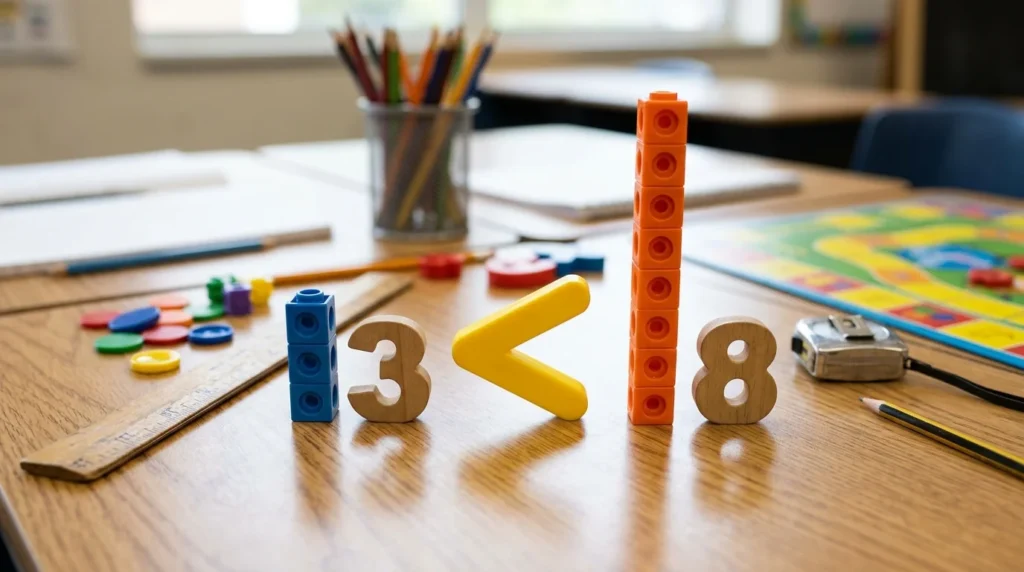
Less than is especially important in mathematics. It describes a number that has a smaller value than another number. The mathematical symbol for “less than” is <.
| Statement | Meaning |
|---|---|
| 3 < 8 | 3 is less than 8. |
| 12 < 20 | 12 is less than 20. |
| x < 100 | x is less than 100. |
A common way to remember the symbol is that the wider opening points toward the larger number, while the narrow point faces the smaller number.
Less Than in Everyday English

In everyday English, less than is used for time, money, distance, quantity, measurements, and degrees. For example, people commonly say, “It took less than five minutes,” “The price is less than $20,” or “The store is less than a mile away.”
The phrase can also appear in more abstract comparisons. You might say, “The result was less than impressive” or “The experience was less than ideal.” In these expressions, less than still communicates a lower degree or quality.
Is “Less Then” Ever Correct?
Less then is not a standard fixed phrase for making a comparison. If you are trying to say that something is a smaller amount or number than something else, use less than.
The two words can appear close together in a sentence when they perform separate functions. For example, “I was less confident then than I am now” is grammatical: the first than makes a comparison, while then refers to an earlier time.
Less Than in Real English
Less than is completely natural in both spoken and written English. It is used in casual conversation, business communication, academic writing, technical documentation, mathematics, and journalism.
Less then, when intended as a comparison, is simply a spelling or word-choice error. A reader will usually understand the intended meaning, but the mistake should be corrected in polished writing.
See Also:
Common Mistakes to Avoid
- Writing less then when comparing quantities.
- Using then after “less” simply because it sounds similar to “than.”
- Confusing time and sequence with comparison.
- Writing “less then 10” instead of “less than 10.”
- Using then in mathematical comparisons.
- Forgetting that than is the standard comparison word.
Less Than vs Less Then: Quick Comparison
| Feature | Less Than | Less Then |
|---|---|---|
| Correct comparison phrase? | Yes | No |
| Main word | Than | Then |
| Function | Shows comparison | Shows time or sequence when used correctly |
| Example | Less than five minutes | Incorrect for this meaning |
| Mathematical use | Yes | No |
Real-Life Situations
Talking About Time
If something takes a shorter amount of time than a particular measurement, use less than: “The repair took less than an hour.”
Talking About Money
Use less than when describing a price or amount below a certain figure: “The headphones cost less than $50.”
Talking About Distance
You can use the phrase for measurements of distance: “The hotel is less than two miles from the airport.”
Talking About Numbers
In mathematics and everyday conversation, less than introduces a smaller number: “The class has less than 30 students.”
Practice Quiz
Choose less than or less then for each sentence.
- The trip took less (than / then) three hours.
- The phone costs less (than / then) $500.
- There are less (than / then) twenty people here.
- The package weighs less (than / then) ten kilograms.
- We arrived less (than / then) an hour later.
Answers
- than
- than
- than
- than
- than
Frequently Asked Questions
Is it less than or less then?
Less than is correct when making a comparison. Less then is incorrect for this meaning.
What does less than mean?
Less than means a smaller amount, number, measurement, or degree than something else. For example, “The box weighs less than five kilograms.”
Why is less then incorrect?
Then is normally used for time, sequence, or consequence. Than is the word used to introduce comparisons, so the correct phrase is less than.
What is the difference between than and then?
Than is primarily used for comparisons, while then generally refers to time, sequence, or a result.
Is less than used in math?
Yes. In mathematics, less than means that one number has a smaller value than another. Its symbol is <.
Is less then ever correct?
Not as the comparison phrase. When you mean “a smaller amount or number than,” always use less than.
How can I remember than vs then?
Remember than = comparison and then = time or sequence. If you are comparing two quantities, use than.
Is less than grammatically correct?
Yes. Less than is a standard and widely used English phrase for comparing amounts, numbers, measurements, and degrees.
Can less than be used with time?
Yes. For example, “The meeting lasted less than an hour” means the meeting lasted for a shorter period than one hour.
Can less than be used with money?
Yes. For example, “The book costs less than $20” means the price is below $20.
Quick Summary
Less than is the correct phrase when you are comparing a smaller amount, number, measurement, or degree with something else. Less then is incorrect when used for this purpose. The confusion comes from the similar appearance and sound of than and then. Remember that than is associated with comparisons, while then usually refers to time, sequence, or consequence. Use “less than five,” “less than an hour,” and “less than $50” when describing a smaller amount. In mathematics, less than is represented by the symbol <.
See Also:
GLHF Meaning in Text: Are You Using It the Right Way?