
You receive a message, open a funny video or scroll through a comment section and suddenly see three unfamiliard something amusing, but the abbreviation may leave you wondering whether it is a typo, a private joke or a new form of online slang.
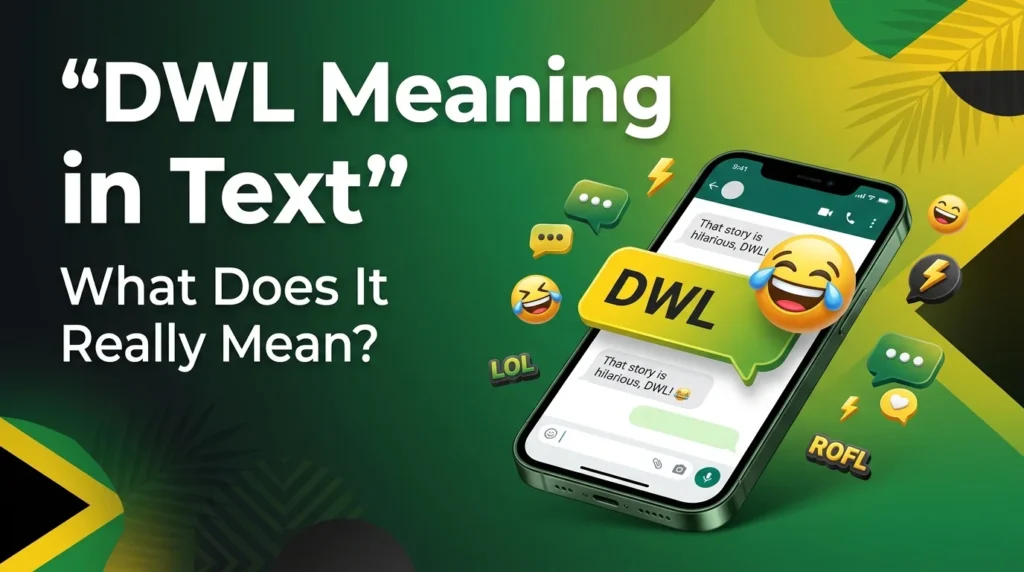
The DWL meaning in text is usually connected to intense laughter. It commonly means “dead wid laugh,” a Jamaican Patois expression that translates naturally into standard English as “dying with laughter.” People use it when something is much funnier than an ordinary “LOL” response can express. DWL can appear in different professional fields, where it may represent technical phrases unrelated to laughter. Its meaning can also change slightly through tone, emojis and the relationship between the people chatting.
This guide explains what DWL means, where it came from, how it appears across social media and how you can reply without feeling confused. You will also learn whether DWL from a girl or guy has a hidden romantic meaning.
DWL Meaning and Definition
DWL is an informal abbreviation most commonly used to express strong laughter in texts, comments and online chats. It comes from the Jamaican Patois phrase “dead wid laugh.” In standard English, the closest translation is “dying with laughter.”
The expression does not mean that someone is literally in danger. It is an exaggerated and humorous way of saying that a joke, video, picture or situation is extremely funny. It works in a similar way to expressions such as “I’m dead,” “LMAO” and “I can’t stop laughing.”
For example, a person may receive an embarrassing childhood photo from a friend and reply, “DWL, why were you dressed like that?” The response shows that the person finds the picture hilarious rather than simply amusing.
Some websites describe DWL as “dead while laughing.” That interpretation communicates almost the same reaction, but the better-established cultural origin is the Jamaican expression “dead wid laugh.” Jamaican language references define it as laughing uncontrollably and compare it with LOL or LMAO. lest definition is:
DWL means “dead wid laugh” or “dying with laughter.” It is used in informal messages when someone finds something extremely funny.
DWL may appear in uppercase as “DWL” or lowercase as “dwl.” Capitalization normally does not change the meaning. Repeated letters, punctuation and laughing emojis can make the reaction feel stronger, such as “DWLLL 😂” or “DWL!!!”
The abbreviation is especially recognizable in Jamaican and Caribbean online communities. However, social media has allowed it to reach wider audiences who may use it without knowing its full cultural background.
What Does DWL Mean in Text?
DWL means “dead wid laugh,” which translates to “dying with laughter.” People use it in texts and online chats to show that something is extremely funny.
It is usually a stronger reaction than a simple “LOL.” For example:
“That video of you falling off the chair has me DWL.”
In this sentence, the sender is saying that the video made them laugh very hard. The term is playful, informal and usually harmless.
You can quickly recognize the intended meaning by checking what appears before DWL. If the message follows a meme, joke, funny picture, awkward story or embarrassing moment, it almost certainly refers to laughter.
DWL can sometimes be used sarcastically. A person might type “DWL” even when they are not genuinely laughing, especially when reacting to an absurd excuse or unbelievable statement. The tone then becomes similar to saying, “That is so ridiculous that it is funny.”
It should not normally be used in professional emails, academic assignments or sensitive conversations. The abbreviation works best among friends, family members and social media users who understand casual internet language.
Background and Origin of DWL
DWL is strongly associated with Jamaican Patois, also called Jamaican Patwa. The abbreviation comes from the phrase “dead wid laugh,” where “wid” means “with.” The complete expression describes someone laughing so hard that they jokingly feel as though the laughter could finish them.
Jamaican language references translate DWL as “dying with laughter” and explain that it is similar to LOL or LMAO in standard internet slang. One recorded online definition appeared as early as 2006, which shows that the abbreviation was being used in digital communication long before many recent slang guides began covering it. se developed naturally from spoken Caribbean expression and later became convenient shorthand in texting. Instead of typing a complete reaction, users could write three letters while keeping the same emotional force.
Social media helped DWL travel beyond Jamaican communities. It began appearing in meme pages, music discussions, group chats, comment sections and conversations among people familiar with Caribbean culture. Users from other regions then adopted the abbreviation because its meaning was easy to understand once explained.
The popular online phrase “I’m dead” may make DWL feel familiar to modern users. Both expressions use dramatic language to describe strong laughter. However, it is more accurate to recognize DWL’s Jamaican Patois background rather than treating it as a recently invented TikTok phrase.
Its cultural origin also explains why some users prefer the expansion “dead wid laugh” instead of “dead while laughing.” Both may be understood online, but the first preserves the expression from which the abbreviation originally developed.
Usage of DWL in Different Contexts
General Usage
DWL is mainly used as a reaction. It can stand alone after a funny message or appear inside a longer sentence.
Someone may simply respond with “DWL” after receiving a joke. Another person might write, “I was DWL when she told me what happened.” In both examples, the abbreviation shows stronger amusement than an ordinary smile or polite laugh.
People commonly use DWL after:
- Funny videos and memes
- Embarrassing stories
- Unexpected mistakes
- Playful teasing between friends
- Relatable social media posts
- Ridiculous comments or excuses
- Funny voice notes and pictures
The abbreviation can express genuine laughter, but it may also add friendliness to a message. A short reply such as “DWL” tells the sender that their joke was understood and appreciated.
Tone remains important. DWL can appear rude when someone shares a serious problem and receives laughter instead of support. Before using it, make sure the situation is meant to be funny.
Formal Usage
DWL is generally unsuitable for formal communication when it means “dying with laughter.” It should be avoided in professional emails, reports, customer complaints, academic papers and official announcements.
For example, replying “DWL” to a manager’s mistake may look disrespectful even when the error is harmless. A clearer response such as “That gave me a good laugh” sounds more professional and less likely to be misunderstood.
The abbreviation may appear in formal writing only when a writer is defining online slang, analyzing language or quoting a message. In that situation, the full meaning should be explained the first time it appears.
Technical fields may use DWL differently. When it represents a recognized engineering, medical or technology term, it can be appropriate in professional documents. The surrounding subject then makes it clear that the abbreviation is not describing laughter.
Informal Usage
Informal communication is where DWL feels most natural. Friends may use it in private chats, group conversations, comments and story replies.
It can also be combined with other reactions:
- “DWL, you are too funny.”
- “Stop it right now, DWL 😂”
- “I cannot believe you posted that. DWL!”
- “DWL, this is exactly what happened to me.”
The abbreviation often creates a warm and playful tone. It may show that the sender feels comfortable enough to laugh openly and continue the joke.
Also Read: BTO Meaning in Text: Back to Office or Something Else?
DWL Meaning on Social Media Platforms
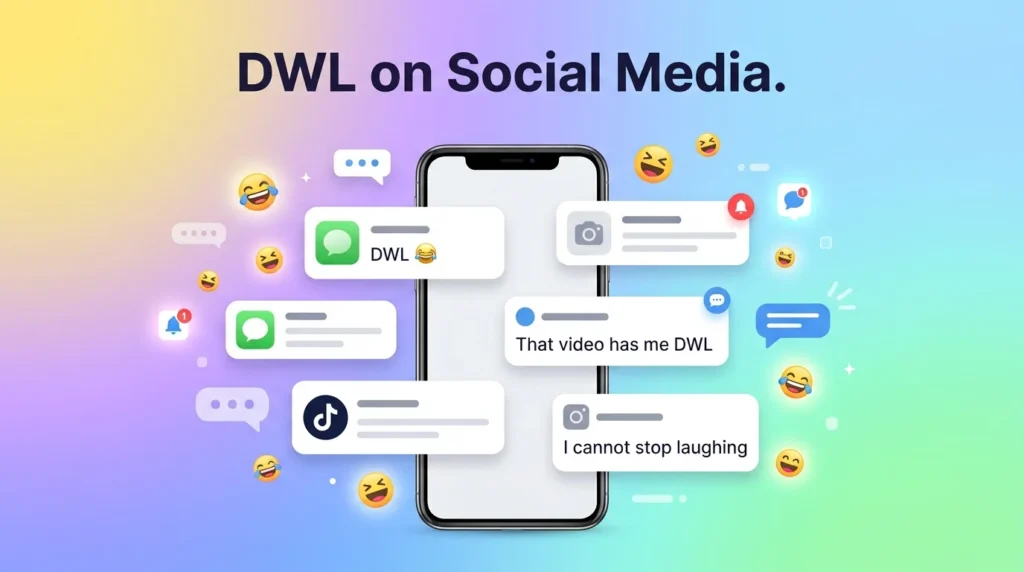
The core meaning of DWL normally remains the same across social media. What changes is how people use it on each platform.
- WhatsApp: On WhatsApp, DWL usually appears in conversations between friends, relatives and group members. A person might send a funny voice note, receive “DWL” and understand that everyone found it hilarious. It may also appear after a humorous family story or mistake. In Jamaican and Caribbean group chats, the abbreviation may feel as natural as LOL. It can stand alone or be followed by laughing emojis.
- Snapchat: On Snapchat, DWL often appears in story replies and private snaps. Someone may post an awkward selfie, failed challenge or funny moment and receive “DWL, why would you post this?” The response is normally playful. Since Snapchat conversations are quick and visual, DWL works as an immediate reaction without requiring a long explanation.
- TikTok: On TikTok, users may write DWL below comedy videos, relatable skits, dramatic reactions and unexpected fails. A comment such as “DWL, the ending finished me” means the viewer found the final part extremely funny. TikTok users outside Caribbean communities may sometimes interpret it as “dead while laughing,” but the reaction remains similar.
- Instagram: On Instagram, DWL can appear in comments, direct messages, reels and meme-page discussions. A friend may send a reel and write, “This looks exactly like you, DWL.” It may also appear under a humorous picture as a stronger alternative to laughing emojis. The expression is informal and works best when the joke is obvious.
DWL does not receive an official platform-specific definition. WhatsApp, Snapchat, TikTok and Instagram do not assign meanings to it. Users carry the expression from their own language, culture and online communities.
Therefore, the platform alone cannot explain every message. The content being discussed provides the strongest clue.
Other Meanings of DWL in Different Fields
DWL usually refers to laughter in casual messages, but the same letters may represent specialized terms elsewhere.
- Medical or Occupational Health — Derived Working Levels: Some medical and occupational-health acronym references use DWL for Derived Working Levels. This type of term may relate to workplace exposure, ergonomics or safety assessments. It is not a universal patient-facing medical abbreviation, so its exact meaning should be confirmed from the report, institution or professional using it.
- Medical abbreviations frequently vary between specialties and organizations. ics and Engineering — Distributed Wind Load:** In structural engineering and applied physics, DWL may mean Distributed Wind Load. This refers to wind pressure treated as a load spread across a surface or structure.
- Engineers may consider it while analyzing walls, roofs, towers and other structures exposed to wind. It has no relationship with texting slang. nology — Drawing Lock File:** In computer-aided design software, a file ending in .dwl may be a temporary drawing lock file.
- AutoCAD-related systems can create DWL or DWL2 files when a drawing is open. The lock helps show that the drawing is currently being used and may prevent conflicting access. Such files are normally technical system files rather than documents intended for casual viewing.
- omics — Deadweight Loss:** DWL commonly means deadweight loss in economics. It describes economic value or total welfare lost when a market does not operate efficiently. Taxes, price controls and market power can create deadweight loss under certain conditions. A
- lthough economics was not the original texting meaning, students may see DWL frequently in charts and classroom notes. appears in a casual message after a joke, it almost certainly refers to laughter. When it appears in a report, technical drawing or lecture, check the subject before interpreting it.
Examples of DWL Meaning in Text in Sentences
- Example 1 — Reacting to a funny mistake:
Aisha: “I waved back at someone and then realized they were waving at the person behind me.”
Maya: “DWL! I would have walked away immediately.”
Maya uses DWL because Aisha’s awkward mistake sounds extremely funny. The reply is friendly and shows that Maya understands the embarrassment. - Example 2 — Replying to a video:
Ryan: “Watch the last five seconds of this clip.”
Jordan: “DWL, the way he ran after dropping the cake!”
Jordan is saying that the final part made him laugh very hard. DWL strengthens the reaction and encourages Ryan to continue discussing the video. - Example 3 — Playful teasing:
Nia: “You said you were saving money, but you bought three new pairs of shoes.”
Ella: “DWL, please mind your business.”
Ella is not angry. Her response is playful and acknowledges that Nia’s observation is funny and accurate. - Example 4 — Sarcastic laughter:
Daniel: “He said he was late because his alarm forgot to ring.”
Marcus: “DWL. His alarm forgot?”
Marcus uses DWL because the excuse sounds ridiculous. The abbreviation communicates disbelief as well as laughter.
These examples show that DWL can express amusement, teasing, agreement and disbelief. The exact emotional meaning depends on the surrounding sentence.
Common Misconceptions About DWL
- Misconception 1: DWL originally means “dead while laughing.”
Many modern slang pages use this expansion because it sounds natural in English. However, the abbreviation is better traced to Jamaican Patois “dead wid laugh.” “Dying with laughter” is the clearest standard-English translation. onception 2: DWL is a romantic or flirting code.**
DWL is not automatically romantic. A girl or guy may use it while flirting, but the abbreviation itself only communicates laughter. Romantic interest must be judged from the entire conversation, not from these three letters. - Misconception 3: DWL means the sender is literally laughing loudly.
Like LOL, DWL is often exaggerated. A sender may be smiling, amused or reacting politely rather than physically laughing uncontrollably. Online reactions do not always describe a person’s exact behavior.
Another mistake is believing that DWL is rude in every situation. It is normally harmless among friends. It becomes insensitive only when someone uses it during a serious, painful or private discussion.
Also Read: MJM Meaning in Text From a Girl or Guy: Full Guide
Similar Terms and Alternatives
- LOL — Laughing out loud; a common reaction to something funny.
- LMAO — Laughing very hard; generally stronger and more informal than LOL.
- ROFL — Rolling on the floor laughing; used for extreme amusement.
- I’m dead — A modern expression meaning something is extremely funny or shocking.
- LMBO — Laughing my butt off; a less explicit alternative to LMAO.
- Crying — Used online to show that something is so funny that it brings tears.
- Weak — Means a joke has made someone feel weak from laughing.
- Screaming — An exaggerated reaction to something funny, shocking or dramatic.
- PMP — A crude humorous abbreviation suggesting someone laughed extremely hard.
- Haha — A simple and widely understood written laugh.
- 😂 — The face-with-tears-of-joy emoji, commonly used to show laughter.
- 🤣 — The rolling-on-the-floor-laughing emoji, used for stronger amusement.
- That finished me — Means something was so funny that the person could not handle it.
- I can’t breathe — An exaggerated way to describe uncontrollable laughter.
DWL is closest to LMAO, ROFL and “I’m dead.” However, it has a clear Jamaican cultural connection that makes it different from generic internet slang.
How to Respond When Someone Uses DWL in Text
The best reply depends on what caused the laughter. You can continue the joke, acknowledge the reaction or ask for clarification when the context is unclear.
- Response 1 — Continue the joke:
“You are laughing now, but you would have done the same thing.”
This response works when a friend is teasing you about an embarrassing or funny experience. - Response 2 — Match the energy:
“I knew that video would finish you 😂.”
Matching the sender’s playful tone keeps the conversation lively and shows that you understand DWL. - Response 3 — Ask what they mean:
“DWL as in dying with laughter?”
This is useful when you are unfamiliar with the abbreviation or when the conversation could involve a technical meaning.
You can also respond with “LOL,” “I’m crying,” “Exactly!” or another laughing emoji. There is no special reply required.
When the message appears flirtatious, a playful answer may work well. For example, “At least I made you laugh” keeps the exchange friendly without assuming too much.
Difference Between DWL and Similar Terms
DWL, LOL, LMAO and ROFL all show amusement, but their strength and cultural use differ.
LOL is the most common and mildest option. People may use it even when they only smile. LMAO suggests stronger laughter and often feels more expressive. ROFL exaggerates the reaction by suggesting that someone is rolling on the floor.
DWL also expresses strong laughter, but it comes from Jamaican Patois. It may feel more culturally specific than LOL or LMAO, especially when used by Jamaican and Caribbean speakers.
DWL is also different from DL, which often means “down low,” “download” or “direct line,” depending on context. Missing the letter W can completely change the meaning.
It is also different from DWL in economics, where it means deadweight loss. A sentence about taxes, market efficiency or price controls is not describing laughter.
The easiest way to identify the correct term is to look at the topic:
- A joke or meme suggests dying with laughter.
- A market graph suggests deadweight loss.
- A building calculation may suggest distributed wind load.
- A CAD folder may contain a drawing lock file.
Relevance in Online Conversations and Dating Apps
DWL remains useful because modern online conversations depend on quick emotional reactions. Instead of writing several sentences about how funny something is, a user can type three letters and immediately communicate amusement.
On dating apps, DWL may appear after a joke, unusual pickup line, funny profile detail or playful confession. A person who replies “DWL, you are actually funny” is showing that they enjoyed the message. This can create warmth and help the conversation feel less formal.
However, DWL alone does not prove romantic interest. Some people naturally react with expressive slang, while others use it with everyone. Look for stronger signals such as thoughtful questions, consistent replies, compliments and attempts to continue the conversation.
DWL can also soften teasing. A message such as “You really thought that outfit matched, DWL” sounds more playful because the abbreviation signals humor. Without it, the same words might seem critical.
Also Read: DD Meaning in Text Explained: Full Guide, Uses, Examples & Hidden Meanings
DWL Meaning in Text From a Girl
The DWL meaning in text from a girl usually remains “dead wid laugh” or “dying with laughter.” Her gender does not create a different definition.
If a girl replies “DWL” after your joke, she is telling you that she found it funny. This is generally a positive response because it shows engagement and comfort. She may be encouraging you to continue the playful conversation.
In a dating chat, DWL can sometimes support a flirtatious tone. For example:
“You really practiced that pickup line, didn’t you? DWL.”
She may be teasing you rather than rejecting you. A suitable response could be, “It worked because you laughed.”
Still, do not assume that DWL means she likes you romantically. She may simply appreciate the joke. Look at whether she continues the chat, asks questions or responds with the same energy.
If she sends DWL during a serious conversation, she may have misunderstood the message or may be reacting to one specific part. Calmly ask what she found funny rather than becoming defensive.
DWL Meaning in Text From a Guy
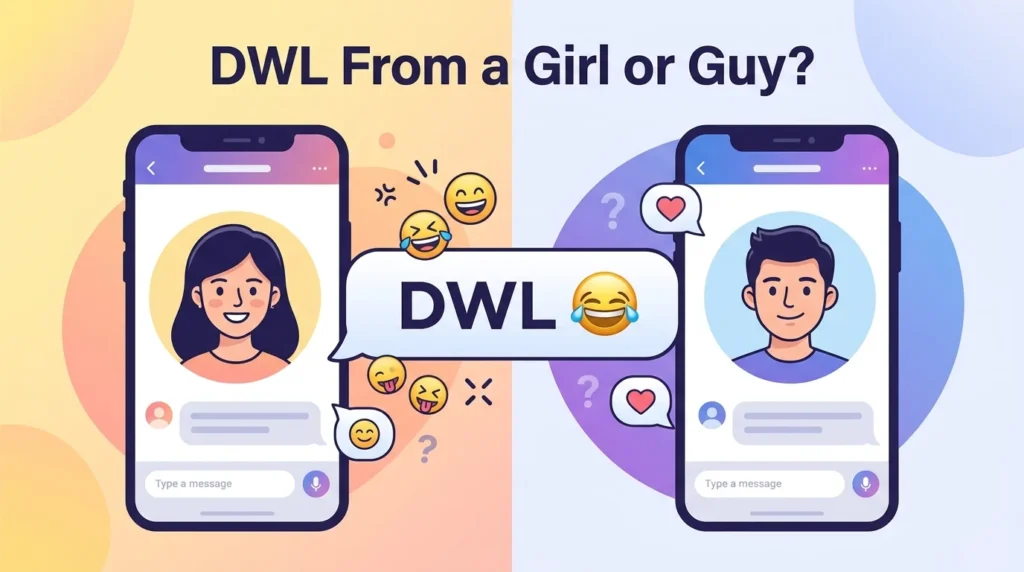
The DWL meaning in text from a guy is also normally “dying with laughter.” It shows that he finds a message, picture, story or video highly amusing.
A guy may use DWL while teasing a friend, reacting to a meme or responding to an awkward story. In a dating conversation, it may indicate that he feels relaxed and enjoys the exchange.
For example:
“You thought I would believe that excuse? DWL.”
The tone may be playful disbelief rather than anger. You could respond with, “It was worth trying,” or continue the joke.
DWL does not automatically reveal romantic feelings. A guy may use the same abbreviation in group chats and with close friends. To understand his interest, consider the full conversation, including how often he initiates contact and whether he makes an effort to know you.
Frequently Asked Questions
1. What does DWL mean in a text message?
DWL means “dead wid laugh,” which translates to “dying with laughter.” It shows that someone finds something extremely funny.
2. What does DWL mean on Snapchat?
On Snapchat, DWL usually expresses strong laughter after a funny snap, story or private message. It has the same general meaning as LMAO.
3. Is DWL the same as LOL?
Both express laughter, but DWL normally feels stronger. LOL may indicate mild amusement, while DWL suggests that something is extremely funny.
4. Is DWL Jamaican slang?
Yes. DWL comes from the Jamaican Patois phrase “dead wid laugh.” It is widely understood as “dying with laughter.” ow should I reply when someone says DWL?
You can continue the joke, send a laughing emoji or say something such as “I knew you would find that funny.” Ask for clarification when the context is unclear.
Conclusion
The DWL meaning in text is usually “dead wid laugh,” a Jamaican Patois expression meaning “dying with laughter.” People use it when a joke, meme, video or situation feels extremely funny. It works like a stronger and more culturally specific version of LOL or LMAO.
DWL may appear on WhatsApp, Snapchat, TikTok, Instagram and dating apps, but its main texting meaning remains consistent across these platforms. It can express genuine laughter, playful teasing or sarcastic disbelief. A message from a girl or guy does not create a secret definition, although the surrounding conversation may still be friendly or flirtatious.
The abbreviation can also represent technical terms such as distributed wind load, drawing lock files and deadweight loss. Context therefore remains important. When DWL follows something humorous, it almost certainly refers to laughter. When it appears in a report, calculation or computer folder, check the professional subject before deciding what it means.
Also Read: EVB Meaning in Text Explained – Full Guide, Definition, Usage & Examples