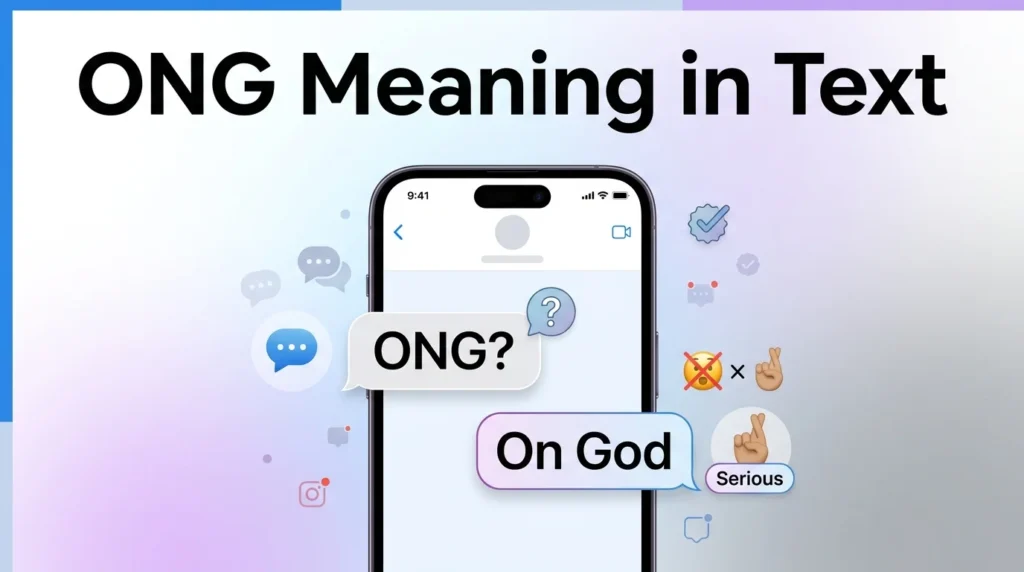

You see “ONG” in a message, comment, or caption, and for a second, it looks like a typo. Maybe the person meant OMG, right? Not always. ONG meaning in text is one of those modern slang terms that can confuse people because it looks small, but it carries strong emotion. In most texting and social media conversations, ONG means “On God.” People use it when they want to sound serious, honest, or fully sure about what they are saying. Dictionary.com defines ONG as an abbreviation for “on God,” used to express honesty, strong belief, or strong emotions.
For example, if someone says, “ONG, that was the best movie I’ve seen this year,” they are not talking about religion in a formal way. They are saying, “I’m serious,” “I swear,” or “I really mean it.” This guide explains the full meaning, where it came from, how people use it on WhatsApp, Snapchat, TikTok, and Instagram, and how you should reply when someone sends it.
Meaning & Definition
ONG meaning in text is most commonly “On God.” It is a slang phrase people use to show that they are telling the truth, strongly agreeing with something, or adding extra force to a statement. It works like saying “I swear,” “for real,” “no lie,” or “I’m serious.” Wiktionary also lists ONG as internet slang and a text messaging abbreviation for “on God.”
The most common meaning is simple: ONG = On God = I swear this is true. When someone writes ONG in a message, they usually want you to believe that they are not joking. It can be used in serious conversations, funny chats, emotional messages, arguments, gaming comments, TikTok captions, or casual replies.
For example, someone might text, “ONG, I didn’t touch your phone.” That means they are trying to sound honest. Another person might comment, “This song is fire ONG.” That means they strongly like the song and want to emphasize their reaction.
However, ONG does not always belong in every conversation. It is casual slang, not formal language. It is mostly used by younger internet users, social media users, and people who talk in a relaxed texting style. In professional writing, school essays, emails, or business messages, it is better to write clear words like “honestly,” “I truly believe,” or “I am serious.”
What Does ONG Meaning in Text?
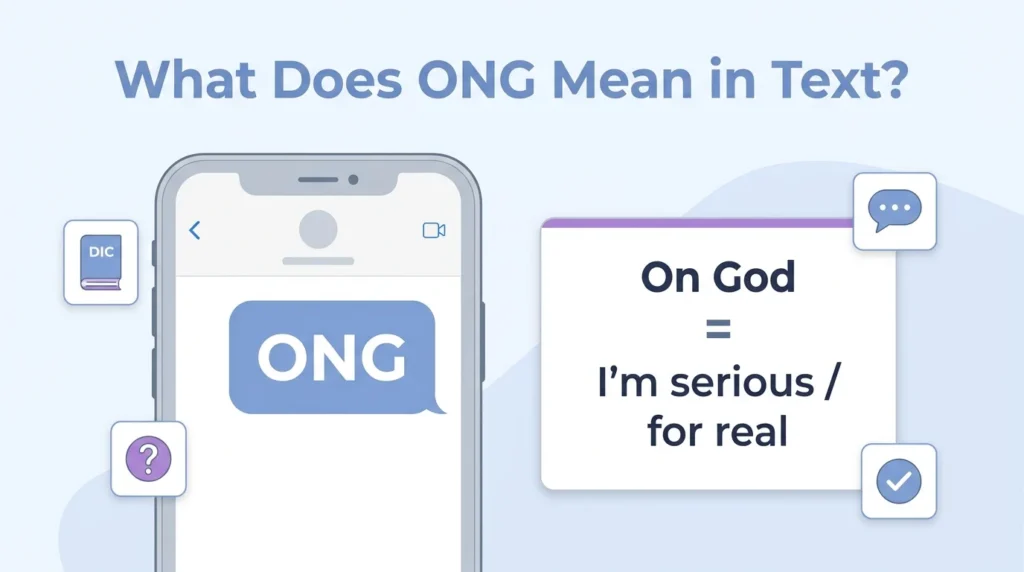
ONG meaning in text is “On God.” It is used when someone wants to show honesty, strong agreement, or serious emotion in a short message.
Featured snippet answer:
ONG means “On God” in text. People use ONG in texting, WhatsApp, Snapchat, TikTok, Instagram, and online comments to mean “I swear,” “for real,” “I’m serious,” or “I strongly agree.”
Example:
Friend: “That test was impossible.”
You: “ONG, I guessed half of it.”
Here, ONG means you strongly agree and you are being serious.
The easiest way to understand ONG is to replace it with “for real” or “I swear.” If the sentence still makes sense, then ONG probably means “On God.” For example, “ONG, that food was amazing” means “For real, that food was amazing.” It adds confidence, emotion, and emphasis to the message.
Do not confuse ONG with OMG. OMG means “Oh My God” and is usually used for surprise. ONG means “On God” and is usually used for truth, agreement, or emphasis. That one-letter difference changes the whole meaning.
Background / Origin
The phrase “on God” existed before the abbreviation ONG became popular in online chats. People used “on God” as a way to swear that something was true, similar to saying “I swear to God” or “God is my witness.” Over time, texting culture shortened the phrase into ONG, just like people shortened “for real” into FR, “laughing out loud” into LOL, and “I don’t know” into IDK.
The exact origin of ONG as an internet abbreviation is not tied to one official person, app, or year. Slang usually spreads through repeated use, not through formal dictionaries first. People started using it in texts, memes, rap-influenced online language, TikTok comments, Snapchat replies, and casual social media conversations. Once more users understood it, ONG became a quick way to sound honest, intense, or strongly supportive.
A big reason ONG became popular is that it is short and expressive. Instead of typing “I swear I’m telling the truth,” someone can simply write “ONG.” That makes it useful in fast conversations where people want emotion without long explanation.
Still, ONG can sound too casual or too dramatic if used in the wrong place. It belongs mainly in informal digital communication. If you are speaking to a teacher, manager, client, or professional contact, using ONG may look immature. In casual chat, it works. In formal writing, it does not.
Usage in Different Contexts
General Usage
In general texting, ONG is used to make a message sound more serious, honest, or emotionally strong. People often use it when they want others to believe them. For example, “ONG, I didn’t say that” means the person is strongly denying something. “That burger was amazing ONG” means the person really enjoyed the burger and wants to emphasize it.
ONG also appears when people agree with someone strongly. If one person says, “School starts too early,” another might reply, “ONG.” In that case, ONG means “I completely agree.” It is short, but it carries a strong reaction.
It can also be used for jokes. Someone might say, “ONG, my bed gets more comfortable when my alarm rings.” The person is not making a serious oath. They are adding humor and emphasis. This is why context matters.
Formal Usage
ONG should not be used in formal communication. It is internet slang, and many people outside social media culture may not understand it. In professional emails, reports, school assignments, resumes, client messages, or business chats, use clear wording instead.
For example, instead of writing “ONG, this strategy will work,” write “I strongly believe this strategy can work.” Instead of “ONG, I completed the task,” write “I confirm that I completed the task.” Formal writing needs clarity, not slang.
Using ONG in the wrong setting can make your message look careless. It may also confuse the reader. The better move is simple: save ONG for friends, social media, and casual chats.
Informal Usage
ONG works best in informal texting. It is common between friends, classmates, siblings, gaming partners, online followers, and people who use modern slang regularly. It helps the message feel natural, emotional, and quick.
For example, “ONG, I’m tired” sounds casual and relatable. “You were right ONG” sounds like strong agreement. “That episode was crazy ONG” sounds like a social media-style reaction.
Informal use does not mean careless use. You still need to understand the tone. If you overuse ONG in every sentence, it can sound forced. Use it when you actually want to add emphasis.
ONG Meaning on Social Media Platforms
- WhatsApp →
On WhatsApp, ONG usually means “On God.” People use it in private chats and group messages when they want to sound honest or strongly agree. For example, “ONG, I forgot completely” means the person is admitting something seriously. In group chats, ONG is also used as a fast reaction when someone says something true or funny. - Snapchat →
On Snapchat, ONG often appears in quick replies, snaps, captions, and streak conversations. Since Snapchat is casual and fast, ONG is used to react strongly without typing a long sentence. If someone sends a funny snap, a reply like “ONG, I’m dead” means the person finds it extremely funny. It can also mean “I swear” when someone is defending themselves. - TikTok →
On TikTok, ONG is common in comments. People use it to agree with a video, support an opinion, or react emotionally. For example, under a relatable video, someone may comment, “ONG, this is exactly me.” It means they strongly relate to the content. TikTok helped slang like ONG spread because short comments move quickly across trends. - Instagram →
On Instagram, ONG appears in DMs, story replies, captions, and comments. Someone might comment “ONG this outfit is perfect” to show strong approval. In DMs, it can mean “I’m serious” or “believe me.” Instagram users often use ONG with other slang like FR, no cap, lowkey, and real.
Other Meanings in Different Fields
- Medical →
In medical contexts, ONG can have a very different meaning. Some medical abbreviation sources list ONG as optic nerve glioma, a tumor that affects the optic nerve. Radiopaedia’s medical abbreviation list also includes ONG as optic nerve glioma. This is why you should never read medical notes like normal texting slang. In health documents, ONG does not mean “On God.” - Physics →
ONG is not a common standard abbreviation in basic physics. If you see ONG in a physics-related document, it may be a project label, variable name, institutional abbreviation, or a short form used inside that specific material. You should not assume it means “On God” in scientific writing. Always check how the author defines it. - Technology →
In technology and internet domains, .ONG is a domain extension connected with nonprofit and non-governmental organizations. GoDaddy states that Public Interest Registry is the sponsor of the .ONG extension, and the extension is focused on entities acting in the public interest. In this context, ONG is unrelated to texting slang.
Examples of ONG Meaning in Text in Sentences
- Example 1: Strong agreement
A: “This new update made the app worse.”
B: “ONG, it was better before.”
Here, ONG means “I strongly agree.” The person is not adding new information. They are showing that they fully support the first person’s opinion. - Example 2: Honest denial
A: “You ate the last slice, didn’t you?”
B: “ONG, I didn’t touch it.”
In this example, ONG means “I swear” or “I’m telling the truth.” The person is trying to sound honest and serious. - Example 3: Emotional reaction
A: “That ending was so sad.”
B: “ONG, I almost cried.”
Here, ONG adds emotional weight. It shows the person really felt something and is not exaggerating casually. - Example 4: Funny social media reply
Post: “Me opening the fridge every 10 minutes like food will magically appear.”
Comment: “ONG, this is my daily routine.”
In this case, ONG means the commenter strongly relates to the post. It makes the comment sound natural and funny.
Common Misconceptions
- Misconception 1: ONG means OMG
This is the most common mistake. ONG and OMG look similar, but they are not the same. OMG means “Oh My God” and usually shows surprise. ONG means “On God” and usually shows honesty, agreement, or emphasis. - Misconception 2: ONG is always religious
ONG comes from the phrase “On God,” but in texting, many people use it as slang rather than a serious religious statement. For most users, it works like “I swear,” “for real,” or “no lie.” Still, some people may find it sensitive, so use it carefully. - Misconception 3: ONG is professional language
ONG is not professional language. It belongs in casual texts, comments, and social media conversations. In serious writing, replace it with clearer words like “honestly,” “seriously,” “I strongly agree,” or “I confirm.”
Similar Terms & Alternatives
- FR — For real; used to show agreement or honesty.
- No cap — No lie; used when someone means they are serious.
- I swear — A clear phrase used to promise something is true.
- Deadass — Slang for being serious or honest.
- NGL — Not gonna lie; used before an honest opinion.
- ISTG — I swear to God; stronger and more direct than ONG.
- Facts — Used when someone strongly agrees with a statement.
- True — A simple way to show agreement.
- Real — Used to say something is relatable or honest.
- For sure — A relaxed way to show agreement or certainty.
- Honestly — A safer alternative for normal or semi-formal writing.
- Seriously — A simple alternative when you want to add emphasis.
How to Respond to ONG Meaning in Text When Someone Uses It
When someone uses ONG, your response should match the situation. If they are agreeing with you, you can continue the conversation naturally. If they are defending themselves, listen to the full message before judging. If they are reacting emotionally, reply in a way that matches their energy. The key is not to overthink it. ONG usually means “I’m serious,” “for real,” or “I swear.”
- Response 1:
“FR, I was thinking the same thing.”
Use this when someone uses ONG to agree with your opinion. It keeps the tone casual and natural. - Response 2:
“Okay, I believe you.”
Use this when someone says ONG while trying to prove they are telling the truth. It gives a calm and clear reply. - Response 3:
“Exactly, that’s what I’m saying.”
Use this when ONG is part of a strong agreement. It keeps the conversation moving and shows you understand them.
If you do not understand the message, just ask, “What do you mean by ONG?” That is better than pretending and replying awkwardly.
Difference Between ONG Meaning in Text and Similar Terms
ONG is similar to terms like FR, no cap, ISTG, and facts, but it is not exactly the same. ONG meaning in text is usually stronger than a simple “true” because it adds emotional force. When someone says “ONG,” they are not only agreeing. They are often saying, “I really mean this.”
Compared with FR, ONG can feel more intense. FR means “for real,” and it is usually casual. ONG can sound like a stronger promise or stronger agreement. For example, “FR, that was funny” sounds relaxed. “ONG, that was the funniest thing ever” sounds more emotional.
Compared with no cap, ONG is close in meaning. No cap means “no lie.” It is often used when someone wants to prove they are not exaggerating. ONG does the same thing, but it connects more directly to the phrase “on God.”
Compared with OMG, ONG is completely different. OMG shows surprise, shock, or excitement. ONG shows truth, agreement, or seriousness. If someone says “OMG, you came!” they are surprised. If someone says “ONG, I came early,” they are emphasizing that they really did.
The easiest difference is this: OMG reacts. ONG confirms.
Relevance in Online Conversations & Dating Apps
ONG matters in modern online conversations because people want short words that carry strong emotion. In texting, people do not always want to type full sentences. They want quick reactions that feel real. ONG does that well. It can show honesty, agreement, shock, loyalty, or emotional intensity in only three letters.
On dating apps, ONG can make a message feel casual and confident. For example, someone might say, “ONG, your smile is actually cute.” This means they are trying to sound honest, not just smooth. It can also be used when someone agrees with a dating opinion, like “ONG, communication matters more than looks.”
But there is a risk. ONG can sound immature if used too much. It can also sound too intense if the conversation is still new. If you are texting someone for the first time, using too much slang can make your message harder to understand. The smarter move is to use ONG only when the tone is already casual.
In online communication, ONG works best when people share the same slang style. If the other person does not use slang, write clearly instead.
Frequently Asked Questions
What does ONG mean in text?
ONG means “On God” in text. It is used to mean “I swear,” “for real,” or “I’m serious.”
Is ONG the same as OMG?
No. OMG means “Oh My God” and shows surprise. ONG means “On God” and shows honesty, agreement, or emphasis.
What does ONG mean on Snapchat?
On Snapchat, ONG usually means “On God.” People use it in snaps, replies, and chats to sound serious or strongly agree.
What does ONG mean on TikTok?
On TikTok, ONG is used in comments and captions to show strong agreement, truth, or emotional reaction. It works like “for real” or “no cap.”
Is ONG rude?
ONG is not usually rude. However, it is very casual, so it may sound inappropriate in formal or professional conversations.
Can ONG mean something else?
Yes. Outside texting, ONG can mean other things, such as optic nerve glioma in medical abbreviation lists or .ONG as a nonprofit-related domain extension. Context decides the meaning.
Conclusion
ONG meaning in text is most commonly “On God.” People use it to show honesty, strong agreement, serious emotion, or emphasis in casual digital conversations. It is popular in texting, WhatsApp chats, Snapchat replies, TikTok comments, Instagram DMs, memes, and online discussions.
The simplest way to understand ONG is to replace it with “I swear,” “for real,” or “I’m serious.” If the sentence still makes sense, then you have the right meaning. However, ONG is not the same as OMG, and it should not be used in formal writing. It can also mean different things in medical, technology, or domain-related contexts, so the full conversation matters.
Use ONG naturally with friends or people who understand slang, but avoid forcing it into every sentence. When in doubt, ask what the person means. Clear communication always beats guessing.
See Also:
IK Meaning in Text – Simple Explanation + Real Chat Examples